
Prime Minister Narendra Modi emphasised the democratisation of technology to ensure no section of society is left behind, advocating for affordable and accessible digital services, especially for the Global South. He highlighted the potential of Digital Public Infrastructure (DPI) and called for solutions to cyber fraud, global standards for emerging tech, and mechanisms to identify AI-generated content during his interaction with GSMA board members.
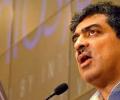
Nandan Nilekani, head of the task force on exam reforms, stated on Tuesday that technology and a systematic approach can solve the issue of question paper leaks. He suggested generating exam papers from a large question bank at the last minute to remove economic incentives for leaks and also proposed moving towards computer-based testing.

Tata Power has partnered with Norway's Ocean Sun to introduce innovative membrane-based floating solar technology to India. A 300 kWp pilot project will be undertaken at Tata Power's Mulshi reservoir in Maharashtra to evaluate the technology's performance, reliability, and cost-effectiveness under Indian conditions. This collaboration aims to leverage India's significant floating solar potential and contribute to its renewable energy goals.
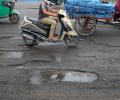
Bengaluru is piloting the Jet Patcher technology to efficiently repair smaller potholes without disrupting traffic. This new method, suitable for potholes up to 50mm deep, uses cold-mix technology and allows for quick repairs, offering an alternative to traditional hot-mix methods which are less effective during monsoons and cause traffic congestion. The city aims to expand its use if the pilot project proves successful.

The BRICS New Delhi Declaration has endorsed India's proposals for a Working Group on Sports Technology and a Sports Goods Manufacturing Conclave, aiming to enhance cooperation and innovation among member nations in the sports sector.

Russian President Vladimir Putin has proposed a new investment platform, based on the New Development Bank (NDB), to fund projects in trade, infrastructure, logistics, and technology across BRICS nations, emphasising that the grouping's expanding economic cooperation is not 'against anyone' but aims to advance members' national interests.

Researchers at BRIC-RGCB in Thiruvananthapuram have developed a novel nanopore-based sensing technology. This innovation allows for the early and highly sensitive detection of biomarkers associated with neurodegenerative diseases like Parkinson's and ALS, addressing a critical challenge in current diagnostic methods. The technology, published in Nature Nanotechnology, uses self-assembling dual-diameter nanopore sensors to identify disease-specific biomarkers even at low concentrations.
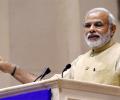
Prime Minister Narendra Modi, in his Independence Day address, highlighted technology and innovation as central to India's goal of becoming a developed nation by 2047. He called for India to lead in emerging technologies like AI, quantum computing, and space, announcing a massive AI skilling initiative for one crore youth. Modi stressed the importance of becoming a global innovation hub, bolstering energy security with nuclear power, and strengthening cybersecurity.
Noted scientist Prof V Ramgopal Rao highlights India's significant progress in higher education and research but points out a critical gap in converting scientific discoveries into market-ready technologies. He advocates for a robust institutional framework, multidisciplinary collaboration, and stronger academia-industry ties to foster innovation and translate research into practical products.
Researchers at NIT Rourkela have developed a novel material from discarded jackfruit peels, capable of removing over 90% of fluoride from contaminated water in about 10 minutes under laboratory conditions. This patented technology, which uses activated carbon modified with zirconium, offers a promising, cost-effective, and sustainable solution for decentralised water treatment, particularly in fluoride-affected regions of India.
Drogo Aerospace's JK 250e fixed-wing VTOL UAV has received type certification from the DGCA on Thursday. This UAV, designed for the Indian armed forces' ISR needs, combines fixed-wing efficiency with VTOL capability and has an endurance of two to three hours. The certification is crucial for indigenous UAV technology development and operator training.

Jio Platforms (JPL) is preparing a capex-light strategy to commercially launch 6G services in the early 2030s through software upgrades, rather than fresh infrastructure investments, according to Akash Ambani, managing director of JPL.
PCBL Chemical Ltd's subsidiary, Nanovace Technologies Ltd, has formed a new wholly-owned subsidiary, Nanovace Advanced Materials Ltd, to focus on advanced battery materials and next-generation energy storage technologies for various sectors including electric vehicles and consumer electronics.

Union Minister Ashwini Vaishnaw warned of increased global turbulence from tech disruptions, AI, and financial risks in the coming years. He stated that India is strengthening its economic and technological resilience to protect its growth from external shocks. India is focusing on domestic manufacturing and design in critical tech areas while maintaining global integration, with trust becoming as crucial as cost in supply chains.
IIT Hyderabad and Japan's Mie University have signed MoUs to foster academic exchanges and joint research, with a strong focus on semiconductors and digital technologies. This collaboration aims to develop skilled talent and strengthen the semiconductor ecosystem in both countries.

IBM India and South Asia MD Sandip Patel stated that India is at a defining moment with a unique opportunity to shape exponential technologies like artificial intelligence, emphasizing that "when India builds, it builds for billions," leading to scalable impact. Speaking at the IBM Think 2026 event, Patel highlighted that the AI revolution is still in its early stages, requiring enterprises to redesign their operations around agents, real-time data, automation, hybrid architecture, and trust. He also introduced the concept of "digital swaraj" or sovereignty in the Indian context, stressing the importance of control over operating environments, data, technology, and AI execution. IBM also announced an MoU with MeitY Startup Hub to accelerate India's deep tech innovation and startup ecosystem, providing startups access to IBM's technology expertise and platforms like watsonx and Sovereign Core.

Atomic Energy Commission chairman Ajit Kumar Mohanty stated that India is on the verge of a significant technological transformation, driven by advancements in AI, quantum technologies, and other fields. Speaking at BIT Mesra's convocation, he emphasised the need for strong indigenous capabilities, skilled professionals, and interdisciplinary collaboration to achieve a developed India. Other speakers, including BIT Mesra's Chancellor and Vice Chancellor, echoed the importance of continuous learning and contributing to national progress.

Elon Musk's Tesla has unveiled a new Roadster capable of 'kickflipping' in mid-air using aerospace-inspired technology, showcasing a vision of flying cars and extraordinary acceleration.
Infosys co-founder Nandan Nilekani has dismissed fears that artificial intelligence will lead to job losses in India's IT services sector, calling such concerns "hogwash" and "disaster marketing." Speaking at the Bloomberg New Economy Forum 2026, Nilekani argued that AI will actually increase demand for IT firms as it necessitates complex business transformations and creates new types of jobs, particularly in small businesses.
The Indian Institute of Management Ahmedabad (IIMA) has opened applications for the second batch of its two-year Blended MBA Programme in Business Analytics & Artificial Intelligence (BPGP: BA & AI). The programme, offered by the Krishnamurthy Tandon School of AI, aims to develop professionals who can integrate AI technology with management principles, addressing the industry's need for leaders capable of driving transformation and managing complex IT infrastructure, including data centres.

'Reliance has had a very, very strong history of shareholder value and growth, and that's what we need to focus on the further journey from the IPO.'
ideaForge Technology has received an order from the Survey of India for its Q6 V2 unmanned aerial vehicles. These advanced, DFCA-certified drones will enhance the Survey of India's ability to collect high-quality aerial and geospatial data for surveying and mapping across diverse terrains, offering efficient and rapid deployment for large-scale projects.
IBM India and South Asia MD Sandip Patel states that technology, especially AI, should not be "artificially paused." He advocates for vigilance and proactive governance to foster innovation while addressing potential risks. Patel also highlights IBM's India-specific initiatives like Bharat Core and a sovereign AI stack, and discusses the impact of AI on jobs and global supply chains.
Experts at the TIS-H Clinical AI Summit 2026 highlighted the critical need for real-world evaluation of AI solutions in healthcare. They stressed that promising results from development or pilot programmes do not guarantee effective and safe deployment in hospitals, emphasising clinical relevance, validation, and integration into existing workflows.
Researchers at IIT-ISM Dhanbad have been granted an Indian patent for an electrochemical reactor designed to recover copper from industrial wastewater. This innovative technology offers an environmentally sustainable solution for resource recovery and wastewater treatment, particularly benefiting the mining and metallurgical sectors.

The Government of Karnataka has called for enhanced collaboration with the BFSI and FinTech sectors to bolster its technology ecosystem and accelerate the adoption of innovative solutions. This initiative, discussed at an Industry Meet, aims to foster partnerships between government, industry, and academia, particularly through programmes like 'Government First', in preparation for the Bengaluru Tech Summit 2026.
L&T Technology Services (LTTS) has inaugurated an NVIDIA-powered Engineering Intelligence (EI) lab in Bengaluru, designed to showcase AI-native manufacturing, digital twins, and autonomous systems. The facility offers clients a comprehensive view of the manufacturing journey, from virtual validation to autonomous operations, and plans to expand to the US.

A dozen companies, including major players like Jio Platforms and Zetwerk Manufacturing Business, are poised to launch Initial Public Offerings (IPOs) in October, continuing India's strong fundraising momentum in the primary market. These offerings span diverse sectors, reflecting sustained investor interest in businesses with robust growth prospects.
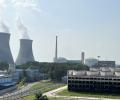
Atomic Energy Commission Chairman Ajit Kumar Mohanty announced that India's private sector is projected to invest Rs 7.5 lakh crore and contribute 30 GW towards the nation's goal of achieving 100 GW nuclear power capacity by 2047. This marks a significant policy shift, facilitated by the SHANTI Act, encouraging private participation in nuclear energy beyond the traditional public sector model. The country is also exploring Small Modular Reactors (SMRs) for industrial needs and advancing its three-stage nuclear power programme, leveraging its substantial thorium reserves.

Jio Platforms Limited (JPL) believes satellite broadband services are unlikely to achieve significant scale or compete effectively on price in India's highly connected and affordable market, despite developing its own satellite constellation solutions and flagging it as a potential disruptor.

Cisco Chairman and CEO Chuck Robbins announced plans to expand the company's silicon design team in India, citing the country's pro-growth strategy, scale, ambition, and engineering focus as key reasons for its strategic importance.
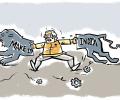
Hical Technologies and Safran Aerosystems have signed a Memorandum of Understanding to explore a joint venture for manufacturing complex systems, including fluid and fuel systems, for the Dassault Rafale program in India. This partnership aims to bolster the Make in India initiative, leveraging Hical's expanding manufacturing capabilities and Safran's technology leadership to produce critical aerospace components domestically and for global markets.

Twenty individuals were arrested in Lonavala, Maharashtra, for operating an illegal call centre that defrauded foreign nationals. The accused impersonated representatives of companies like Amazon and Google, threatening victims with fake drug cases to extract banking details and money.
GE Aerospace is set to significantly increase its supply chain spending in India, targeting USD 400 million by 2030, up from USD 200 million in 2025. This expansion reflects the company's commitment to India's burgeoning aviation market, driven by substantial aircraft orders and the strategic importance of its manufacturing and technology centres in Pune and Bengaluru.
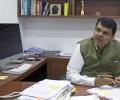
Maharashtra Chief Minister Devendra Fadnavis announced the state's ambition to become India's leader in quantum technology. The state plans to build a robust ecosystem, align with the National Quantum Mission, and train over 5,000 professionals, recognising AI, semiconductors, and quantum tech as key pillars for future growth and global competitiveness.
Ericsson CEO Andres Vicente emphasised the critical need for technology alignment and ecosystem collaboration to ensure security in the age of Artificial Intelligence. Speaking on Wednesday, he highlighted that AI's benefits in productivity and innovation cannot be forgone, making shared security concerns across interconnected tech layers paramount. Ericsson is actively working with partners through the Trusted Tech Alliance to establish common AI-era security understandings.

External Affairs Minister S Jaishankar will host US Secretary of State Marco Rubio in Mumbai on October 20 for talks aimed at strengthening the Comprehensive Global Strategic Partnership. Discussions will cover energy, trade, defence, and critical technologies. The visit also includes celebrations for the 250th anniversary of US Independence. This meeting follows earlier confusion regarding Rubio's visit and will also touch upon the India-US bilateral trade agreement, which both sides are close to concluding. The MEA clarified that hosting foreign dignitaries outside Delhi is a common practice.
Bharti Airtel Chairman Sunil Mittal has called for proactive regulation of Artificial Intelligence, stating that waiting for an "accident" before implementing safeguards would be "foolish." Speaking at the Bloomberg New Economy Forum 2026, Mittal highlighted the struggle of governments to keep pace with AI's rapid growth and emphasised the need for a global regulatory framework, similar to the aviation sector, to ensure national security and responsible development.
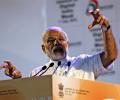
Prime Minister Narendra Modi, at the India Mobile Congress (IMC) 2026, articulated a vision for India's communications sector, emphasizing a global framework to combat cyber frauds and deepfakes. He called for India to become a hub for innovation and product development for the world. Industry leaders lauded his vision, highlighting India's robust digital infrastructure and its journey towards becoming a global technology leader, with a focus on trust, security, and responsible innovation.

India remains one of the Hyundai Motor group's most important and strategic markets globally. The initiative positions India as a strategic core market for the group's growth, emerging market expansion, and next-generation automotive innovation.
