
The Monsoon Session of Parliament for 2026 is scheduled from July 20 to August 13, with significant political developments expected following recent assembly poll results and internal party rebellions. The session will see the ruling NDA's strengthened position in the Rajya Sabha and potential redrafting of a key Constitution amendment bill.

Rajya Sabha Chairman C P Radhakrishnan expressed "deep concern" over the persistent disorder and frequent disruptions that "derailed" the business of the House during the Monsoon Session, leading to a productivity of only 39 per cent.

The Lok Sabha's monsoon session concluded on Thursday, marked by relentless opposition protests over critical issues like the NEET paper leak and police action on students, yet saw the passage of several key bills without extensive debate. Home Minister Amit Shah expressed readiness to debate the student protest issue, urging the speaker to allocate time.

Major bills, including those on women's reservation, delimitation, and the Foreign Contribution (Regulation) Act (FCRA), face an uncertain future in the ongoing Monsoon session of Parliament due to persistent opposition protests and a lack of consensus.

The Monsoon session of Parliament is expected to begin on July 20 and last for three weeks. Key political developments, including recent election victories and party rebellions, are set to influence the session, alongside the government's redrafting of a significant Constitution amendment bill concerning women's reservation and Lok Sabha seats.

An all-party meeting convened by the government ahead of Parliament's Monsoon Session on Sunday saw the entire opposition staging a symbolic walkout over the invitation to rebel Trinamool Congress MPs and a demand for a discussion on the issues of Ram temple donation 'theft', NEET paper leak and mixing of ethanol in petrol.
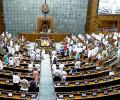
The Congress party is set to challenge the Modi government on a range of critical issues, including alleged theft of Ram temple donations, 'systemic corrosion' of the education system, and constitutional amendment bills related to delimitation and dismissal of ministers, during the upcoming Monsoon Session of Parliament.

The Indian government and opposition are preparing for a contentious Monsoon Session of Parliament, with key issues including the Constitution Amendment Bill on delimitation and women's reservation, the alleged NEET paper leak, and a row over Ram temple donations set to spark heated debates.

The report of a three-member committee investigating the grounds for the removal of High Court judge Yashwant Varma, following the discovery of burnt currency notes at his residence, will be tabled in the Lok Sabha during the upcoming Monsoon session.

Lok Sabha Speaker Om Birla is set to make crucial decisions regarding the status of rebel factions from the Trinamool Congress (TMC) and Shiv Sena (UBT) before the Monsoon session of Parliament begins on July 20, following demands for their disqualification by their parent parties.

Lok Sabha Speaker Om Birla is set to make crucial decisions regarding the disqualification petitions against rebel MPs from the Trinamool Congress and Shiv Sena (UBT) before the upcoming monsoon session of Parliament. Both parties have sought the disqualification of their defecting members under the anti-defection law, while the Speaker is consulting legal experts and examining precedents to ensure legally sound decisions.

The Delhi Traffic Police has issued an advisory for heavy vehicular movement and restrictions around the Parliament complex ahead of the Monsoon Session and a planned 'Chalo Sansad' march by the Cockroach Janata Party (CJP). Security has been significantly intensified across New Delhi, with additional personnel, barricades, and checks to manage traffic and maintain law and order during the protest against alleged NEET irregularities.

The monsoon session of Parliament will be held from July 21 to August 12, Union Minister Kiren Rijiju said on Wednesday.

More than half of the bills introduced in the 18th Lok Sabha have been passed by both Houses in the same session, a significant acceleration compared to previous terms, raising concerns about the time available for legislative scrutiny and stakeholder consultations.

India's Monsoon Session of Parliament concluded with significantly low productivity, marked by frequent disruptions and protests from the Opposition, primarily the Congress, leading to minimal debate on key legislation.
Ten days after both Houses of Parliament were adjourned sine die, the Monsoon session is yet to end formally, giving rise to speculation that the government wants to pass a key legislation without convening a new session.

The BJP has accused the Congress and its INDIA bloc allies of deliberately disrupting the Monsoon Session of Parliament, alleging that their conduct has prevented discussions on key Bills and exposed the Opposition's 'double standards' on issues such as paper leaks and student protests.

The Congress on Wednesday alleged that the government has announced the start of the Monsoon session of Parliament 47 days before it is due in order to run away from the demand of the party and Indian National Developmental Inclusive Alliance (INDIA) for an immediate special session to discuss the Pahalgam attack and the Centre's failure to bring the terrorists to justice.

The Indian government is reportedly considering increasing the foreign direct investment (FDI) limit in the pension sector to 100 per cent, bringing it in line with the insurance sector. A Bill to amend the PFRDA Act, 2013, is expected in an upcoming Parliament session.

The Monsoon session of Parliament saw the passage of several key bills in both the Lok Sabha and Rajya Sabha, despite repeated disruptions and adjournments.

Relentless protests by Opposition parties forced the adjournment of the Lok Sabha for the day after the passage of the Bankers' Books Evidence Bill without a debate on Wednesday, with the government accusing them of coming to the House to disrupt proceedings and not for discussion.
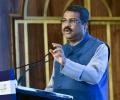
Union Education Minister Dharmendra Pradhan criticised Congress leader Rahul Gandhi for staging a protest outside the Prime Minister's residence regarding the NEET paper-leak issue. Pradhan accused Gandhi of using students as "political tools" to disrupt Parliament, while asserting the government's commitment to discussing NEET concerns in the House. The incident involved Gandhi and other opposition leaders being detained after refusing to end their sit-in.

The Indian Parliament remains deadlocked as the Opposition, led by the Congress, insists on Prime Minister Narendra Modi's reply to discussions on alleged donation theft at the Ram temple in Ayodhya and student protests, rejecting the government's offer for Home Minister Amit Shah to respond.

Kiren Rijiju has strongly criticised the Congress for allegedly 'unfairly disrupting' the recent monsoon session.

Top BJP leaders, including Home Minister Amit Shah and party president Nitin Nabin, met at PM Modi's residence ahead of the Parliament's Monsoon session, amidst speculation of a party and cabinet reshuffle.

Opposition parties disrupted Lok Sabha proceedings on the opening day of the Monsoon Session, leading to multiple adjournments. Protests focused on the alleged NEET paper leak and Ram temple donation theft issues, with demands for Education Minister Dharmendra Pradhan's resignation. The House was eventually adjourned for the day after repeated appeals for order failed.

The meeting comes amid the speculation that the Sharad Pawar led NCP may join the ruling alliance.

Opposition MPs, including Rahul Gandhi and Mallikarjun Kharge, staged a symbolic protest in Parliament, enacting the "theft" of Ram Temple donations. The INDIA bloc demanded Home Minister Amit Shah's resignation and questioned his absence, also protesting police action against student agitators.
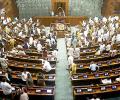
The Monsoon session of Parliament concluded after facing disruptions and protests over the revision of electoral rolls in Bihar. Despite the disruptions, the government managed to pass key legislations.

The govt and the opposition appeared set for a showdown in Parliament's monsoon session.

Activist Sonam Wangchuk's wife, Gitanjali J Angmo, announced that Wangchuk would end his indefinite hunger strike if political leaders assure him that education accountability will be a focus of the upcoming Monsoon Session of Parliament. Wangchuk, currently admitted to Safdarjung Hospital, continues his fast, demanding action against the alleged NEET paper leak and broader education reforms.

Prime Minister Narendra Modi has called upon citizens to celebrate Independence Day with honour and pride, urging them to take a pledge for a developed India. This appeal comes amidst parliamentary sessions marked by protests from both ruling and opposition alliances.
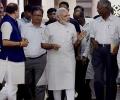
The stage is set for a showdown between the government and the Opposition over the GST or Goods and Services Tax Bill in the monsoon session of Parliament, which begins on Monday.
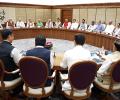
The NDA's parliamentary party meetings will now be known as 'Mangal Milan', with the first under this new name scheduled for July 21. This change was informally discussed in the Union cabinet. Additionally, the newly formed Nationalist Citizens Party of India (NCPI), comprising 20 MPs who defected from the TMC, is seeking formal recognition and parliamentary facilities, including a party office and designated floor leaders.

Parliamentary Affairs Minister Prahlad Joshi has said that 31 bills will be taken up in the monsoon session. Among these include the Digital Personal Data Protection Bill, 2023.

Presiding officers of both Houses Lok Sabha Speaker Om Birla and Rajya Sabha Chairman M Venkaiah Naidu on Saturday held deliberations on the logistics of organising the session in the wake of the COVID-19 pandemic. The sources said options were being explored so that both Houses could function simultaneously during the session, and not on alternate days as some sections of the media were claiming.

Rajya Sabha is likely to adjourn sine die after taking up five bills on Wednesday, the sources said on Tuesday. The Lok Sabha, Speaker Om Birla said, will meet at 6 pm on Wednesday instead of the usual 3 pm.

The situation in Manipur and the Delhi services ordinance are set to dominate the Monsoon session of Parliament beginning Thursday with the Opposition gearing up to raise these issues to corner the government.

Parliamentary Affairs Minister Kiren Rijiju asserted in Lok Sabha that the Opposition cannot dictate which minister responds to questions, amidst demands for Home Minister Amit Shah to address police action on protesting students. The House faced continuous disruptions, leading to adjournment.
Delhi Police has significantly increased security across New Delhi ahead of the Monsoon session of Parliament and a proposed "Chalo Sansad" march by the Cockroach Janta Party (CJP). Additional personnel, barricades, and vehicle checks are in place, with authorities stating no permission has been granted for the march. The heightened vigil follows CJP founder Abhijeet Dipke's hunger strike and activist Sonam Wangchuk's call for the July 20 march from the hospital.
