
Climate scientist Tapio Schneider advocates for expanding early warning systems beyond rainfall events to include other disaster triggers like flash floods, citing the recent Nepal floods. He highlights the inevitability of 1.5 degrees Celsius global warming and discusses the role of advanced climate modelling and AI in improving predictions and research, particularly for regions like India.

A senior Geological Survey of India official warns that the Himalayas are vulnerable to cascading disasters, where one high-altitude event can trigger a chain of destructive events downstream, as evidenced by Nepal's recent floods. He stresses the need for integrated monitoring using satellite data and ground investigations to identify high-risk areas and improve preparedness in the Indian Himalayas.

The central government has approved additional financial assistance of 1,912.99 crore to five states and the Union Territory of Jammu and Kashmir, which were affected by various natural disasters in 2025.


The objective should be clear: Energy security without abandoning environmental responsibility; water security without ignoring local concerns; and strategic resilience without sacrificing public confidence, notes Varun Arya.

At least 38 people were killed after a powerful 7.7-magnitude earthquake struck eastern Indonesia on Saturday, triggering a tsunami warning that was later lifted, CBS News reported.

Sikkim has identified 40 high-hazard glacial lakes, with 16 at the highest risk of catastrophic outbursts. Following a devastating GLOF in 2023, the state is developing India's first dedicated GLOF Risk Mitigation Protocol, using advanced monitoring and interdisciplinary approaches to protect downstream settlements and serve as a model for other Himalayan regions.

Chinese officials warn that glaciers on the Tibetan Plateau are becoming increasingly unstable, leading to a higher risk of flash floods and other disasters, as evidenced by a recent deadly ice-rock avalanche near the Nepal-Tibet border. The region has seen a significant reduction in glacier area, and scientists are calling for advanced monitoring systems to predict these complex events.

Uttarakhand Chief Minister Pushkar Singh Dhami has directed officials to strengthen regular monitoring and safety measures for 13 identified 'sensitive' glacial lakes in the state, citing potential risks in hilly regions.

The National Disaster Response Force (NDRF) is closely monitoring the India-Nepal border regions in Bihar and Uttar Pradesh for any adverse impact from the devastating flash floods in Nepal. While no significant impact has been reported yet, 20 NDRF teams are deployed in the Indian states for potential relief operations. India has also sent humanitarian aid to Nepal and has additional NDRF teams on standby for deployment if requested.

Following devastating flash floods in Nepal, experts are calling for systematic scientific assessments of glaciers to understand and mitigate hazards, alongside the development of a robust land use policy for the Himalayan region. The floods, which killed over 460 people and left thousands missing, are believed to be linked to climate change impacts on glaciers and permafrost.

'There needs to be a monitoring of glaciers in high altitude areas and one needs to check regularly how geological changes are taking place.' 'We can mitigate that by regular monitoring but unfortunately, hardly any monitoring is happening.' 'And without monitoring those higher altitudes of Himalayas, people are suffering.'

The devastating floods in Nepal have brought back memories of two major disasters in Uttarakhand in recent years, the Rishiganga tragedy of February 2021 and the Dharali disaster of August 2025, which caused extensive loss of life and property and left thousands struggling to rebuild their lives.

China has issued a Level-IV alert due to a newly formed barrier lake at the Tibet-Nepal border, warning of a high risk of breaching and flooding downstream areas. The lake, formed at the confluence of Chhochen Khola and Purepu Tsangpo rivers, has accumulated an estimated two million cubic metres of water, with inflows expected to increase, raising concerns for areas including Gyirong Port.

Oriental Insurance has insured around 100 Ganesh pandals this year compared with only 20-30 last year.

'The trigger for the flood was definitely natural, but the damage that it caused was human-made.'

India has highlighted 13 key outcomes from the recent Shanghai Cooperation Organisation (SCO) summit, focusing on enhanced cooperation in security, counter-terrorism, and addressing transnational threats. These outcomes include the establishment of a Universal Centre for Countering Challenges and Threats to Security, a strong stance against state-sponsored terrorism, and agreements on narcotics control, climate change, and artificial intelligence, reinforcing India's engagement in the Eurasian region.
The Indian Air Force (IAF) demonstrated 'Vayu UTtaM', an indigenously developed multi-mode Unmanned Traffic Management (UTM) system, at 'Dronathon 2026' in Pokhran. This ground-based system is designed to manage drone operations in congested airspace and identify rogue drones, with applications extending to critical infrastructure, civil aviation, and public safety. The event also saw the release of the 'IAF UAS Roadmap' to guide indigenous innovation in unmanned systems.

A devastating fire at the Na Ladprao eatery in Bangkok's Chatuchak district resulted in 27 fatalities and 63 injuries, with officials confirming that most deaths were due to smoke inhalation after a stage circuit breaker exploded.

It is very unfortunate that China has decided to proceed with the controversial mega hydropower plants(despite the apparent opposition of many scientists in China). Why is Delhi silent about the development? asks Claude Arpi.

External Affairs Minister S Jaishankar has affirmed India's commitment to ensuring issues like a free, open, and rule-based maritime order, seafarer safety, and countering terror financing receive due attention at the UN Security Council during its 2028-29 term.

Mumbai experienced heavy overnight monsoon rains, with some areas receiving over 200 mm in 24 hours, leading to widespread waterlogging, traffic congestion, and disruptions in suburban train services, particularly on Central Railway lines due to a track cave-in.

A lesson for India is to clearly define objectives beforehand, so that the adversary or other parties do not attempt to mitigate them midway.

The IMD has issued an orange alert for heatwave conditions in parts of Kerala, prompting authorities to urge caution. Maximum temperatures are expected to reach up to 41 degrees Celsius in some districts. Strict guidelines have been issued, including the suspension of vacation classes and rescheduling of working hours.

Flash floods ravaged Dharali, around 264 km from Chamoli, burying half of the mountain village in a fast-flowing mudslide of slush, rubble, and water.

A large-scale civil defence mock drill was conducted across Delhi, simulating a hostile attack scenario to test preparedness and response systems.

Thousands of dead fish have been found floating in the Najafgarh drain near the Dhansa regulator, raising concerns about pollution levels. Activists attribute the deaths to the inflow of untreated residential effluents and industrial wastes, exacerbated by rising temperatures.

The International Cricket Council has sought an explanation from Pakistan on how the 'Force Majeure' clause can be invoked to justify the team's refusal to play the T20 World Cup match against India.

PCB writes to ICC to invoke 'force majeure', global body asks for justification

Multiple avalanches on the Srinagar-Leh national highway at Zojila Pass have resulted in the deaths of seven people, including a child and two women, with rescue operations ongoing.

Even as nature's fury is causing multitude of disasters in Uttarakhand and Himachal Pradesh, the Centre is yet to appoint head of the specialised 10,000- personnel strong NDRF, the mainstay for disaster mitigation and rescue operations in the country.
The President has given his assent to the Disaster Management Bill.
Speaking at the national conference on 'Safe transportation of hazardous, dangerous goods through land, air, sea and pipelines in Ahmedabad on Monday, member of the NDMA J R Bharadwaj said that there was a gap between disaster mitigation and preparedness. "We have all the rules and regulation in place for crisis management, but the main problem lies in its implementation," Bharadwaj said.

A bill to repeal the MGNREGA and introduce a new rural employment law, the Viksit Bharat Guarantee for Rozgar and Ajeevika Mission (Gramin), has been circulated among Lok Sabha members.

Finance ministers of states demanded an increase in allocation under 50-year interest-free loan scheme, while fiscally stressed states like Punjab and Kerala pitched for a special package and borrowing flexibility, sources said on Friday. In a pre-budget meeting with Union Finance Minister Nirmala Sitharaman, states have also urged for higher borrowing limits to support fiscal activities, besides additional funds for Jal Jeevan Mission.

About 57 per cent of Indian districts, home to 76 per cent of the country's population, are currently at high to very high risk from extreme heat.

A 5.8 magnitude earthquake shook parts of northeast India and West Bengal. No immediate reports of casualties or significant damage were reported. The epicenter was in Udalguri district, Assam.

A comprehensive risk assessment warns that Kishtwar district in Jammu and Kashmir faces a serious threat from glacial lake outburst floods (GLOFs), endangering lives, infrastructure, and the ecosystem. The report calls for immediate mitigation measures and long-term strategies to build resilience.
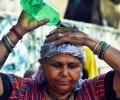
With the summer approaching sooner than scheduled, Maharashtra, Telangana, Odisha, and West Bengal have already started experiencing heat waves with temperatures soaring above 40°C.
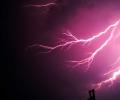
Lightning claims more lives in India annually than any other extreme weather event. Between April and July this year alone, 1,621 people died due to lightning strikes.
