
The Qualified Institutional Buyers (QIBs) portion of the Jio Platforms IPO was fully subscribed at over 2x demand within minutes of its issue opening on Wednesday, indicating strong institutional interest in India's largest public issue.
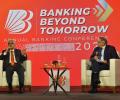
Bank of Baroda has launched 'bob World 2.0', an AI-powered mobile banking app featuring voice-command capabilities for payments and navigation. The updated app also includes a personal finance management module and a persona-based customer experience, aiming to offer intuitive, secure, and personalised banking services.

The CEO of the National Health Authority, Sunil Kumar Barnwal, highlighted BRICS nations' shared aspiration for connected, patient-centric, and resilient healthcare systems through digital health infrastructure and responsible AI. Discussions at the 16th BRICS Health Ministers' meeting focused on overcoming challenges like limited interoperability and workforce constraints, with countries like Brazil and Indonesia sharing successful digital health initiatives.

Canadian billionaire Prem Watsa's Fairfax Financial Holdings will utilise the expertise of Deepak Parekh and Paresh Sukthankar, former HDFC leaders, as it moves to acquire a 60.72 per cent stake in IDBI Bank for 52,878 crore, with N S Kannan proposed as chairman.

Telangana IT Minister D Sridhar Babu stated that Gen Z will be the driving force behind the next wave of AI and green innovation. He urged young innovators to use their skills to solve real-world challenges, particularly in sustainability. The launch of the Green Skills and Applied AI Centre of Excellence in Hyderabad, a partnership between Telangana's IT Ministry, Microsoft, 1M1B, and MeitY Startup Hub, aims to equip graduates with industry-relevant skills in AI, green pharma, solar energy, EVs, and wind energy, with 100 job offers already announced.

A man named Fayaz Ahmad has been arrested in Maharajganj, Uttar Pradesh, for allegedly creating and sharing a digitally edited video on social media that depicted a fake explosion at a Sashastra Seema Bal (SSB) camp along the India-Nepal border. The video, which targeted a sensitive security installation, led to an investigation and his subsequent arrest for breach of peace.

The retail portion of Jio Platforms' initial public offering (IPO) was fully subscribed within two hours on the second day of bidding, with overall subscription reaching 3.47 times by 11:00 am on Thursday.

A 49-year-old teacher, Sandeep Vilasbuwa Joshi, who went missing from Beed, Maharashtra, was found dead in a well near a temple on Saturday. He had left a digital suicide note on Friday, prompting a search by his family. Police have registered a case of accidental death, and the motive remains unclear.

A 22-year-old man, Faiyaz Ali, was arrested in Bhadohi, Uttar Pradesh, for allegedly creating fake Instagram accounts to circulate child sexual abuse material and explicit chats. The arrest followed a tip-off from the Union home ministry's Indian Cybercrime Coordination Centre (I4C), which flagged an Instagram account with objectionable content. Police traced the account to Ali and apprehended him while he was attempting to flee.

President Droupadi Murmu, Prime Minister Narendra Modi, and Vice President C P Radhakrishnan attended Dussehra celebrations in New Delhi on Tuesday. Effigies of Ravan, Kumbhkaran, and Meghnath were burnt at various Ramleela grounds, with dignitaries delivering messages on truth, righteousness, and fighting social evils. One committee also burnt a cockroach effigy to symbolise filth, leading to a complaint from AAP Delhi chief Saurabh Bharadwaj.

A gym owner in Navi Mumbai has been arrested for allegedly blackmailing his woman business partner and extorting Rs 38 lakh. He threatened to circulate her objectionable videos, which he secretly recorded after establishing physical relations. The victim filed a complaint, leading to his apprehension and remand in police custody.

Jio Platforms Ltd's (JPL) public offer, valued at Rs 30,213 crore, was fully subscribed within 100 minutes of opening, making it the fastest-ever subscribed IPO in India, driven by strong institutional demand.

The Indian government, through the Ministry of Electronics and Information Technology (MeitY), has issued an advisory to Meta, urging the social media giant to prevent its recommendation systems from disproportionately exposing users to limited narratives and to enhance checks on content that could incite public disorder or unlawful activity. The advisory, dated October 10, also calls for Meta to provide adequate context for content related to ongoing public events and to review its content-ranking mechanisms to avoid amplifying misleading information.

The Lok Sabha has passed a Bill to amend the Payment and Settlement Systems Act, 2007, authorising the government to permit banks and service providers to levy charges on UPI and other electronic payment modes. This move aims to create a sustainable revenue model for the digital payments ecosystem, shifting from the current exemption of UPI transactions from such charges.
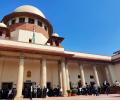
The Supreme Court has made permanent its order protecting a journalist from coercive action in a road rage case and quashed a police notice to 'X' seeking his digital details. The court noted the police sought data from before the alleged crime and granted the journalist liberty to challenge the FIR and seek guidelines for data collection.

Airtel Business CEO Sharat Sinha stated that evolving architecture and methodologies for safely deploying Artificial Intelligence, coupled with adequate guardrails, are essential to unlock productivity gains. He welcomed the government's upcoming consultation paper on AI regulation, focusing on safety, deepfakes, and a human-first approach. Sinha also highlighted AI's role in driving demand for digital infrastructure and Airtel's growth in cybersecurity and fraud prevention.

Prime Minister Narendra Modi has urged for a global framework to combat cross-border cyber frauds and deepfakes, highlighting the need for governments, tech companies, telecom operators, and financial institutions to collaborate. Speaking at the India Mobile Congress 2026, Modi stressed that technology thrives on trust and that India is ready to share its expertise in tackling cyber threats. He also noted the rapid expansion of 5G and the success of digital governance initiatives like Direct Benefit Transfer.
A report by IIT-Bombay professors recommends reducing the Merchant Discount Rate (MDR) on UPI transactions from 0.40 per cent to 0.08 per cent. It suggests that banks should fund the UPI ecosystem using their net interest margins from CASA deposits, rather than relying on MDR. The report also addresses transaction costs, credit card MDR, and ATM withdrawal allowances, aiming to ensure UPI's long-term sustainability and public trust by proposing remuneration only from large merchants.

IBM India and South Asia MD Sandip Patel stated that India is at a defining moment with a unique opportunity to shape exponential technologies like artificial intelligence, emphasizing that "when India builds, it builds for billions," leading to scalable impact. Speaking at the IBM Think 2026 event, Patel highlighted that the AI revolution is still in its early stages, requiring enterprises to redesign their operations around agents, real-time data, automation, hybrid architecture, and trust. He also introduced the concept of "digital swaraj" or sovereignty in the Indian context, stressing the importance of control over operating environments, data, technology, and AI execution. IBM also announced an MoU with MeitY Startup Hub to accelerate India's deep tech innovation and startup ecosystem, providing startups access to IBM's technology expertise and platforms like watsonx and Sovereign Core.

Himachal Pradesh Chief Minister Sukhvinder Singh Sukhu congratulated the State Cooperative Bank on successfully migrating its core banking system to the 'Finacle 10.2.25' platform. This upgrade aims to provide faster, more transparent, and secure financial services, enhancing customer experience and operational efficiency across its 262 branches.

The first five matches of the Indian Super League 2026-27 season have garnered significant viewership on YouTube, with 65 million views and 52 million viewers. The opening week also saw high concurrent viewership, particularly for the Inter Kashi versus Kerala Blasters FC match, and strong engagement across both English and Hindi feeds, underscoring the league's growing digital presence and the importance of multilingual content.

Jio Platforms Ltd's Rs 30,213-crore initial public offering (IPO) has garnered bids worth Rs 3.73 lakh crore, achieving a subscription rate of 5.57 times the shares on offer, driven by robust institutional and anchor investor demand.

From Salman Khan's cheeky advice to Varun Dhawan to Kareena Kapoor Khan and Shahid Kapoor's reunion, the IIFA announcement in Mumbai was a starry affair.

Faridabad police have arrested three individuals for robbing a man of Rs 32,500 at knifepoint after luring him through the dating app Grindr. The victim was taken to a secluded spot, assaulted, and robbed, with the extorted money later deposited into an online betting site.

Most of the companies AI models and AI agents targeted had no idea their networks had been breached.

Adani Enterprises and US-based Jabil have signed a non-binding agreement to establish a 50:50 joint venture in India. This JV will manufacture artificial intelligence and data centre equipment, including AI racks, servers, storage, networking gear, and cooling systems, targeting both Indian and global markets. The collaboration aims to capitalise on India's accelerating data centre demand and the surging global investment in AI compute infrastructure.

India's manufacturing and services sectors are set to create over 35 crore new jobs by 2030, necessitating urgent skilling and industry-academia collaboration. Key sectors like automotive, logistics, telecom, clean energy, and textiles will drive this growth, highlighting the need for competency-driven learning to prepare the workforce.

Police sources reveal that the three shooters involved in the attack on actor Tiger Shroff on October 18 received real-time updates on the police investigation via news channel coverage from their handlers, allowing them to alter their escape routes. They were apprehended from a train in Kota on October 19. The investigation also points to gangster Anil Pandit, an alleged associate of the Lawrence Bishnoi gang, claiming responsibility.

India A were bundled for a lowly 113 as five of their batters perished for ducks before captain Rhys Marius's half-century helped New Zealand A take the lead on Day 1 of the 1st unofficial Test.

Samajwadi Party president Akhilesh Yadav has criticised the BJP government, posing 12 questions regarding the banking sector. He highlighted issues such as recurring bank charges, reduced interest rates, demonetisation's impact, missing locker valuables, and poor working conditions for bank employees, accusing the government of weakening banks and exploiting vulnerable communities.

A new digital political phenomenon, the 'E20 Janta Party', is gaining traction on Instagram, mobilising Gen Z against the government's mandatory 20% ethanol-blended petrol (E20) and demanding Union Minister Nitin Gadkari's resignation.
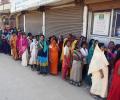
Meghalaya has shown significant progress in digital transactions and financial inclusion, recording 32.76 crore digital transactions and nearly 10 lakh Jan Dhan accounts by 2025-26. Efforts like the JAM Trinity and financial literacy programmes have expanded banking access, with a high percentage of bank account holders adopting digital modes. The next phase focuses on enhancing financial literacy and cyber resilience, especially in rural areas.
Akash Ambani is leading Jio Platforms' initial public offering (IPO), set to be India's largest, with a strategy that includes appealing to regional investors and drawing parallels to his grandfather Dhirubhai Ambani's historic public listing of Reliance Industries.

Maharashtra Cyber has arrested Phannendra Balkrishna Pamarti, a 34-year-old Bengaluru resident, for allegedly stalking and harassing a female stand-up comedian through multiple Instagram accounts. The comedian had lodged a complaint about persistent online harassment, leading to an FIR under Bharatiya Nyaya Sanhita and IT Act sections. Investigators used cyber-forensic tools to trace and arrest the accused.

Protesters associated with the Cockroach Janta Party (CJP) in Delhi, many of whom participated in a July demonstration, adapted their strategies for a recent protest on Saturday. They used digital artwork, prepared for potential police action like lathi charges, and advised newcomers on safety measures such as carrying multiple masks and goggles. The protest, called to demand the resignation of Chief Election Commissioner Gyanesh Kumar over alleged voter-list manipulation, faced heavy security deployment, barricades, and mass detentions, preventing a large-scale gathering at Jantar Mantar.

African digital financial services platform, Airtel Money, has successfully debuted on the London Stock Exchange, marking the exchange's largest initial public offering (IPO) in several years with an implied market capitalisation of about USD 7 billion.

'What is the need for collecting so much data unless they are going to be used for some other purpose?'

IIT Madras is hosting the 3rd Digital India RISC-V (DIR-V) Symposium 2026 in partnership with the Ministry of Electronics and Information Technology and RISC-V International. The symposium aims to unite stakeholders from government, industry, and academia to advance India's semiconductor innovation, focusing on indigenous processor technologies, secure computing, hardware innovation, and AI, aligning with the government's vision for India as a global semiconductor hub.

A new EY India report highlights how young professionals, women wealth creators, entrepreneurs, ESOP beneficiaries, and digitally active consumers from Tier-2 and Tier-3 cities are fundamentally changing India's wealth ecosystem. This shift is evidenced by increased participation of young and women investors, a rise in disciplined investing via SIPs, and the crucial role of Digital Public Infrastructure in democratizing access to long-term wealth creation. The report predicts over 100 million new investors by 2035.

Across all 10 schemes from FY24 to FY26, print media captured 58.8 per cent of the total ad spending, followed by electronic media at 19.5 per cent, digital media at 14.6 per cent, and outdoor media at 7.2 per cent.
