
Indian envoy to China, Vikram Doraiswami, met Afghanistan's ambassador Mawlawi Asadullah to discuss bilateral ties and cooperation, as confirmed by the Indian Embassy.
India has asserted that the state of its border with China directly impacts the broader bilateral relationship, emphasising the critical importance of maintaining peace and tranquillity along the Line of Actual Control (LAC). The Ministry of External Affairs also firmly rejected China's claims over Arunachal Pradesh, reiterating its status as an integral part of India. This stance was reiterated during a recent Working Mechanism for Consultation and Coordination meeting, where both sides agreed to continue using diplomatic and military channels to resolve outstanding issues.

Cricket Scotland has announced it will not schedule matches against Afghanistan outside ICC events due to concerns over the Taliban government's treatment of women and girls and broader human rights issues. This decision aligns with similar stances taken by Cricket Australia and the England and Wales Cricket Board.

A US Congressman has raised serious concerns regarding India's proposed amendments to the Foreign Contribution Regulation Act (FCRA), warning that these changes could lead to government takeovers of religious charities and strain bilateral relations.

US Secretary of State Marco Rubio is on a three-day visit to India to discuss bilateral ties in energy, trade, investment, defence, and critical technologies, as well as the West Asia crisis. His visit aims to strengthen the India-US Comprehensive Global Strategic Partnership amidst existing friction, with a focus on finalising a proposed bilateral trade deal.

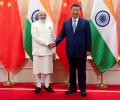
Prime Minister Narendra Modi, in bilateral talks with Chinese President Xi Jinping, emphasized that both nations must show sensitivity to each other's core issues and be guided by mutual respect, sensitivity, and interest. Modi highlighted the critical importance of peace and tranquillity along the Line of Actual Control for the development of India-China relations, while also addressing concerns regarding Taiwan and Tibet.

An Indian Defence Forces Tri-Services contingent participated in a bilateral hockey tournament in New Zealand, celebrating 100 years of sporting ties between the two nations. The event saw the Indian team secure a victory against the New Zealand Defence Force and included cultural exchanges and a wider celebration involving cricket teams and dignitaries, highlighting the historical sporting connections, including Major Dhyan Chand's 1926 tour.

Prime Minister Narendra Modi has announced a significant 24,000 crore Nepalese rupees development package for Nepal, further solidifying bilateral ties and launching key India-assisted projects, including a new cross-border passenger rail link between Ayodhya and Janakpur Dham. This move signals a major reset in relations after a period of strain over border disputes, with both leaders emphasising deep kinship and mutual support.

Prime Minister Narendra Modi conveyed to Chinese President Xi Jinping that peace and tranquillity along the frontier remains an "essential" basis for the development of India-China relations, even as the two leaders welcomed "steady progress" in bilateral ties during their talks on the sidelines of the BRICS summit.

Pakistan is currently deliberating its participation in the Shanghai Cooperation Organisation's Civilisational Dialogue Forum, scheduled to be held in India later this month. The invitation from India is significant given the historically strained bilateral relations, particularly after recent military confrontations and India's consistent concerns about cross-border terrorism.

Pakistan's Federal Minister for Climate Change and Environmental Coordination, Masood Malik, has arrived in New Delhi to participate in the Shanghai Cooperation Organisation (SCO) Civilisation Dialogue. This marks the first visit by a Pakistani minister to India in three years, occurring amidst strained bilateral relations following a terror attack and subsequent military confrontation in 2025.

US Secretary of State Marco Rubio visited Reliance Industries' Jamnagar refinery, a day after calling India a crude oil refining 'superpower', and met with top Indian business leaders Gautam Adani and N Chandrasekaran to advance bilateral ties in energy, trade, investment, and defence.

Nepal Prime Minister Balendra Shah is on a two-day visit to India, focusing on energy, economic cooperation, and infrastructure development. This marks his first official bilateral foreign visit since taking office. Discussions will cover expanding connectivity, trade, and investment, with several MoUs expected to be exchanged. The visit aims to strengthen the deep-rooted ties between the two nations.

Japan's military will use Indian firing ranges for live-fire training, with drills scheduled to begin next year. The exercises will include surface-to-ship missiles for the first time, marking a significant expansion of bilateral defence cooperation.

Chinese Foreign Minister Wang Yi stated that President Xi Jinping and Prime Minister Narendra Modi reached a crucial consensus during the BRICS summit, agreeing that China and India should be partners, not rivals. The leaders pledged to maintain peace and tranquility in border areas, deepen cooperation, and support each other in multilateral forums, aiming to strengthen the Global South and promote a multipolar world order.
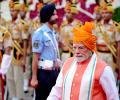
Prime Minister Narendra Modi will travel to China to attend the Shanghai Cooperation Organisation (SCO) summit, marking his first visit in over seven years. The visit signals a potential improvement in India-China relations after recent tensions.

Prime Ministers Narendra Modi and Balendra Shah virtually flagged off the Saryu-Kamala Express, connecting Ayodhya and Janakpur Dham. This new weekly train service aims to boost religious and cultural tourism along the Ramayana Circuit, strengthening historical ties between the two nations. The 604-km route will allow devotees to visit key pilgrimage sites associated with Lord Ram and Mata Sita.

External Affairs Minister S Jaishankar highlighted that India's primary concern regarding terrorism from its neighbour, Pakistan, if not fully appreciated by partners like the US, negatively impacts bilateral relations. Speaking at the Asia Society, Jaishankar discussed the turbulence in India-US ties, particularly in light of Washington's renewed engagement with Pakistan and the perceived lack of empathy for India's terrorism concerns, especially under the second Trump administration. He emphasized that addressing these sensitivities is crucial for improving the relationship.

Engagement with neighbours has gathered pace, particularly as the conflict in West Asia has exposed their vulnerability to energy supply disruptions.

During the 18th BRICS Summit in New Delhi, Chinese President Xi Jinping and Prime Minister Narendra Modi held a bilateral meeting, outlining a four-point approach for the steady and long-term development of China-India relations. The leaders stressed strategic understanding, win-win cooperation, mutual respect, and inclusive multilateral engagement, reaffirming their commitment to resolving the boundary question and addressing economic concerns. They also discussed global challenges and strengthening people-to-people ties.
New Zealand's envoy to India, Patrick John Rata, stated that the recently concluded Free Trade Agreement (FTA) between India and New Zealand is more than a conventional trade agreement, reflecting mutual trust and designed to deliver balanced and tangible benefits to both economies.

Chinese President Xi Jinping concluded his three-day visit to the US, stating that his discussions with President Donald Trump had injected "new substance" into the China-US relationship. Both leaders expressed optimism for future cooperation, with agreements reached on certain trade goods and discussions held on AI capabilities.

Prime Minister Narendra Modi and US President Donald Trump exchanged pleasantries and held a brief conversation at the G7 summit, their first in-person encounter in 16 months, setting the stage for high-stakes bilateral talks amidst continuing strain in India-US relations.

Prime Minister Narendra Modi presented his Nepalese counterpart Balendra Shah with a Kalamkari Sampoorna Ramayana painting, a Banarasi brocade stole, and 'Gangajal' during their bilateral meeting on Monday. These gifts symbolise the deep spiritual, cultural, and civilisational ties between India and Nepal, connecting significant religious sites and traditions.
The Esports Federation of India (ESFI) and the New Zealand Esports Federation (NZ Esports) have drafted a Memorandum of Understanding (MoU) to enhance cooperation and exchange knowledge in the esports sector. This initiative coincides with the 100 Years of Unity Through Sport celebrations, featuring Indian gamers competing in eFootball and Clash Royale in Auckland.

Bangladesh's State Minister for Foreign Affairs, Humaiun Kobir, announced that the country seeks to "reset" its relationship with India, moving towards a new bilateral engagement based on mutual interests. He described ties during the previous government's tenure as "uncomfortable" and emphasised the need for Bangladesh to approach India as "just another country," focusing on balanced relations rather than an "excessive preoccupation." This comes after Bangladesh's Prime Minister Tarique Rahman did not attend the BRICS Summit in India.

Chinese ambassador to India, Xu Feihong, on Wednesday expressed hope that the recently completed Indo-China border disengagement in Eastern Ladakh would smoothen relations and pave the way for a better understanding between the two neighbours in the days ahead.
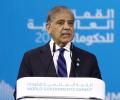
Pakistan has officially ratified a defence cooperation agreement with Kuwait, formalising a pact concluded five months prior. This agreement aims to enhance bilateral military ties through various forms of cooperation, including manufacturing, communications, and joint exercises, and will be overseen by a joint military committee.

Reports claiming that India has proposed allowing military aircraft to use Nepal's Bagdogra entry point are false, sources said on Sunday, dismissing media reports suggesting any such move.

'We are open to all countries around the world as long as we get a fair deal, as long as we are ensured continuity in the engagement.'

US Secretary of State Marco Rubio kick-started a three-day visit to India on Tuesday to advance bilateral ties in energy, trade and investment, defence, critical technologies, and exchange views on the West Asia crisis.

US Secretary of State Marco Rubio's visit to India this week underscores the complex dynamics of global energy policy, as Washington re-evaluates sanctions on Russian oil buyers amidst India's continued reliance on Russian crude.

Rahul Gandhi, Leader of Opposition, met Malaysian Prime Minister Anwar Ibrahim for a breakfast meeting in New Delhi to discuss India-Malaysia relations. The meeting, also attended by Priyanka Gandhi Vadra, followed earlier talks between PM Narendra Modi and Ibrahim on trade, semiconductors, infrastructure, and defence. Malaysia is a key partner for India within BRICS and ASEAN.

Chinese President Xi Jinping's upcoming visit to India for the BRICS summit is a pivotal diplomatic event poised to significantly impact bilateral ties and global cooperation amidst ongoing international instability.

Chinese President Xi Jinping's first visit to India in seven years for the BRICS Summit and bilateral talks with Prime Minister Narendra Modi is set to address crucial aspects of India-China relations, including trade, investment, and persistent border tensions.

Pakistan and the Maldives have signed 20 Memorandums of Understanding (MoUs) covering defence, maritime security, artificial intelligence, trade, and other sectors during Maldivian President Mohamed Muizzu's three-day visit to Islamabad. The agreements aim to significantly boost bilateral cooperation and trade, with Pakistan also offering technical expertise and educational opportunities.

National Security Advisor Ajit Doval engaged in Special Representatives talks with Chinese Foreign Minister Wang Yi in Beijing, focusing on the India-China boundary question and enhancing bilateral relations. These crucial discussions precede Chinese President Xi Jinping's anticipated visit to New Delhi for the BRICS summit, aiming to address persistent border differences and stabilise ties strained by past conflicts like the Galwan Valley clash.
Kanishka Narayan, the UK's first Cabinet minister for AI, spoke at the Bharatiya Vidya Bhavan's Diwali Gala in London. He discussed how traditional Indian culture, with its emphasis on storytelling and oral histories, is uniquely resilient to automation and the rise of AI. Narayan also highlighted his Indian roots and the strong ties between the UK and India, emphasizing the diaspora's role in bilateral relations.

President Droupadi Murmu hosted Swiss President Guy Parmelin at a banquet featuring exquisite delicacies from Jammu and Kashmir and Ladakh. The curated menu highlighted unique regional ingredients and culinary traditions, serving as a cultural exchange alongside significant bilateral discussions on trade, migration, nuclear energy, and defence.

Prime Minister Narendra Modi and US President Donald Trump are set to hold comprehensive talks focusing on a bilateral trade deal, defence cooperation, and energy and critical minerals sectors during the G7 summit in Evian-les-Bains, France.
