
Investors' wealth zoomed by Rs 5,78,634.72 crore in two days of intense market rally, with participants adding Rs 2,74,908.83 crore to their fortune on Tuesday. Over the past two sessions, the BSE gauge Sensex has gained about 1,461 points or 2.99 per cent. The benchmark rallied 612.60 points or 1.24 per cent to settle above the 50,000-mark on Tuesday. Following the two-day massive rallies, the market capitalisation of BSE-listed companies jumped by Rs 5,78,634.72 crore to a record Rs 2,16,39,367.91 crore on Tuesday.

Tata Steel was the top gainer among the Sensex constituents, surging around 6 per cent, followed by SBI, HDFC Bank, Bajaj Finance, Axis Bank, LT, Maruti, IndusInd Bank and HDFC. NSE Nifty touched a fresh intra-day high of 12,934.05.

IndusInd Bank was the top laggard, tumbling over 7 per cent, followed by Bajaj Finance, M&M, Tech Mahindra, TCS and Tata Steel.

FMCG distributors on Thursday said it has suspended their boycott of certain products of oral care maker Colgate after talks with the company representatives over the issue of the price disparity between the traditional distributors and organised business-to-business channel. A day after a virtual meeting with Colgate-Palmolive (India) Ltd (CPIL) representatives, the All India Consumer Products Distributors Federation (AICPDF) called off its stir to boycott certain products of the company starting from January 1, 2022. "From today, the movement against Colgate is postponed till further notice," the AICPDF said in a statement.
'With the ease of access, we have seen an increased participation from tier-2, tier-3, and tier-4 cities/towns.'

Investor wealth surged Rs 602,001.9 crore in two days of market rally which was supported by positive global cues. The 30-share BSE index on Tuesday closed at 50,136.58, an increase of 1,128.08 points or 2.30 per cent. During the day, it gained 1,259.95 points to touch 50,268.45. On Friday, the benchmark had closed 568.38 points higher. Markets were closed on Monday for Holi. Driven by the rally, the market capitalisation of BSE-listed companies soared Rs 602,001.9 crore to Rs 2,04,77,472.33 crore in two trading days.

The IT major is followed by RIL (Rs 795,628.55 crore), HDFC Bank (Rs 624,362.11 crore), Hindustan Unilever (Rs 367,880.69 crore) and ITC (Rs 367,513.78 crore).
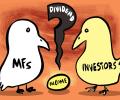
The combined dividend payout by early-bird companies -- those that have declared their results for FY21 -- is up 8.9 per cent, lower than the 21.9 per cent rise in in FY20 but ahead of the underlying growth in India Inc business last year. Combined net sales of these early birds were down 1.8 per cent last financial year while net profit was up 27.3 per cent in FY21. Some top companies that have stepped up dividend payout in FY21 include Hindustan Unilever, Indus Towers, Tata Steel, Ultratech Cement, Larsen & Toubro, Dabur, Asian Paints, and UPL. In contrast, banks have skipped dividends under an RBI diktat while companies such as Marico, TCS, Maruti Suzuki, and Godrej Consumer are paying lower dividends for FY21.

Unlike many other B-schools, IIM Ahmedabad follows a cluster system of final placements process where sectors are invited in cohorts at regular intervals.
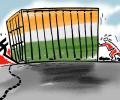
The Netherlands has emerged as India's fifth-largest export destination in 2021-22 (FY22), jumping from its 10th position a year ago. Exports to the fifth-largest economy in the European Union (EU) bolted 94 per cent to $12.5 billion in the financial year ended March 31. In FY22, the Netherlands surpassed Hong Kong, Singapore, the UK, Germany, and Nepal to become India's largest export destination in the EU. Germany, which was earlier India's top European export destination (eighth position), has now dropped two ranks to 10th place.
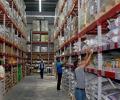
A few days ago, Reliance Retail surprised the market by acquiring the Campa brand from Delhi-based Pure Drinks Ltd for Rs 22 crore. A successful cola brand in the eighties, especially in North India, Campa Cola thrived when Coke exited India in the late seventies. When the Atlanta-based major returned and PepsiCo set base in India, it went down fighting.

'The correction could take two to three months and traders need to be careful.' 'For investors, this could be a good time to nibble in.'

From the enactment of the capital control Act to the recognition of the BSE as a stock exchange and the infamous Harshad Mehta scam, here are the 18 biggest events for stock markets from 1947 to 1993.

Equity indices gave up early gains to close in the red for the third session on the trot on Wednesday, weighed by selling in banking and finance counters amid inflationary pressures and persistent foreign fund outflows. A weak rupee and lacklustre global cues also kept buying sentiment in check, traders said. The 30-share BSE Sensex opened on a firm footing but failed to hold on the momentum, finishing 237.44 points or 0.41 per cent lower at 58,338.93. On similar lines, the broader NSE Nifty dipped 54.65 points or 0.31 per cent to close at 17,475.65.

TCS, HDFC Bank, Hindustan Unilever Limited (HUL), HDFC, Infosys, ITC, Kotak Mahindra Bank, ICICI Bank and SBI closed the week with losses.

172 firms participated in the final placement process.

'We have been told since we were children, that fairness is the only definition of beauty.'
Hindustan Unilever Ltd, the Indian unit of Anglo-Dutch consumer group Unilever Plc, reported an 18 per cent rise in quarterly profit, beating estimates, helped by a revival in consumer spending.

'If a stranger refuses to pet my Russian dog, what treatment can I expect for myself?'
The firm is on course to replace state-owned Gail India in the widely-followed index during the semi-annual review set for March.

Nine of the top 10 most valued companies witnessed a combined erosion of Rs 1,63,510.28 crore in market valuation last week, with Reliance Industries emerging as the biggest laggard.

Since 2016, Sebi has made many rules to prevent unauthorised trading by stockbrokers. Yet, one comes across dozens of cases of blatant overtrading in client accounts, every year, leading to massive losses to investors, observes Debashis Basu.

Hindustan Unilever Ltd on Friday said its Managing Director and Chief Executive Officer, Nitin Paranjpe, will take up a global role at parent Unilever and become the President, Home Care, of the FMCG giant.
Companies from Nestle and ITC to Hindustan Unilever and Patanjali have pledged to reduce use of unhealthy ingredients by five to 50 per cent

India will be the global host this year for World Environment Day, with the theme "Beat Plastic Pollution".

In the Sensex pack, Vedanta rallied 3.20 per cent, followed by Tata Steel, M&M, Tata Motors, ONGC, Hindustan Unilever, Maruti, Hero MotoCorp, HDFC, Bajaj Finance, SBI, HDFC Bank, HCL Tech, Coal India, Sun Pharma, Infosys, Reliance and Bharti Airtel, rising up to 2.69 per cent.
Six of the top-10 most valued domestic firms added Rs 91,629.38 crore cumulatively in market valuation last week, with ICICI Bank and Tata Consultancy Services clocking maximum gains. During the last week, which was holiday-truncated, the Sensex rallied 929.83 points or 2.10 per cent. The list of gainers had Reliance Industries Ltd (RIL), Tata Consultancy Services (TCS), Hindustan Unilever Ltd (HUL), Infosys, ICICI Bank and Bharti Airtel.

Falling for the sixth straight session, the BSE Sensex plunged 1,114.82 points or 2.96 per cent to close at 36,553.60 on Thursday, tracking a heavy selloff in global markets. The market capitalisation of BSE-listed companies stood at Rs 1,48,76,217.22 crore, down by Rs 11,31,815.5 crore in six sessions. Since September 16, the 30-share BSE benchmark index has fallen by 2,749.25 points.

India is Facebook's largest market with 250 million active monthly users. Along with Google, it has a 70 per cent share in the Rs 1,000 crore domestic digital ad market.

In May, Satpal Singh, who runs a dairy business with three buffaloes in Jewar, near Noida, was worried about the steep spike in input costs. Singh said dry fodder rates, which cost Rs 1,500-2000 per tractor trolley last year, were quoting at Rs 4,500-5,000. The price of other cattle feed ingredients (that include mustard meal and similar mixes) had also gone up from Rs 2,000 per quintal to Rs 3,100-3,200 per quintal.

Unilever, which derives 52-53 per cent of its $70-billion revenues from emerging markets, said it expected economic pressures to continue in 2013.
The market valuation of Tata Consultancy Services (TCS) jumped Rs 31,294.89 crore to Rs 8,25,149.40 crore while Reliance Industries Limited (RIL) added Rs 28,464.11 crore to take its market valuation to Rs 11,33,168.55 crore.

FMCG giant Unilever CEO Paul Polman and technology major Intel President Renee James on Tuesday met Prime Minister Narendra Modi as a slew of global corporatehonchos continue to line up to express their intention to invest in India.

Together with the firm's partly-paid shares that were issued in the recent rights issue and are traded separately, the company had a combined m-cap of Rs 13.5 lakh crore or over $181 billion.
'Private banks are well-placed to deliver good performance over the next six months.'

His transformational vision and strategic orientation played a crucial role in navigation of BMW Group India in a challenging business environment.

Advertising on television continued to show momentum in May despite the surge in Covid-19 infections and the temporary suspension of the Indian Premier League (IPL), a high-impact television property. The data shared by the Broadcast Audience Research Council of India (BARC) on Thursday shows that advertising volumes in May were up 64 per cent year-on-year. However, there was a marginal dip sequentially, that is, in comparison to April 2021, when advertising had touched a record high owing to the start of the summer season and the return of the IPL to India after being held in the United Arab Emirates in 2020.

FMCG major Hindustan Unilever on Wednesday said clear instructions need to be provided to enforcement authorities across states for the smooth transportation of essential items and functioning of supply chain amid the nationwide lockdown due to coronavirus outbreak.

We have not suffered such huge price shocks across so many basic commodities, at the same time, in decades. Has the inflationary impact of all this been factored into stock prices as yet, asks Debashis Basu.

Humble attitude, capacity to adapt to complex situations make Indian managers much sought-after.
