
The Board of Control for Cricket in India (BCCI) has pegged the base price for the combined IPL media rights at Rs 32,890 crore, nearly double the Rs 16,347 that Star Disney paid five years ago. Experts say that at these levels, there does not seem to be any profit-and-loss logic at play. It is more about what premium broadcasting companies are ready to spend for market share dominance. They point out that due to competition, they expect the final price to hit Rs 40,000-50,000 crore.

Ajit Mishra, vice president, Research, Religare Broking, answers your queries.

'I remain optimistic that 2021 will be better than 2020 because we have visibility of vaccinations this year.'

Move comes at a time when the $50-billion Unilever is looking to double its turnover in 10 years.

On its radar are Alberto-Culver and the personal care and laundry portfolios of Sara Lee, both recent acquisitions of Unilever.

In the Sensex pack, IndusInd Bank was the top gainer, soaring around 8 per cent, followed by Bajaj Finance, Axis Bank, PowerGrid, ONGC, ICICI Bank, Sun Pharma and M&M.

'We need to encourage the next generation of farmers to continue in farming'

To tackle the resultant inflation, the Indira Gandhi government had imposed price controls on manufactured products, including soaps and vanaspati, in 1973.

HUL's board approved the royalty of 3.15 per cent of turnover effective from February 2013.
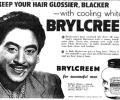
The iconic British brand acquired by Unilever in 2009 from American major Sara Lee, is attempting to get a new image with actors Sidharth Malhotra and Varun Dhawan.

Despite near-term headwinds of rising input costs and the possibility of lower demand for products as Covid dented rural & urban India, and impacts both production & consumption, analysts remain bullish on stocks of fast moving consumer goods (FMCG) companies and expect the index to relatively outperform its peers in the second half of fiscal 2021-22 (FY22). In the past one year, prices of key commodities such as groundnut oil, mustard oil, Vanaspati, soya oil, sunflower oil and palm oil have shot up in the range of 20 per cent to 60 per cent, data show. The FMCG sector macros in this backdrop, according to analysts, have further deteriorated because of weakness in consumer demand and likely margin pressure due to elevated crude oil, palm oil and global food prices.

Inbound M&A into India totals $9.86 billion this year, the highest in Asia.

Hindustan Unilever, the FMCG major, has posted disappointing numbers for the December quarter on weak consumer sentiment, specially in discretionary categories.

Irrespective of demonetisation and GST blues, IIM Lucknow has been able to successfully place their batch of 459 students.

Net sales were 12.48 per cent at Rs 6,367.14 crore.

Ajit Mishra, vice president, research, Religare Broking, answers your queries.

Higher prices are burdening household budgets and threatening the margins of leading manufacturers.

Companies which have been dropped from the list include Tata Motors, Hindustan Unilever, MRF, Glaxo SmithKline Consumer Healthcare, Pfizer, Dr Reddy's Labs, Glenmark Pharmaceuticals, HDFC and Kotak Mahindra Bank

The fast moving consumer goods major Hindustan Unilever on Monday said it exited from BPO firm Capgemini Business Services India by selling its remaining 49 per cent stake to IT consultancy firm Cap Gemini SA for an undisclosed sum.

I have a number of wonderful opportunities where I can leverage my global experience, says Manvinder Singh Banga, President, Unilever Plc.

Ajit Mishra, vice president, research, Religare Broking, answers your stockmarket queries.

First it was called content-led commerce. Then it came to be known as influencer-led commerce. And its latest iteration is creator economy. This evolution of the terminology for online personas impacting buying decisions -- through blogs, memes, bite-sized videos, and podcasts -- has happened over the past five to seven years.
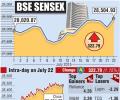
The BSE Sensex ended at 28,504, stronger by 322 points or 1%.

Will the warning shots from giants like Unilever and P&G break digital growth?

The country's top FMCG stocks, such as Hindustan Unilever, ITC, Nestl, Britannia, Godrej Consumer Products, and Dabur, among others, are currently trading at around 41x their trailing 12-month earnings, down from their peak P/E multiple of around 48x at the end of December 2018.

ICICI Bank's valuation tumbled Rs 6,883.44 crore to Rs 3,48,532.24 crore, taking the worst hit among the top-10 firms.

Over the past few months, FMCG companies redefined their "fairness" offerings to make them more inclusive in the backdrop of the global movement "BlackLivesMatter".

Nilanjan Roy spent 13 years with Bharti Airtel, prior to which he worked for 15 years with Unilever across their global operations.

The board meeting also saw Mehta, 57, being re-appointed as MD & CEO for a period of five years after the completion of his term in October
This stupendous success of Indian talent for Unilever globally is in no small measure on account of the strong foundations that were laid in the early years of the organisation, which is celebrating its 75th year in India.

The Indian IT services sector is scrambling to retain talent since digitisation-led transformation has increased the demand for a digitally skilled workforce. As a result, the pull for jobs for tech professionals is also coming from non-IT sectors, leading to higher attrition among IT companies. The average number of tech jobs from non-IT sectors has seen a 41 per cent uptick in March-May'21 versus March-May'19, according to data from Naukri.com.

The list includes Hindustan Unilever, Asian Paints and Bharti Airtel - firms that investors feel are most likely to come up with the next big innovation.

TCS, HDFC Bank, Infosys and Kotak Mahindra Bank were the other firms in the top-10 list which witnessed a rise in their market capitalisation. On the other hand, HUL, HDFC, Bharti Airtel, ITC and ICICI Bank finished with losses.
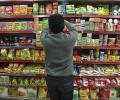
60-65 per cent of the FMCG industry's overall sales come from urban areas; 35-40 per cent from rural areas.

Markets

One of the oldest living brands in the country, Horlicks has been innovative in its approach, which helped it survive intense competition
India now has three companies in the global top 100 list in terms of market value: Reliance Industries (RIL) ranks 72, Tata Consultancy Services (TCS) is at 86 and HDFC Bank at 99.

The one-minute-long ad features a young Hindu girl, dressed in a white t-shirt, who chooses to get stained in Holi colours in order to protect her young Muslim friend who has to go to the nearby mosque to pray. The advertisement ends with its classic tagline, 'Daag achche hain' (stains are good).
In spite of a severe second wave of the coronavirus pandemic, and a widespread disruption in public life therefore, India's fast-moving consumer goods (FMGC) sector seems to have emerged as one of the most resilient segments of the economy. The early numbers and estimates for the April-June quarter indicate a steady recovery in FMCG players' business, which is now set to exceed the pre-pandemic level. Amid nationwide lockdowns because of the first Covid wave, FMCG revenues had been severely affected in mid-2020.

The industry began to upgrade its practices even before the NGO alleged Indian tea contained harmful pesticides.
