
Journalist Kuldip Nayar's autobiography recounts Pakistan founder Muhammad Ali Jinnah's despairing remark, "What have I done?", after witnessing the mass displacement during the 1947 Partition. The article also details Nayar's own grim experiences of the communal violence and human tragedy at the time, highlighting the immense upheaval that accompanied the division of the subcontinent, now commemorated as Partition Horrors Remembrance Day.

Had it been know that Jinnah suffered from tuberculosis and did not have much time to live, there is a possibility Partition could have been averted.

The RSS leader said post-Partition, people consciously decided to come to India from the other side, because they wanted to live in the land which is Bharat, where they can follow their religion without fear.

Imtiaz Ali's new film Main Vaapas Aaunga is set to delve into the enduring trauma of the 1947 Partition, continuing Bollywood's complex cinematic journey of depicting one of history's most violent and impactful events.

The NCERT Class 8 social science textbook has undergone significant revisions, including a tweaked narrative on the 1947 Partition, the inclusion of VD Savarkar's demand for Swaraj, and the removal of references to Adolf Hitler and Nazi ideology. These changes follow a Supreme Court intervention regarding controversial content on the judiciary.

US Ambassador to India, Sergio Gor, visited Amritsar's Golden Temple, Jallianwala Bagh, and Partition Museum, calling it a "memorable day." During his visit to the Golden Temple, he was welcomed by SGPC President Harjinder Singh Dhami, who also raised concerns about a controversial "Mr Singh" poster issued by the US Department of Homeland Security, which was later removed. Discussions also covered the Sikh community's contributions and issues in the US.
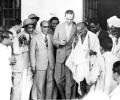
Historian Ramachandra Guha, at the launch of his book "Arguments with Gandhi", discussed Mahatma Gandhi's use of "Ram Rajya", acknowledging it could be "off-putting to Muslims" despite Gandhi's interfaith practice. Guha highlighted Gandhi's pluralistic approach, his efforts to protect minorities after Partition, and his contributions to the anti-untouchability campaign, often overlooked in contemporary discourse. The book also examines Gandhi's disagreements with figures like Ambedkar, Savarkar, Nehru, and Bhagat Singh.

Researchers at the Indian Institute of Technology (IIT), Guwahati, have developed an innovative nature-based wastewater treatment system utilising taro plants and an engineered "zig-zag flow" design. This low-energy, compact technology offers a promising solution for treating highly polluted swine wastewater in decentralised livestock farms, particularly in rural and resource-limited regions.

Several protesters, including CPI(M) MP John Brittas, were detained in Delhi as the Cockroach Janata Party's (CJP) protest demanding Chief Election Commissioner Gyanesh Kumar's resignation entered its second day on Sunday. Protesters alleged manhandling by security personnel, while police maintained extensive security arrangements, detaining thousands over the weekend.

From Azhar and Sanju to Thackeray and Swatantrya Veer Savarkar, Bollywood has often struggled to tell controversial true stories without turning their subjects into heroes.

The partition of Bengal in 1905 split more than a province, it touched people's hearts and awakened India's fight for freedom.

'It beggars belief that Saudi Arabia would deploy military force against India, a top partner and market.'

The moment it became clear that Maharashtra Chief Minister Devendra Fadnavis would launch the trailer of the Hindi film Prahaar: The Untold Story of Ujjwal Nikam it became obvious that the spectacle was more political than cinematic.

Coming so soon after Main Vaapas Aaunga, also a Partition era tale with a message of compassion, the flaws in Batwara 1947 are even more grating, observes Deepa Gahlot.

Karnataka home minister Priyank Kharge on Saturday rejected Bharatiya Janata Party leader B L Santhosh's claim that Rashtriya Swayamsevak Sangh workers had protected his (Kharge's) family from Razakars during Hyderabad state's integration with India, saying that his family and people of the region were protected by Sardar Vallabhbhai Patel, Jawaharlal Nehru and the Indian Army.

August 15 was the date of India's Independence, so why did transfer of power happen at the stroke of midnight August 14-15?

Examine the complete title chain to establish how the present owner acquired the property.

4 Rivers 6 Ranges finds its strongest moments in the moral conflict between non-violence, survival and the fight for freedom.

The question for the next 20 years is not whether India can become a $5 trillion or $10 trillion economy. Those are attractive targets, but the real question is whether India can create enough productive jobs, educate its children properly, make its cities liveable, and give hundreds of millions of people a substantially better life, asserts Ramesh Menon.

Held during the Beating Retreat ceremony at JCP Stadium, the event was titled Jai Ho -- A Musical Salute to the Bravehearts and came ahead of the release of filmmaker Imtiaz Ali's new film Main Vaapas Aaunga, a cross border drama which features music by Rahman.

Underlining that students are the "architects of India's future," President Droupadi Murmu on Friday said the government is taking comprehensive steps to reform public examinations to completely curb paper leaks and unfair means, making the system transparent, secure, and trustworthy.


West Bengal BJP president Samik Bhattacharya's comments recalling the role of non-Bengali communities during the 1946 communal riots and alleging past restrictions on Durga Puja have drawn sharp criticism from opposition parties, including the TMC, Congress, and CPI(M). Bhattacharya appealed for unity for peaceful Durga Puja celebrations, while opposition leaders accused him of divisive politics and distorting history.

Despite repeated demands over the years, the proposal to develop Khudiram Bose's cremation ground in Muzaffarpur into a martyr park has yet to see the light of day due to official apathy.

Vande Mataram, the national song that has stirred passions and political controversies for more than a century, received legal protection on Thursday with Parliament passing a bill making any insult to it a punishable offence, rekindling the long-running debate over its place in India's history and identity.

'Making a film -- good or bad -- is extremely hard work, involving hundreds of people and at least two years from idea to release. When the audience rejects it, it is known to push makers into depression. And then there is the danger of theatres stopping the screenings after week one if footfalls don't improve.'

In her address to the nation on the eve of the country's 80th Independence Day, the president stressed that just as government and society remain united to ensure national security, everyone must contribute through joint and concerted efforts to safeguard the present and future of students.
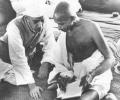
What Every Indian Must Know About the Quit India Movement.

'It was only after Aishwarya ran for 100 days and became a massive hit that Shah Rukh Khan signed Deepika Padukone.'


Discover the top OTT releases this week, featuring a compelling mix of Hindi dramas like Imtiaz Ali's Main Vaapas Aaunga and Manoj Bajpayee's Governor, alongside regional and international titles.

A R Rahman performed at the first-ever concert at the Attari-Wagah border post, using the platform to promote his soundtrack for Imtiaz Ali's Partition-era film Main Wapas Aaunga.

Before Shabana Azmi tries to outrival herself in the Batwara 1947 and Awarapan 2 clash, we look at other Bollywood stars whose films released on the same day.

'...depicting a love story is hard.'

The Indian History Congress (IHC) has criticized NCERT's new Partition Horrors Remembrance Day modules, alleging they spread falsehoods with communal intent by depicting the Congress as complicit in Partition while absolving the British.

As the FIFA World Cup concludes, we give you a curated list of the most impressive Hindi and English shows from 2026 to fill the OTT void.

Through his commitment to democratic norms, debate, dissent and constitutionalism, Jawaharlal Nehru helped ensure that parliamentary democracy took deep root in independent India. Utkarsh Mishra evaluates Nehru's 17 years as India's first prime minister, examining his role in nation-building, democratic institution-building, economic planning, scientific advancement and foreign policy.

Main Vaapas Aaunga transcends its flaws to deliver a profoundly moving plea for humanity, anchored by heartbreakingly brilliant performances, observes Sreeju Sudhakaran.
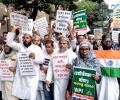
'Why are we deliberately taking apart an electoral system that has worked?' 'There is no answer to that, and there is no data and has never been any on the absurd slander that foreigners are voting here,' asserts Aakar Patel.
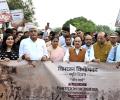
Instead, they argue, three actors shaped the division, "Jinnah, who demanded it; the Congress, which accepted it; and Mountbatten, who formalised and implemented it."
