
NIT Rourkela has secured a patent for a solar-powered electric vehicle (EV) charging microgrid designed to enhance efficiency, reliability, and sustainability. The technology integrates solar panels, the conventional grid, and a unique energy storage system combining batteries and supercapacitors, managed by an improved mixed droop technique. This innovation addresses challenges like power surges, renewable energy fluctuations, and battery degradation, with plans for future scaling and industry integration.

The BRICS New Delhi Declaration has endorsed India's proposals for a Working Group on Sports Technology and a Sports Goods Manufacturing Conclave, aiming to enhance cooperation and innovation among member nations in the sports sector.

rediffGURU Nayagam PP, a career coach and founder of EduJob360 guides students and working professionals on how to pick the right skills and career path.

Tata Power has partnered with Norway's Ocean Sun to introduce innovative membrane-based floating solar technology to India. A 300 kWp pilot project will be undertaken at Tata Power's Mulshi reservoir in Maharashtra to evaluate the technology's performance, reliability, and cost-effectiveness under Indian conditions. This collaboration aims to leverage India's significant floating solar potential and contribute to its renewable energy goals.
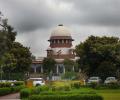
The Supreme Court has sought responses from the Maharashtra government and other parties regarding a plea to fell and transplant trees for a proposed National Centre of Excellence for Animation, Visual Effects, Gaming, Comics and Extended Reality in Mumbai's Film City. The project, deemed of "eminent national importance," requires the felling of 124 trees and transplanting 333, with compensatory afforestation planned. The court's intervention follows a previous order restricting tree felling in the Aarey colony.
Researchers at the Indian Institute of Technology Bombay have developed an innovative, low-cost device capable of screening for anaemia and sickle cell disease using just a single drop of blood. This point-of-care approach measures blood smear length to detect differences in viscosity, which are indicative of these conditions. The patented device is designed for cost-effective manufacturing and ease of use, making it ideal for areas with limited access to conventional diagnostic laboratories. The technology is currently licensed to an IIT Bombay startup and is moving towards regulatory approval.

Kerala Chief Minister V D Satheesan announced the state's vision to become a national hub for artificial intelligence and emerging technologies, coinciding with the launch of Naviq Technology by IBS Software Group. The state government is implementing initiatives like an AI-powered dashboard, a Global Job Watch Tower, and curriculum revisions to align with technological advancements and foster skill development in AI and semiconductor sectors.

Under the NEET-UG 2026 rules, students can complete physics, chemistry, biology as additional subjects through a recognised board such as NIOS after Class 12, says rediffGURU Radheshyam Zanwar, founder of Zanwar Classes.

Prof Rajeev Ahuja, Director of IIT Ropar, has been awarded the National Systems Gold Medal by the Systems Society of India. This prestigious award has previously been conferred upon eminent scientists like Dr A P J Abdul Kalam and Dr K Sivan, recognising significant contributions to Systems Science and Engineering.

Sikkim's Education Minister Raju Basnet highlighted the potential of computational mathematics and artificial intelligence in predicting landslides and weather risks at an international conference. Experts discussed the role of mathematics in AI, scientific discovery, and the need for interdisciplinary research and international cooperation to develop reliable AI systems for real-world challenges.
Educationists and policy experts at the Indian Statistical Institute (ISI) in Kolkata emphasised the critical need for developing a robust database, leveraging modern technology and artificial intelligence, to enhance effective policymaking. The two-day conclave, featuring prominent speakers like Prof S Mahendra Dev, highlighted the ongoing transformation in official statistics and the importance of public trust and research.

US President Donald Trump hosted a Diwali celebration at the Oval Office, attended by prominent Indian-American members of his administration, entrepreneurs, and top CEOs. The event featured the lighting of a diya and highlighted the growing cultural ties and contributions of the Indian-American community.
Experts highlight India's significant market potential for assistive technologies, estimated at Rs 75,000-95,000 crore by 2030. They advocate for a National Assistive Technology Policy to address current gaps in access and service delivery, fostering inclusion, independence, and economic participation for persons with disabilities and the elderly.

Russian President Vladimir Putin has proposed a new investment platform, based on the New Development Bank (NDB), to fund projects in trade, infrastructure, logistics, and technology across BRICS nations, emphasising that the grouping's expanding economic cooperation is not 'against anyone' but aims to advance members' national interests.
MI5 Director General Ken McCallum has issued a stark warning about artificial intelligence "supercharging" cybersecurity challenges and national security risks. He revealed that terrorists are already exploiting AI for attack capabilities and announced the launch of the AI Threat Assessment Centre (AITAC). McCallum also highlighted a fourfold increase in threats from hostile states like Russia, Iran, and China, urging public resilience.

Fintech firm PhonePe has signed a Memorandum of Understanding (MoU) with the Ministry of Electronics and Information Technology (MeitY) to integrate its enterprise data intelligence platform, PulsePro, into the PM GatiShakti framework. This collaboration aims to provide granular, hyperlocal insights for national infrastructure planning, economic analysis, and holistic urban and rural development.

The model from Kodumon, Kerala, walked the Victoria's Secret runway twice, sharing the stage with supermodels Gigi Hadid, Bella Hadid, Irina Shayk and Alessandra Ambrosio.

The Trump administration has ruled out a coordinated cyberattack, state-sponsored activity or involvement of a malign actor behind a series of recent technology outages, saying the incidents were separate disruptions caused by companies patching vulnerabilities and upgrading outdated systems.

Public shareholders in One 97 Communications (Paytm) have seen approximately 1.7 times returns on their investment over the past five years, driven by the fintech company's rising share price. This growth reflects a substantial increase in public ownership and institutional participation since its market debut, alongside improved financial performance and six consecutive quarters of profitability.
Hindustan Copper Limited CMD Anupam Misra spoke at the 85th CSIR Foundation Day, advocating for workplace safety, employee welfare, and scientific excellence. He stressed the importance of continuous learning, innovation, and bridging research with industrial applications to support Viksit Bharat 2047. CSIR-NML Director Dr. Sandip Ghosh Chowdhury also highlighted CSIR's legacy and its role in India's technological self-reliance.

Niti Aayog has launched the India Science and Technology (S&T) Scoreboard, highlighting state-wise performance in research publications and patent applications. Tamil Nadu, Uttar Pradesh, and Maharashtra are the top three states in research publications, with Tamil Nadu also leading in patent filings. The interactive platform aims to help states benchmark progress and formulate better S&T policies.
Researchers at NIT Rourkela have developed a novel material from discarded jackfruit peels, capable of removing over 90% of fluoride from contaminated water in about 10 minutes under laboratory conditions. This patented technology, which uses activated carbon modified with zirconium, offers a promising, cost-effective, and sustainable solution for decentralised water treatment, particularly in fluoride-affected regions of India.
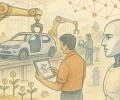
Indian companies showcased their quadruped robots at the Bengaluru Tech Summit, with General Autonomy's Param winning a race. The event highlighted India's growing capabilities in robotics and Physical AI, with robots designed for defence, industrial surveillance, and security applications.
Researchers at IIT-ISM Dhanbad have been granted an Indian patent for an electrochemical reactor designed to recover copper from industrial wastewater. This innovative technology offers an environmentally sustainable solution for resource recovery and wastewater treatment, particularly benefiting the mining and metallurgical sectors.

SAP has announced new programmes to train two million people in India with AI-ready skills by 2030, as part of its global initiative to upskill 12 million individuals worldwide. The company will collaborate with academic institutions, industry partners, and government bodies to expand access to AI, cloud, data, and enterprise technologies, leveraging India's significant role in the global tech workforce.
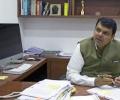
Maharashtra Chief Minister Devendra Fadnavis announced the state's ambition to become India's leader in quantum technology. The state plans to build a robust ecosystem, align with the National Quantum Mission, and train over 5,000 professionals, recognising AI, semiconductors, and quantum tech as key pillars for future growth and global competitiveness.

'Pranab-ji, had developed serious differences with P Chidambaram, and on one occasion, in 2010, I think, after expressing his frustration, he shocked me with the suggestion that perhaps it was time for a change at the top, which I understood as a hint of his long-held desire to become prime minister.'
The Union Culture Ministry is developing an AI-powered "visual library of stolen antiquities" to scientifically compare suspected illegally exported objects with original images. This initiative aims to provide timely evidence for intervention, halt auctions, and facilitate the repatriation of India's cultural heritage. The ministry also launched an AI-powered semantic search engine for Indian culture.

India is proposing the Data Empowerment and Protection Architecture (DEPA) for AI Training, a national framework designed to enable startups, researchers, and companies to train AI models using data from hospitals, banks, and public agencies while ensuring privacy and security. This initiative aims to unlock significant AI-driven value for India's GDP by 2030.

Union Finance Minister Nirmala Sitharaman called upon 'Gen Z' and 'Gen Alpha' to assume leadership, prioritise the nation, and contribute to its growth, rather than questioning what the country has done for them.

The Bajaj Group is building a healthcare business that aims to make money by keeping patients healthy rather than depending on hospital admissions.

India's central cyber security agency, I4C, has issued a critical warning to banks, NBFCs, and fintech firms regarding a surge in financially motivated cyberattacks leveraging artificial intelligence agents. These AI-driven attacks enable hackers to compromise systems and execute fraudulent transactions at machine speed, making investigations complex due to record deletion. The advisory, issued in collaboration with CERT-In, urges financial institutions to implement robust security measures, align with CERT-In's blueprint, and report incidents promptly to mitigate the escalating threat.
IIT-Kharagpur announced the establishment of India's first dedicated academic school for Physical Artificial Intelligence (AI), named the Benjamin Gupta School of Physical AI. Funded by a Rs 35 crore investment, including contributions from alumnus Vinod Gupta and an anonymous donor, the school will focus on developing intelligent systems that interact with the physical world, moving beyond conventional data-driven AI. Academic programmes are expected to commence soon, aiming to foster reliable and responsible AI technologies for various applications.

The Indian government has significantly simplified its visa regime, reducing main categories from 13 to nine and sub-categories from 49 to 23. This initiative also cuts down fields in visa application forms by 65-70 per cent, aiming to make the process more coherent and responsive for foreign nationals. Key changes include renaming the Tourist Visa to Visitor Visa, consolidating medical and student visas, and introducing a Production Investment Business Visa.
Drone technology company ideaForge Technology has successfully raised Rs 500 crore through a Qualified Institutional Placement (QIP). The funding, which saw strong interest from domestic and international institutional investors, will be used to accelerate innovation, expand its product portfolio into combat drones and autonomous systems, and strengthen its working capital to meet growing demand in defence, homeland security, and civil sectors.
Drone technology company ideaForge Technology has successfully raised Rs 500 crore through a Qualified Institutional Placement (QIP). The funding, which saw strong interest from domestic and international institutional investors, will be used to accelerate innovation, expand its product portfolio into combat drones and autonomous systems, and strengthen its working capital to meet growing demand in defence, homeland security, and civil sectors.

The BJP has strongly criticised Congress leader Rahul Gandhi for his comments on India's global standing and a Trump-Xi-Putin meeting, accusing him of being "clueless on geopolitics" and promoting "pro-Pakistan propaganda." BJP leaders highlighted India's strategic autonomy and engagement with various global forums, while questioning Gandhi's understanding of international diplomacy.

Union Home Minister Amit Shah announced that Kashmir is now free from India-born terrorists after 35 years, calling it a "major milestone". He emphasised strengthening proactive counter-terrorism policies, dismantling entire terrorist networks, and bringing fugitives to justice. Shah highlighted successful coordinated operations, including the PFI ban and the dismantling of the Shahzad Bhatti Network, advocating for an ecosystem approach with stronger Centre-state cooperation.
Atomic Energy Commission chairman Ajit Kumar Mohanty stated that India is on the verge of a significant technological transformation, driven by advancements in AI, quantum technologies, and other fields. Speaking at BIT Mesra's convocation, he emphasised the need for strong indigenous capabilities, skilled professionals, and interdisciplinary collaboration to achieve a developed India. Other speakers, including BIT Mesra's Chancellor and Vice Chancellor, echoed the importance of continuous learning and contributing to national progress.

Karnataka Chief Minister D K Shivakumar urged the Centre to expedite statutory clearances for the Mekedatu balancing reservoir project and withdraw recommendations of the Kasturirangan report on the Western Ghats. He also requested aligning CSR initiatives with state guidelines to upgrade 1,000 government schools. These demands were made during the inauguration of CoSMOS in Mysuru, attended by Prime Minister Narendra Modi, where Shivakumar also highlighted Karnataka's contributions to space technology and the importance of decentralising scientific infrastructure.
