
The delegation will now head to Ljubljana, capital of Slovenia, where they are expected to arrive on Sunday. Member of the delegation, Brijesh Chowta left earlier for Ljubljana.
India's measures announced against Pakistan on April 23 will remain effective, the sources said.
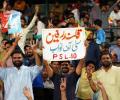
The remainder of PSL is set to be conducted without Hawkeye and DRS technologies as most of the technicians who handle that aspect are from India and are not expected to return.

The Pakistan Cricket Board (PCB) has decided to shift the remaining matches of the Pakistan Super League (PSL) to the UAE due to the ongoing military confrontation with India.

Amid Indian strikes, PCB in huddle to decide whether PSL should continue

External Affairs Minister S Jaishankar has said the recent confrontation between India and Pakistan was not just a mere conflict between two neighbours, but it was about combating terrorism, which will eventually come back to haunt the West.

India's recent missile strikes on nine terrorist locations in Pakistan and Pakistan-occupied Kashmir (PoK), including Bahawalpur, mark a significant escalation in the long-standing military tensions between the two nations. This article provides a historical overview of the Indo-Pak military confrontations, tracing their roots back to the 1947 war following India's independence and the partition of the sub-continent, and highlighting key conflicts such as the 1965 war, the 1971 Bangladesh Liberation War, the 1999 Kargil War, the 2016 Uri attack, and the 2019 Pulwama attack.
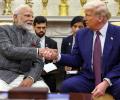
Trump went on to say that "I'm using trade to settle scores and to make peace."

The Federation of Western India Cine Employees (FWICE) urged Prime Minister Narendra Modi to stop the telecast of Sunday's India vs Pakistan Asia Cup match in Dubai.
Tharoor said that though India's case might not be at the top of the agenda for the US media, India can get its message across easily.
In the wake of the recent hostilities, both sides have moved from weapons to words, with India dispatching several delegations to visit more than 30 capitals across the world. A similar effort by Pakistan is set to start on Jun 2.

"India has consistently maintained a firm and uncompromising stance against terrorism in all its forms and manifestations. It will continue to do so," he said.
Future of Indo-Pak cricket at world events likely to dominate ICC annual conference

Pakistan have sealed their spot in the ICC Women's Cricket World Cup 2025 after a flawless campaign in the Qualifiers - but their participation has already stirred controversy.
Akhtar criticised vested interest groups in Pakistan, particularly the army, the political establishment and the extreme right wing, for blocking peace efforts between the two nations.

The sources said, without naming anyone, the party leadership sent a "clear message" during the meeting that this is not a time of airing individual views but for amplifying the party's stand.

The closed-door luncheon meeting came amid escalating tensions between Israel and Iran with Trump exploring Washington's possible involvement.

Manoj Tiwary said that India should boycott the much-talked-about fixture against their arch-rival Pakistan in the upcoming Asia Cup.

The Director Generals of Military Operations (DGMOs) of India and Pakistan on Monday deliberated on various aspects of the May 10 understanding reached between the two sides on cessation of hostilities.
The United Nations Secretary-General, Antonio Guterres, has called for de-escalation between India and Pakistan, expressing deep concern over rising tensions following a terrorist attack in Jammu and Kashmir. Guterres reiterated his condemnation of the attack and urged both sides to avoid a confrontation, which he described as catastrophic. The Secretary-General has also offered his good offices to support de-escalation efforts. The President of the UN General Assembly, Philemon Yang, has also expressed concern over the escalating violence and called for a resolution through diplomatic means. Meanwhile, Pakistan has denied any involvement in the attack and reiterated its commitment to fighting terrorism.
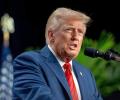
Trump said that leaders in India and Pakistan are "great leaders" and "they understood, and they agreed, and that all stopped".

Villagers living near the International Border and Line of Control in Jammu are on high alert following the recent terror attack in Pahalgam, preparing underground bunkers and accelerating crop harvesting. The incident has heightened security concerns despite a renewed ceasefire agreement between India and Pakistan in 2021. Residents are demanding swift action against the perpetrators and their handlers.

From the Sensex firms, Eternal, Mahindra & Mahindra, Maruti, Bajaj Finance, Tata Steel, Bharti Airtel, Bajaj Finserv, Asian Paints, Power Grid and State Bank of India were among the laggards. Kotak Mahindra Bank, Axis Bank, Titan, HCL Tech, Tata Motors, Infosys and Tata Consultancy Services were the gainers.

Iranian Foreign Minister Abbas Araghchi visited Pakistan and called on both India and Pakistan to "exercise restraint" amid rising tensions between the two countries following the Pahalgam terror attack. Araghchi, who is scheduled to travel to India on Thursday, emphasized the importance of easing tensions and preventing further escalation. During his talks with Pakistani officials, Araghchi and Pakistani Foreign Minister Bilawal Bhutto Zardari reaffirmed their commitment to strong Pakistan-Iran ties and agreed to boost cooperation in trade, energy, and connectivity. Both sides also exchanged views on the situation in South Asia and the US-Iran talks, while agreeing that complex regional issues could be resolved through diplomacy and negotiations.

A 30-minute blackout rehearsal was conducted in the Ferozepur Cantonment area in Punjab on Sunday evening amid heightened tension between India and Pakistan following the April 22 terror attack in Pahalgam. The drill, which took place from 9 pm to 9:30 pm, involved turning off all lights in the area after a siren went off. The exercise was part of a routine preparedness exercise to ensure the effectiveness of blackout procedures during potential war threats. Police and security forces have also increased vigilance in the area, with checkpoints set up at strategic locations and social media activities under surveillance.
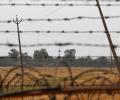
The UN Security Council could meet soon to discuss the situation between India and Pakistan, with the UNSC President expressing concern over rising tensions between the nuclear-armed neighbors. The President, Ambassador Evangelos Sekeris of Greece, said a meeting would provide an opportunity to express views and help diffuse tensions. Sekeris also condemned terrorism in all its forms, including the recent attack in Pahalgam, and called for de-escalation and dialogue between India and Pakistan.
The United States on Thursday said it supports India's right to defend itself and its fight against terrorism as US Defence Secretary Pete Hegseth dialled Defence Minister Rajnath Singh amid rising tensions between India and Pakistan over the Pahalgam terror attack.
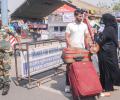
United States Charge d'Affaires Natalie Baker on Wednesday met Deputy Prime Minister and Foreign Minister Ishaq Dar as part of efforts to de-escalate tensions with India following the Pahalgam terror attack on April 22 in which 26 people were killed.
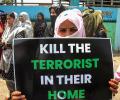
Amid rising tensions between India and Pakistan, the US has called on both countries "not to escalate" the conflict. Secretary of State Marco Rubio is expected to speak with the foreign ministers of Pakistan and India as early as today or tomorrow. The US State Department said Washington is reaching out to both India and Pakistan "regarding the Kashmir situation" and telling them "not to escalate the situation."

The Indian government has assured citizens that the country has ample food stocks to meet domestic demand, despite escalating tensions with Pakistan. The government has also warned traders against hoarding essential food items and creating artificial shortages, emphasizing that there is no need for panic buying. The food ministry detailed the country's current stock levels, showcasing a surplus over required buffer norms for rice, wheat, and pulses. Additionally, India holds substantial edible oil and sugar stocks, ensuring a strong food security position.
Amid escalating tensions between India and Pakistan, the US has said it will not get involved in the conflict, stressing that it is "fundamentally none of our business." While acknowledging concerns about a potential nuclear war, Vice President J D Vance emphasized that the US cannot control India and Pakistan, but can encourage them to de-escalate. The US has also reiterated its support for direct dialogue between the two countries and encouraged efforts to improve communications.
S&P Global Ratings on Thursday said the hostilities between India and Pakistan heighten risks to the credit metrics of both countries, and any escalation in clashes would put downward pressure on sovereign credit support.

US President Donald Trump has called for an end to the escalating tensions between India and Pakistan, expressing concern over the situation and offering to help resolve the conflict. Trump said he wants to see the two countries "stop" and work it out, adding that he has "good relationships" with both nations. He said he hopes the hostilities will end "very quickly", expressing sadness over the situation.
As tensions escalated between India and Pakistan following the deadly Pahalgam terror attack, Iran reached out to both countries, urging de-escalation. Saudi Arabia also expressed concern, with its foreign minister engaging in phone conversations with his Indian and Pakistani counterparts. Iran's foreign minister, Seyed Abbas Araghchi, emphasized the importance of bilateral relations, stating Tehran's willingness to "forge greater understanding" at this critical time. Saudi Arabia's foreign minister, Faisal bin Farhan Al Saud, spoke with both India's External Affairs Minister S Jaishankar and Pakistan's Foreign Minister Mohammad Ishaq Dar. Amidst heightened tensions, India has taken a series of punitive measures against Pakistan, including suspending the Indus Waters Treaty and downgrading diplomatic ties. Pakistan responded by shutting its airspace to Indian airliners and suspending all trade. Both countries exchanged warnings, with Pakistan emphasizing its commitment to "respond firmly to any aggression."
Foreign Secretary Vikram Misri, who faced trolling on social media in the wake of India and Pakistan reaching an understanding on May 10 to halt all military actions, has received support from veteran diplomat Nirupama Menon Rao, a body of Indian diplomats and a host of politicians from several parties.

A senior government official confirmed that after a meeting with other stakeholders, the decision has been taken and airlines and airport authorities have been informed about it.

Stock market benchmark indices Sensex and Nifty tumbled over 1 per cent each on Friday as tensions soared between India and Pakistan, fuelling fears of a wider conflict.

Saudi Arabia's Deputy Foreign Minister Adel al-Jubeir visited India on Thursday to meet with top Indian officials and discuss de-escalating tensions between India and Pakistan. Al-Jubeir's visit followed India's military strikes on terrorist infrastructure in Pakistan and Pakistan-occupied Kashmir. He met with External Affairs Minister S Jaishankar and discussed the situation, emphasizing India's commitment to combating terrorism.

External Affairs Minister S Jaishankar said the 2008 Mumbai terror attack marked a turning point in relations with Pakistan when Indians collectively felt that such behaviour from a neighbouring country could no longer be tolerated. Speaking at Charotar University of Science and Technology, Jaishankar acknowledged India's transformation under Prime Minister Narendra Modi over the last decade, while Pakistan has remained unchanged, continuing with what he termed as its "bad habits."

The reopening brought a sense of relief to students, teachers, and parents across the region.
