
Former CIA Analyst, Larry Johnson, said on Friday that US President Donald Trump asked US chairman of the joint chiefs of staff, Dan Caine, if they could use the nuclear weapons, but the latter denied.

US President Donald Trump and other top officials were evacuated unharmed from the annual dinner of the White House Correspondents' Association after a man armed with multiple weapons fired shots outside the hotel ballroom.

Former US President Donald Trump claimed victory over Iran, stating they agreed to never have a nuclear weapon and provided a 'significant prize' related to the Strait of Hormuz. He also suggested a change in Iranian leadership and acknowledged Pakistan's role in facilitating talks.

The big question is whether Trump is any longer in command of the situation. For all practical purposes, the war seems set to cascade as the US is preparing for a potential ground operation in Iran and threatens to destroy 'bridges next, then electric power plants', points out Ambassador M K Bhadrakumar.
President Donald Trump and other White House officials were evacuated from the White House Correspondents' Association dinner after a shooting outside the venue. A suspect has been apprehended, and Trump addressed the incident in a press conference.

US President Donald Trump stated the war with Iran would end 'soon,' citing significant military gains and minimal remaining targets. This contradicts earlier administration statements about an open-ended timeline.

US President Donald Trump on Thursday said that he has directed the country's Navy to take decisive action against any vessels attempting to lay mines in the strategically vital Strait of Hormuz amid escalating tension over the virtual control of the waterway between Tehran and Washington.

US President Donald Trump has renewed his call for a high-security ballroom at the White House, citing security concerns after a shooting incident near a journalists' dinner he attended.

Following a shooting incident near the White House Correspondents' Dinner, US lawmakers from both parties have condemned political violence and called for national unity. President Trump and other officials were evacuated unharmed.

This is the time for India to plan forward fully, with the goal of Atmanirbharata, and energy security. The Persian Gulf is no longer a reliable source, points out Rajeev Srinivasan.
Following a shooting incident near the White House Correspondents' Dinner, US lawmakers from both parties condemned political violence, with President Trump calling for national unity.

Trump was swiftly evacuated from the White House Correspondents' Dinner after a shooting incident near the venue.
Gunshots fired at the Washington Hilton during the White House Correspondents' Dinner led to the evacuation of President Donald Trump and other senior officials, causing chaos and a security lockdown.

President Donald Trump and other top White House officials were evacuated unharmed from the annual White House Correspondents' dinner after a gunman opened fire outside the hotel ballroom. The suspect, identified as Cole Tomas Allen, has been arrested. World leaders have expressed relief that Trump and other guests were unharmed, emphasising that political violence has no place in a democracy.

Amid rising tensions, Iran threatens retaliation after the United States confirms sinking its warship, IRIS Dena, in international waters, escalating conflict in the region.

United States President Donald Trump warned Iran of potential strikes on its infrastructure, including bridges and electric power plants, saying the US military 'hasn't even started destroying what's left in Iran'.

An Iranian delegation, led by Foreign Minister Abbas Araghchi, is expected to arrive in Islamabad for the second round of peace talks with the US, according to Pakistani media reports. This follows a phone call between Deputy Prime Minister Ishaq Dar and Araghchi regarding the US-Iran ceasefire and Pakistan's diplomatic efforts.

US President Donald Trump said on Wednesday that Washington is considering a "joint venture" with Iran to secure the Strait of Hormuz, following his announcement of a two-week ceasefire.
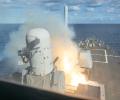
In a coordinated military operation, the United States and Israel launched airstrikes against Iran, escalating tensions amid stalled nuclear talks and claims of resumed nuclear activities, resulting in the death of Iran's supreme leader.

Satellite imagery and expert analysis suggest that a deadly explosion at a school in southern Iran last week was likely caused by a United States airstrike that also targeted a nearby compound linked to the Islamic Revolutionary Guard Corps (IRGC), according to media reports.

Top government sources in India have dismissed claims that the Indian Navy provided intelligence to the US regarding an Iranian frigate that was sunk by a US submarine.

Each time a deadline almost runs out, President Trump hands out a new one.
Araghchi remarked that US messaging currently echoes the Vietnam War-era "Five O'Clock Follies," suggesting a systematic misrepresentation of military progress.

Gold prices are expected to remain volatile next week as investors track geopolitical developments in the Middle East and key macroeconomic data releases that could shape the sentiment in the domestic market, analysts said.

Amidst escalating regional tensions, Sri Lanka is carefully considering its response after a second Iranian ship requested entry into its waters following a reported US submarine attack on an Iranian frigate near Galle.

US defence officials confirmed that an F-35 did perform an emergency landing after an Iranian surface-to-air missile (SAM) barrage, with the pilot safe and an investigation underway.

India granted emergency docking to an Iranian ship, IRIS Lavan, in Kochi due to technical issues, accommodating its crew amidst regional naval activity and tensions.

Egypt, Pakistan, Saudi Arabia and Turkey met in Islamabad in what analysts say is the formal opening of a new diplomatic formation that could reshape the post-war regional order. Their immediate goal is a ceasefire; their larger ambition is to ensure that neither Iran nor Israel emerges from this war in a dominant position. Pakistan's foreign minister then flew directly to Beijing and mooted a Chinese role as guarantor of any eventual agreement. Prem Panicker continues his must read daily blog on the Gulf War.
The modern war is about quality over quantity, points out Mihir S Sharma.

A senior US official has emphasised India's crucial role in maintaining peace and stability in the Indo-Pacific region and ensuring a balanced power dynamic in Asia, advocating for stronger defence ties between the two nations.

India and the US have signed a framework agreement for defence cooperation for the next 10 years, enhancing their partnership and aiming for regional stability.
Sri Lanka is deliberating appropriate action after a second Iranian ship sought entry to its territorial waters, following an attack on an Iranian frigate near the island nation. The government is focused on safeguarding lives and regional peace.

Sri Lanka has allowed a second Iranian ship, IRINS Bushehr, to dock at Trincomalee port after it reported engine failure, following the sinking of an Iranian frigate. The move comes amidst heightened regional tensions and a joint US-Israeli attack on Iran.

The vessel sank on March 4, 2026, approximately 20 nautical miles west of Galle, after reportedly being struck by a torpedo from a United States submarine.
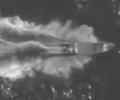
The United States on Wednesday struck an alleged drug vessel, an eighth such attack by the US, on the Pacific side of South America, according to Secretary of Defence Pete Hegseth, as reported by CBS News.

The 'rescue' operation occurred within kilometres of Iran's underground tunnel complex at Isfahan, assessed by the IAEA and US intelligence as holding a substantial portion of the country's 60 per cent enriched uranium stockpile. Retired senior US military officers have highlighted that the mission's footprint -- hundreds of special operators, multiple heavy-lift aircraft deep inside Iran -- appears outsized for recovering a single airman. Prem Panicker continues his must read blog on the Iran War.

The core issues to be settled -- access to Hormuz, Israel's aggression in Lebanon, the question of Iran's nuclear programme, sanctions relief and compensation -- are thorny enough to require weeks of patient negotiation. The most likely outcome of the opening sessions is that both sides take the measure of each other, establish what is and is not negotiable, and return home without having broken anything. That would count as progress.

The delegations from the US and Iran head to Islamabad on Friday, carrying a ceasefire that is already fraying, a Strait that is technically open and practically closed, and a negotiating agenda that would challenge even parties actually negotiating in good faith, which these groups are not. Prem Panicker continues his must read blog on the Iran War.

What we are watching is something different: A fog manufactured and maintained by the people who started the war, so that the question of why it was started never has to be answered, observes Prem Panicker in his must read blog on the war in the Middle East.

United States President Donald Trump on Friday said that in response to Islamic State's killing of two Americans in Syria, the US retaliated by striking the nation.
