
Airports across the country have been placed on operational alert to manage potential flight diversions, unscheduled landings and passenger facilitation requirements.

Modi's comments on underlining the importance of ensuring the safety of seafarers came against the backdrop of growing anger in India over the killing of the three Indian crew members in a US military attack on a merchant ship off the coast of Oman last week.

'You have seen the retrenchments by big corporates in the IT industry because they are not getting enough offers.' 'MSMEs in the manufacturing sector are really struggling. They do not know what to do. They are not able to predict what will happen tomorrow.'

Iranian Foreign Minister Seyyed Abbas Araghchi stated that the Strait of Hormuz remains open to all commercial vessels, requiring ships to coordinate with Iranian naval forces due to regional tensions and a US blockade.
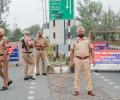
Pakistani authorities have arrested eleven social media activists in Punjab province for allegedly spreading provocative content against the army and inciting public unrest.

India's trade with West Asia saw a significant decline of over 28% in April, marking the second consecutive month of contraction. This downturn is attributed to severe shipping disruptions stemming from the ongoing conflict involving the US, Israel, and Iran, particularly impacting the crucial Strait of Hormuz waterway.

Ideology is dead; long live the numbers game that is being played with the sole intention of securing a two-third majority in the Lok Sabha for the NDA, observes Nilanjan Mukhopadhyay.

Former Central Command chief David H Petraeus suggests the US and Iran are likely to extend their ceasefire beyond the initial two-week period, citing willingness from both sides to continue negotiations.

India has voiced deep concern over a drone attack targeting the Barakah nuclear facility in the United Arab Emirates (UAE), calling it a dangerous escalation in the West Asia conflict.

Dhanush takes on the role of a desperate bank robber in the newly released trailer for Kara, a Vignesh Raja directorial set against the tumultuous economic backdrop of the 1991 Gulf War, promising an intense action drama.

Climate change has increased the likelihood of temperatures high enough to affect player performance at 97 of the 104 tournament matches.

Iran's Revolutionary Guard Corps (IRGC) has claimed responsibility for strikes on an American base, alleging it was in response to earlier aerial attacks near Bandar Abbas Airport. The incident follows reports of confrontations between Iranian and US forces in the Strait of Hormuz.

The airlines has been directed to pay a compensation of about Rs 1.4 lakh with nine per cent interest per annum from the date of travel, to former MLA and advocate Nizamudeen, the affected passenger.

An India-flagged LPG tanker, Jag Vikram, has successfully crossed the Strait of Hormuz following a temporary ceasefire between the United States and Iran, marking a significant development for India's energy security.
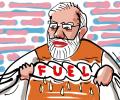
Following through announcements with enforcement of measures is key, as a run through recent Indian economic history shows, points out A K Bhattacharya.

The naval command underlined recent regional developments, which have now established a new reality in which extra-regional powers, led by Washington, DC, can no longer dictate terms or project unchecked influence in Iran's immediate maritime environment.

US Secretary of State Marco Rubio said that discussions aimed at halting the conflict with Iran have shown "some slight progress," while simultaneously echoing Washington's dissatisfaction with its NATO allies.

Markets face risk of a prolonged bear phase as oil shocks and geopolitical tensions test inflation, growth and investor confidence globally, points out Debashis Basu.

'You empower a man, you are not necessarily empowering a family, you are just empowering him.'

The Narcotics Control Bureau has busted an international drug syndicate involved in trafficking Captagon, seizing approximately 227.7 kg of the 'jihadi drug' worth Rs 182 crore.

Few leaders since Independence have been able to establish such a direct connection with the electorate or shape the national conversation to the extent that Narendra Modi has done over the past decade, points out former Union minister Dr Karan Singh.

Iran was the chance to arrange a concert of nations, to actually be a Vishwaguru. Instead, we are watching from the sidelines as Pakistan, the same country that is apparently still at war with Afghanistan, hosts talks between US-Israel and Iran. The irony is hard to miss, points out Amberish K Diwanji.

US Central Command (CENTCOM) released footage of a maritime operation where Marines boarded an Iranian-flagged vessel, the Touska, in the Gulf of Oman, leading to heightened tensions and threats of retaliation from Iran.

Donald Trump has issued a stern warning to Iran, stating that the US will take a tougher stance if a diplomatic resolution regarding its nuclear programme is not reached soon.

Tensions in West Asia have dramatically escalated as Israel launched targeted military operations against Iran, triggering widespread blasts across strategic cities, following earlier Iranian projectile attacks on Israel.

Sports Minister Mansukh Mandaviya said Yogasana would be pushed for inclusion in the future Olympic Games roster keeping in mind India's bid to host the 2036 Games.

'Neither do the Israelis. The two attacking parties have very little economic interest in Hormuz.'

Shah Rukh Khan's King has been forced to relocate its April shooting schedule from the Gulf to Mumbai.

Conflicting reports emerge regarding the effectiveness of the US blockade on Iranian ports, with Iran claiming successful transit of vessels and the US asserting complete maritime dominance.

The escalating crisis in West Asia and its impact on the global energy supply chain are expected to dominate deliberations at a two-day meeting of BRICS foreign ministers to be hosted by India.
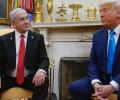
A media report suggests the US and Israel considered installing Mahmoud Ahmadinejad as Iran's president as part of regime change plans.

The Andhra Pradesh cabinet has recommended a series of measures, including 'No Vehicle Day,' online classes, and reduced foreign tours, to mitigate the economic impact of the Gulf war.

Former Pakistan captain and coach Haroon Rasheed says India's cricket dominance stems from strong grassroots structures and long-term planning, while Pakistan continues to suffer from instability, poor domestic systems and lack of continuity.

Despite a ceasefire agreement between Iran and the United States, the Strait of Hormuz remains blocked due to Iran's inability to locate and remove all the mines it laid during the conflict, hindering global oil and gas supplies.

Iranian Foreign Minister Abbas Araghchi is in India for a BRICS foreign ministers' meeting, where discussions will focus on the escalating crisis in West Asia and its impact on global energy supply chains.

India begin their 2026 Test season against Afghanistan with several selection questions to answer, including the No. 3 spot and Ravindra Jadeja's long-term successor, as they build towards key World Test Championship assignments.

Amid ongoing ceasefire negotiations, Israel is on high alert, fearing a potential surprise missile and drone attack from Iran targeting Gulf countries and Israel, according to intelligence officials.
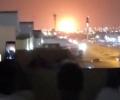
The official statement highlighted that these "blatant Iranian attacks" have also targeted members of the Gulf Cooperation Council (GCC) and several other Arab and Islamic nations.

One Indian oil tanker successfully crossed the Strait of Hormuz, while others turned back after Iran signalled the waterway's closure, amidst rising tensions and disruptions to global energy flows.

Srivastava warned that continued bombing of Iran by the US and Israel could severely undermine any prospects of reopening critical maritime routes through negotiation with Tehran.
