
Saudi Arabia defeated the United Arab Emirates 2-0 to win the 27th Gulf Cup, marking their first title in 22 years. Goals from Hammam Al Hammami and Feras Al Brikan secured the victory, with the Saudi team maintaining a clean sheet throughout the tournament.
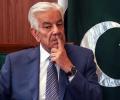
Pakistan's Defence Minister Khawaja Asif has reiterated the nation's unwavering commitment to the Makkah Joint Defence Agreement, underscoring its role in regional security following an attempted drone attack near the holy city of Mecca. The pact, signed by Pakistan, Turkiye, and Saudi Arabia, establishes a framework for collective deterrence against armed attacks.

Fighting in Yemen has intensified as Houthi rebels advance on strategic government-held areas like Marib and Taiz, putting pressure on Saudi Arabia to respond. The conflict is also linked to wider US-Iran tensions affecting shipping in the Strait of Hormuz, with former US President Trump commenting on the situation.

Non-resident Indians are increasingly investing in luxury homes in India, driven by geopolitical uncertainties, particularly the Iran war. This trend is observed across major cities like Mumbai, Bengaluru, and the National Capital Region, with developers noting a significant rise in NRI pre-sales. While some see it as a temporary shift, others believe India is becoming a stable, long-term investment destination for NRIs, especially those from West Asia.

India has strongly condemned a major attack on Saudi Arabia's King Khalid International Airport in Riyadh, which resulted in 12 deaths and over 300 injuries. New Delhi called the repeated targeting of civilians and infrastructure "completely unacceptable" and expressed solidarity with Saudi Arabia.

India has issued an advisory for its nationals in Saudi Arabia, urging them to stay indoors during aerial attacks and follow local instructions, amidst ongoing tensions and drone/missile attacks by Houthi rebels. The advisory follows an attack on Riyadh airport that killed one Indian national and injured several others, leading to flight suspensions by Indian carriers.

Seven Indian-flagged vessels, carrying 148 seafarers, are currently in the Persian Gulf region amidst escalating military tensions between the US and Iran. An Indian crew member was killed in a recent attack on a merchant ship, raising concerns about maritime safety and the fragile US-Iran peace deal.

Former US President Donald Trump stated that Gulf nations should reimburse the United States for safeguarding maritime traffic through the Strait of Hormuz, while asserting that recent American military interventions have profoundly crippled Iran's military capabilities, claiming Iran has been "brought back to the Stone Ages."

Five Indian nationals aboard a Kuwait-flagged tanker were safely shifted ashore after the vessel was struck by a projectile in the Strait of Hormuz, the Embassy of India in Oman said.

Donald Trump announced he is replacing the 20% reimbursement fee for securing the Strait of Hormuz with massive trade and investment deals from Gulf States into the United States, while maintaining a full blockade on Iranian ship traffic.

Air India has extended the cancellation of flights to Saudi Arabia until October 20, 2026, due to escalating tensions and Houthi attacks in the region. IndiGo and Akasa Air have also extended their flight suspensions to Saudi cities, with passengers offered full refunds.
India has advised its nationals in Saudi Arabia to 'remain calm and vigilant' due to an evolving security situation, including drone and missile attacks by Yemen's Iran-backed Houthi rebels, which recently resulted in the death of an Indian national and injuries to several others.

There are only bad and worse options before him, points out Aakar Patel.
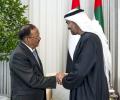
India is the only significant power that all parties trust, or at least do not distrust, notes former defence secretary Ajay Kumar.

Top defence officials from Saudi Arabia, Pakistan, and Turkiye have affirmed their commitment to the Makkah Defence Alliance, a trilateral pact aimed at collective security against threats, particularly from Yemen's Houthi rebels. The alliance, formed last month, considers an attack on one as an attack on all, and its members met in Riyadh to discuss intelligence sharing, military coordination, and capability integration to defend Saudi Arabia's security, sovereignty, and territorial integrity.

External Affairs Minister S Jaishankar, addressing the UN General Assembly, condemned the targeting of commercial shipping and seafarers in the Gulf, calling it "simply unacceptable." He also voiced deep concern over the "weaponisation of everything," which he stated has severe consequences for Global South nations, impacting peace, progress, and development globally. India urged restraint, de-escalation, and protection of civilians, while also highlighting the 4F crisis (food, fuel, fertiliser, finance) faced by developing countries.

A senior Pakistan Army general has confirmed the presence of Pakistani troops in Saudi Arabia, operating in "multiple capabilities" and "domains" amidst escalating Houthi attacks. This deployment is linked to the Makkah defence pact, a trilateral agreement with Turkiye and Saudi Arabia for collective deterrence, though specific details remain classified. Both Pakistan and Turkiye emphasise the defensive nature of their involvement.

Non-resident Indians (NRIs) in the Gulf region are increasingly purchasing term life insurance policies from India, driven by geopolitical uncertainties in West Asia and the significant cost advantages offered by Indian products, with the GCC region now contributing over half of the total NRI demand.

'It will take a long time to recover from the impact of this war.'

US President Donald Trump has expressed strong support for the India-Middle East-Europe Economic Corridor (IMEEC), citing the necessity to move energy infrastructure away from Iranian checkpoints following attacks in West Asia. He made these remarks during a multilateral meeting with the Gulf Cooperation Council at the UN General Assembly, emphasising the corridor's role in overcoming regional challenges.

Technopark-based space-tech startup HEX20 has been selected by the UAE Space Agency to develop a spacecraft for an asteroid probe, marking the first time an Indian private company has been chosen for a deep-space mission by the Gulf nation. HEX20 is contributing its expertise in developing the spacecraft bus and software for the Emirates Mission to the Asteroid Belt, which is scheduled for launch in March 2028 to study asteroid 269 Justitia.

Foreign Portfolio Investors (FPIs) have withdrawn Rs 44,166 crore from Indian equities in October, pushing the total outflows for the year past Rs 3 lakh crore, driven by elevated crude oil prices, a stronger US dollar, higher US bond yields, and the allure of AI-led rallies in North Asian markets.

India's coastline is now officially measured at 11,098.81 km, significantly higher than the earlier figure of 7,516.6 km used since the 1970s.

The United States military has developed fresh strike options against Iran that include the potential use of the GBU-43/B Massive Ordnance Air Blast (MOAB), widely known as the "mother of all bombs", to target energy infrastructure and nuclear sites, CNN reported, citing multiple US officials familiar with military planning discussions.

An Indian national was killed and ten others injured in an attack at King Khalid International Airport in Riyadh, Saudi Arabia. The Indian Embassy confirmed the death and ongoing medical care for the injured. India has strongly condemned the repeated attacks, which Saudi Arabia blames on Yemen's Houthis, and called for an immediate cessation of violence.


Navigating this geopolitical minefield requires a cold-blooded blend of immediate tactical pleading, structural domestic diversification, and aggressive collective resistance, suggests Ambassador Rajasekhar.

A question has been raised whether the Mecca Pact will have a negative impact on our doctrine that the Operation Sindoor has only been suspended and that it would be resumed if Pakistan engages in terrorism in the future. But the Mecca Pact only speaks of aggression, not defence against terrorism, points out Ambassador T P Sreenivasan.

India has issued an advisory for its nationals in Saudi Arabia to remain vigilant and stay indoors due to an escalating security situation involving Houthi attacks on civilian infrastructure, including airports. The advisory also cautions against circulating related news and confirms the normal functioning of Indian diplomatic missions. Flight services from India to Riyadh have been cancelled by Air India and Air India Express until October 10 following the attacks.

Not a single retail outlet ran dry. Every household that wanted a cylinder got one. India faced neither a 1991 moment nor a 2013 one. Macroeconomic stability held. This was not an accident, and it was not luck alone. It was the work of a government that chose to act as it had during the pandemic -- deliberately and gradually, building one measure upon another rather than reaching for a single dramatic lever, explains V Anantha Nageswaran, chief economic advisor to the Government of India.

Police in Kerala have arrested four individuals, including the driver, in connection with a fatal Mini Cooper crash that killed three youngsters. The driver, Suhail, was allegedly under the influence of alcohol and driving at high speed. The victims' family is demanding that murder charges be invoked against the accused, while the Excise Department has registered cases against three bars for serving alcohol to underage individuals.

A CNN reporter was denied entry to the White House and had her press pass seized on Saturday (local time), as the Trump administration began enforcing President Donald Trump's announced ban on CNN, MS NOW and Politico from the White House premises.

Indian tennis players Dhakshineswar Suresh and Sumit Nagal have made winning starts to their men's singles campaigns at the Asian Games, securing places in the pre-quarterfinals.

Pakistan and Turkiye have agreed to deploy military forces in Saudi Arabia as part of the Makkah Alliance for Defence. This decision follows recent attacks by Houthi rebels and aims to strengthen collective deterrence against threats to Saudi Arabia. The alliance, formed in August, considers an attack on one member as an attack on all.

External Affairs Minister S Jaishankar met US Secretary of State Marco Rubio on the sidelines of the UN General Assembly session in New York. India raised its concerns regarding the recently signed "Lindsey O. Graham Sanctioning Russia and Iran Act of 2026," which authorises tariffs on countries buying Russian oil and gas. Both leaders also discussed bilateral relations, regional priorities, and the situations in the Gulf and Ukraine.

A source familiar with US Treasury Secretary Scott Bessent's thinking revealed on Saturday that the department "intends to utilise all available authorities to make Iranian assets accessible for rebuilding and repair efforts related to any future damage inflicted by Iran."
A new report from Cambridge University Press & Assessment highlights the critical need for Indian policymakers to collaborate with teachers in developing AI education policies. The study emphasizes investing in teacher professional learning and involving educators and learners in the design and evaluation of AI tools to ensure policies are grounded in classroom realities and promote critical AI literacy.

The Reserve Bank of India's 25-basis point increase in the repo rate to 5.5 per cent is expected to exert pressure on housing affordability and buyer sentiment, particularly affecting interest rate-sensitive segments and potentially moderating sales during the crucial festival season.

India's men's and women's kabaddi teams marched into the Asian Games finals with comfortable semifinal wins over Thailand and Nepal respectively on Friday, keeping their hopes of defending their gold medals alive.

The Centre on Monday informed the Supreme Court that the Central Board of Secondary Examination has come up with a new policy for the evaluation of private students, who were affected by the cancellation of Class XII board examination in Gulf countries due to the recent Iran-US war.
