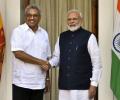
New Delhi is approaching Gota with an open mind, observes N Sathiya Moorthy.
Dominic Xavier offers his take on Gotabaya Rajapaksa's flight.

From Sri Lanka's most popular political family to its most despised -- going by the voices on the streets calling for the Rajapaksas' ouster -- what went wrong for the clan? Veteran Sri Lanka watcher N Sathiya Moorthy offers an insight.
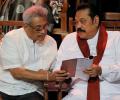
Gota has to decide if he could order elder brother Mahinda's arrest as the agent provocateur of Monday's violence. Then he has to prepare for an interim government, in which no one would now want to become a cabinet minister leave alone prime minister, explains N Sathiya Moorthy.
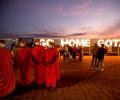
With Buddhist monks joining the protests against President Gotabaya Rajapaksa and his brother Prime Minister Mahinda Rajapaksa -- who have long counted on the support of the Buddhist clergy -- the daily demonstrations against Rajapaksa rule have taken a new turn.

Thousands of demonstrators have hit the streets since April 9, as the government ran out of money for vital imports; prices of essential commodities have skyrocketed and there are acute shortages in fuel, medicines and electricity supply.
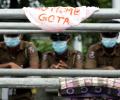
Sri Lankan police on Saturday fired tear gas and water cannons to disperse anti-government protestors here as the ongoing agitation demanding the resignation of President Gotabaya Rajapaksa over the worst economic crisis intensified as it entered its 50th day.
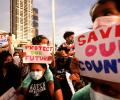
Glimpses of the continued protests in Sri Lanka against the worsening economic conditions and the Rajapaksas.
President Rajapaksa and Prime Minister Rajapaksa will transform Sri Lanka's political landscape after Thursday's electoral triumph, predicts N Sathiya Moorthy, veteran Colombo watcher.
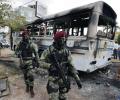
There have been reports that the Rajapaksa brothers, which dominates the current Sri Lankan government, are not on the same page. Gota, it is said, is not on the same wave length as his elder brother, Prime Minister Mahinda Rajapaksa, the former president, or Finance Minister Basil Rajapaksa, who is seen to be the family's strategist.

'Gotabaya will expect India to observe the red line.' 'He even dispensed with any gesture welcoming India as an interlocutor on the Tamil issue.' points out Ambassador M K Bhadrakumar.
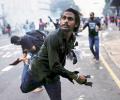
Thousands of protesters in Colombo broke through police barricades and stormed President Gotabaya Rajapaksa's official residence in the Sri Lankan capital, demanding he resign and accept responsibility for the island's gravest economic crisis that has caused thousands of Sri Lankans to live on one meal a day.
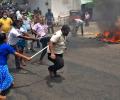
As angry protests calling for Sri Lankan President Gotabaya Rajapaksa's resignation grew, supporters of Sri Lanka's ruling party stormed a protest site in Colombo on Monday, attacking anti-government demonstrators and clashing with police.
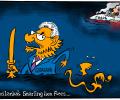
Uttam Ghosh offers his take on Gota's flight in the middle of the night.

The violence occurred following reports on Monday that Mahinda Rajapksa may offer to stand down as Prime Minister.

Glimpses of the protests in Colombo against the worsening economic crisis
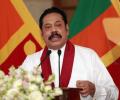
Sri Lankan Prime Minister Mahinda Rajapaksa resigned on Monday, hours after his supporters attacked anti-government protesters outside embattled President Gotabaya Rajapaksa's office, leaving at least 78 people injured and prompting authorities to impose a nationwide curfew and deploy army troops in the capital.
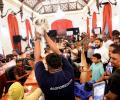
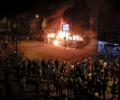
Mayhem prevails in Colombo after protesters enter President Gotabaya Rajapaksa's home; mysterious vandals set afire Prime Minister Ranil Wickremesinghe's private residence.
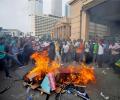
Angry protests in Colombo as Sri Lanka grapples with its worst ever economic crisis.
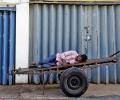
A nationwide strike, April 28, 2022, demanded the resignation of Sri Lanka President Gotabaya Rajapaksa and his cabinet, amid the country's economic crisis.
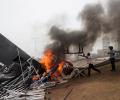
Earlier it was claimed that the MP committed suicide by shooting himself after he opened fire at two members of the group which had surrounded his vehicle on Monday.
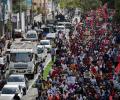
As the protests in Colombo against Sri Lankan President Gotabaya Rajapaksa continued on Tuesday, elsewhere on the island -- in southwestern Rambukkana -- police opened fire at anti-government protestors, killing at least one person and injuring 13 others.
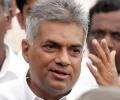
Sri Lankan Prime Minister Ranil Wickremesinghe was appointed as the country's acting president after President Gotabaya Rajapaksa fled to the Maldives on a military jet on Wednesday in the face of a public revolt against his government for mishandling the economy that has bankrupted the country.
Rajapaksa's decision was to ensure public security and maintain essential services so as to ensure a smooth functioning of the country, the presidential media division said.
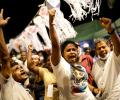
The anti-government protests near the presidential secretariat in Colombo resumed on Sunday after the authorities lifted the nation-wide curfew to celebrate the Vesak -- what we call Buddha Purnima in India -- festival.

The order was also imposed on parliamentarians Johnston Fernando, Pavithra Wanniarachchi, Sanjeewa Edirimanne, Kanchana Jayaratne, Rohitha Abeygunawardena, C B Ratnayake, Sampath Athukorala, Renuka Perera, Sanath Nishantha, Senior DIG Deshabandu Thennakoon among others.
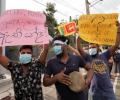
"No petrol, no gas, no milk powder, no electricity", "Go home Gota", placard carrying protestors were then seen walking towards the Rajapaksa private residence in Colombo at Pangiriwatte Lane.
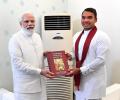
When the first flight arrived at Kushinagar airport on Wednesday, it was not Gota or Mahinda who stepped out, but another Rajapaksa. Namal Rajapaksa, Sri Lanka's minister of sports.

In a statement released on the eve of General Naravane's visit, the Indian high commission in Colombo described Sri Lanka as India's 'Priority One' partner.

Eyewitnesses said that a section of the protesters had remained for the all-night vigil.

The protesters left the main anti-government protest camp at Galle Face promenade where they had been staging sit-ins since April 9, branding it as the 'Gota go home village' (Rajapaksa go home).

Sri Lanka declared a state of emergency on Wednesday as angry protesters stormed the prime minister's office in Colombo, hours after president Gotabaya Rajapksa fled to the Maldives on a military jet, amid the country's worst economic crisis in decades.
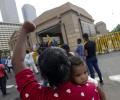
Thousands of student activists from the Inter University Students Federation blocked the main access road to the parliamentary complex since Thursday and carried on protests for almost 24 hours.

Sri Lanka's embattled President Gotabaya Rajapaksa, under immense pressure from the public and the Opposition to quit over the island nation's worst economic crisis, said on Thursday that the abolition of the executive presidency, a move that will curb his powers, will be considered by Parliament.
Ppolitical experts in Colombo said the ministers came under intense pressure from the public over the government's alleged "mishandling" of the economic crisis, triggered by the shortage in the foreign exchange reserve.

'India has given assistance that we required, otherwise we would not have been able to survive this far.'
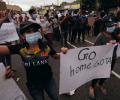
The government's poor handling of the economic crisis where people currently endure long hours of power outages and scarcity of essentials has angered the public which planned country-wide protests on Sunday.

The protests brought home the fact that the Sri Lankan public is in no mood for halfway measures, as voices against Rajapaksa 'family rule' and 'securitisation' of the civilian administration began sidestepping the more critical economic crisis, affecting the nation and afflicting the individual, observes Sri Lanka watcher N Sathiya Moorthy.

'No one in Sri Lanka could afford to stay at home, everyone came onto the street.'

The book, Gota's War, talks about India's "covert" role in LTTE's growth as the outfit undertook frequent terrorist strikes in the island.
 © 2026 Rediff.com - Advertise with us - Disclaimer - Privacy Policy - Sitemap - Feedback - About us - Terms of use - Grievances