
The Indo-Tibetan Border Police (ITBP) is undergoing a significant modernization drive, establishing drone platoons, developing a new 'Strike' course for Galwan-like situations, and constructing underground infrastructure along the Line of Actual Control. This strategic shift, announced by DG Shatrujeet Singh Kapoor, aims to counter China, identified as India's 'biggest adversary,' by embracing modern warfare techniques learned from recent global conflicts.

India has stated that the situation along the Line of Actual Control (LAC) is disturbed by Chinese forces diverging from established patrolling patterns, emphasising that maintaining peace and tranquillity is essential for bilateral relations. This statement follows remarks by the ITBP Director General about ongoing confrontations. Both nations are utilising diplomatic and military mechanisms to resolve issues and improve LAC understanding. Recent high-level talks between Prime Minister Narendra Modi and Chinese President Xi Jinping have focused on rebuilding trust and respect after the 2020 Galwan clashes, including a disengagement pact for Depsang and Demchok.

Their Supreme Sacrifice for the Motherland will Never be Forgotten.

External Affairs Minister S Jaishankar stated that the stability of the Line of Actual Control (LAC) is essential for normalising India-China relations, asserting that border disturbances will have consequences. He connected trade and investment growth to border peace and highlighted significant economic issues, including a severe trade imbalance and lack of market access for India in China. Jaishankar also referenced the 2020 Galwan clashes as a critical turning point, underscoring the profound impact of border tranquillity on the overall bilateral relationship.

'We are open to all countries around the world as long as we get a fair deal, as long as we are ensured continuity in the engagement.'

Indian and Chinese military officials have held corps commander-level talks in Arunachal Pradesh to review the Line of Actual Control (LAC) situation, following recent Special Representative discussions aimed at de-escalating border tensions and fostering bilateral ties.

'Therefore, Beijing comes to wrong conclusions.'

'Eastern Ladakh set the relationship back by about 10 steps. So far, especially since Galwan, we may have taken just 4 steps forward.'

The new title is likely inspired by the film's first track Maatrubhumi, sung by Arijit Singh.

Indian and Chinese armies held their first high-level commanders' flag talks in the Arunachal Pradesh sector, following Special Representatives dialogue. These talks, aimed at maintaining peace along the Line of Actual Control, occurred amidst reports of aggressive military posturing and just days before Chinese President Xi Jinping's visit to India for the BRICS summit.
Xi brought in asymmetrical power play by stating that India should have 'strategic cognition' and 'strategic judgement made on the basis of the stage of development the two countries are at'. This is a very nuanced way of asserting China's coercive diplomatic posture and reflects Beijing's penchant to unleash border instability at will, restrict rare earth metal exports, exert pressure on India at global and regional orders, asserts China expert Srikanth Kondapalli.

'The Chinese military cannot advance much in Ladakh, even if they want to.' 'Similarly, in Arunachal Pradesh, they can rename a village or two, intrude here or there, but cannot do much more realistically.'

The Chinese State-affiliated media outlet Global Times has accused the film of exaggeration and presenting a 'one-sided narrative' of the 2020 Galwan Valley clash between Indian and Chinese troops.

'Salman Khan wanted the song for the end-credits paying a homage to all the martyrs who featured in Battle Of Galwan.'

National Security Advisor Ajit Doval engaged in Special Representatives talks with Chinese Foreign Minister Wang Yi in Beijing, focusing on the India-China boundary question and enhancing bilateral relations. These crucial discussions precede Chinese President Xi Jinping's anticipated visit to New Delhi for the BRICS summit, aiming to address persistent border differences and stabilise ties strained by past conflicts like the Galwan Valley clash.

In recent years, China and Russia have pushed for de-dollarisation within BRICS, which India has resisted. One reason is that India does not want to hurt its relationship with the United States, and another is the fear of China controlling trade because the renminbi is considered the strongest currency in the bloc today.

Prime Minister Narendra Modi conveyed to Chinese President Xi Jinping that peace and tranquillity along the frontier remains an "essential" basis for the development of India-China relations, even as the two leaders welcomed "steady progress" in bilateral ties during their talks on the sidelines of the BRICS summit.
National security advisor Ajit Doval arrived in Beijing on Monday for a two-day visit to take part in the Special Representatives talks on the India-China boundary question with his Chinese counterpart and Foreign Minister Wang Yi.

Senior Congress leader Shashi Tharoor has articulated India's position on BRICS, advocating for it to be a "non-West, but not anti-West" platform, a stance he believes is crucial for India's national interest. He highlighted the prestige of hosting the BRICS summit, India's responsibility to represent the Global South, and the significance of bilateral meetings, particularly with China and Russia. Tharoor also addressed the strained India-China relations, citing border issues and trade leverage, and discussed the challenges within BRICS, including difficulties in achieving consensus on global issues and trade imbalances, while also considering the need for diversified international relations amidst unpredictable US sanctions.
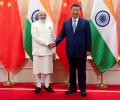
India has asserted that the state of its border with China directly impacts the broader bilateral relationship, emphasising the critical importance of maintaining peace and tranquillity along the Line of Actual Control (LAC). The Ministry of External Affairs also firmly rejected China's claims over Arunachal Pradesh, reiterating its status as an integral part of India. This stance was reiterated during a recent Working Mechanism for Consultation and Coordination meeting, where both sides agreed to continue using diplomatic and military channels to resolve outstanding issues.

India and China are in what experts call 'a cooperation-versus-competition situation'.

India on Tuesday conveyed to China the importance of maintaining peace and tranquility along the Line of Actual Control (LAC) for overall bilateral ties as national security advisor Ajit Doval held talks with Chinese Foreign Minister Wang Yi focusing on delimitation of the frontier and sustaining work on trans-boundary cooperation.

The swag of the military animals on Kartavya Path was unbeatable! Commanded by Captain Harshita Raghav, the double-humped camels, ponies, kites and dogs are soldiers providing active military duties.

National Security Adviser Ajit Doval held "constructive" talks with Chinese Foreign Minister Wang Yi in New Delhi, focusing on the normalisation of bilateral ties. The discussions reviewed recent developments and progress towards rebuilding trust after the eastern Ladakh border standoff. Both sides have implemented measures, including disengagement pacts and high-level meetings, to improve relations.

Salman Khan gives the paparazzi a piece of his mind for invading his privacy outside a hospital.

Chinese Foreign Minister Wang Yi met with National Security Advisor Ajit Doval in New Delhi, stressing the importance of respecting each other's "core interests" and implementing leaders' consensus for stable bilateral relations. Wang highlighted that India and China should view each other as partners, not rivals, and properly handle sensitive issues like the border dispute to foster cooperation and accelerate the modernisation of the Global South.
'Defence Minister Rajnath Singh is in direct touch with Salman Khan, and on his suggestion, Salman decided to drop not only the title but also several scathing references to China.'
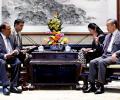
India and China are expected to discuss new confidence-building measures for durable peace and tranquillity along their contested border during Chinese Foreign Minister Wang Yi's two-day visit to India. The visit is seen as an effort to rebuild relations after the Galwan Valley clashes.

Russian President Vladimir Putin stated that Moscow would not interfere in the "delicate" bilateral relations between India and China, expressing confidence in their ability to resolve border disputes amicably. He also discussed Russia's independent partnerships with both nations, touched upon India-Pakistan ties, and highlighted ongoing and proposed defence cooperation with India, including the BrahMos missile and a potential Su-57 fighter jet project.

India and China held constructive talks on the situation along the Line of Actual Control (LAC) in eastern Ladakh, emphasising that maintaining border peace and tranquillity enabled progress in normalising overall relations.

Salman Khan's latest Instagram post features his pet dog and showcases his love for animals.

Defence Minister Rajnath Singh met his Chinese counterpart Admiral Dong Jun in Bishkek to discuss maintaining peace and tranquility along the Line of Actual Control (LAC) and broader regional security concerns.

'When we start describing somebody as an enemy that is the start of politics and emotion after which no business can take place.' 'We need to get out of this, allow Indian businessmen to do business with China.'
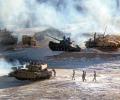
While tensions have eased at several friction points and mechanisms for managing the boundary have been reactivated, underlying differences persist. Disputes over naming practices in Arunachal Pradesh, continued infrastructure development on both sides, and unresolved questions regarding patrolling rights indicate that the structural gap remains, notes Dr Kumar.

Nayanthara has been confirmed to star alongside Salman Khan in Director Vamshi Paidipally's upcoming action film, produced by Dil Raju, marking her second venture into Bollywood after Jawan.

Before you watch the war drama Battle of Galwan on the big screen on April 17, unscramble this puzzle.

Prime Minister Narendra Modi is expected to visit Japan and China starting around August 29. The visit to China would be his first after the Ladakh border standoff.

'We won not (only) because we were able to carry out long-range precision strikes.' 'That is, of course, one of the reasons but we had better situational awareness about what's happening than Pakistan.'

China has honored an army regiment commander who was injured in the Galwan Valley border clash with Indian soldiers in 2020 as an outstanding member of the national advisory body - Chinese People's Political Consultative Conference (CPPCC). Qi Fabao, who was made the torchbearer for the Winter Olympics in 2022, was among the 33 individuals honored with the 2024 Outstanding Performance Award for CPPCC Members. The incident, which resulted in the deaths of 20 Indian soldiers, led to a freeze in relations between the two countries for over four years. Ties were restored after a meeting between Prime Minister Narendra Modi and President Xi Jinping in October 2023.

Apple CEO Tim Cook's strategic pivot, from initial rejections to local partnerships and leveraging government policies like PLI, transformed India into a major iPhone manufacturing and export hub, now accounting for one in every four iPhones assembled globally.
