
The Delhi Police has taken decisive action, directing multiple social media platforms to remove offensive and abusive posts targeting Prime Minister Narendra Modi.

India has highlighted 13 key outcomes from the recent Shanghai Cooperation Organisation (SCO) summit, focusing on enhanced cooperation in security, counter-terrorism, and addressing transnational threats. These outcomes include the establishment of a Universal Centre for Countering Challenges and Threats to Security, a strong stance against state-sponsored terrorism, and agreements on narcotics control, climate change, and artificial intelligence, reinforcing India's engagement in the Eurasian region.

Prime Minister Narendra Modi has announced comprehensive reforms in the education system to combat paper leaks, following the passage of a new anti-paper leak law. He asserted that there would be no leniency for those involved in examination irregularities, highlighting the government's commitment to ensuring fair opportunities for students.

Senior Congress leader Shashi Tharoor has articulated India's position on BRICS, advocating for it to be a "non-West, but not anti-West" platform, a stance he believes is crucial for India's national interest. He highlighted the prestige of hosting the BRICS summit, India's responsibility to represent the Global South, and the significance of bilateral meetings, particularly with China and Russia. Tharoor also addressed the strained India-China relations, citing border issues and trade leverage, and discussed the challenges within BRICS, including difficulties in achieving consensus on global issues and trade imbalances, while also considering the need for diversified international relations amidst unpredictable US sanctions.

Prime Minister Narendra Modi, in bilateral talks with Chinese President Xi Jinping, emphasized that both nations must show sensitivity to each other's core issues and be guided by mutual respect, sensitivity, and interest. Modi highlighted the critical importance of peace and tranquillity along the Line of Actual Control for the development of India-China relations, while also addressing concerns regarding Taiwan and Tibet.

Congress leader Rahul Gandhi on Monday dubbed Prime Minister Narendra Modi as the "most anti-youth" PM in the country's history as he accused the government of not just failing the youth but also pouncing on them.

Chinese Foreign Minister Wang Yi stated that President Xi Jinping and Prime Minister Narendra Modi reached a crucial consensus during the BRICS summit, agreeing that China and India should be partners, not rivals. The leaders pledged to maintain peace and tranquility in border areas, deepen cooperation, and support each other in multilateral forums, aiming to strengthen the Global South and promote a multipolar world order.

Uttar Pradesh Chief Minister Yogi Adityanath has accused anti-India forces of using social media to spread rumours and mislead society, calling it a 'medium' for conspiracies against the country. He also criticised the alleged historical neglect of Indian revolutionaries in favour of one political family.

Hindutva influencer Swatantra Bhardwaj, known for provocative social media posts and claims of political proximity, has been detained in Bulandshahr. His detention follows a viral video where he boasted about assaulting a Jantar Mantar protester's father, leaving him with severe injuries, and claiming to have avoided jail due to political connections. Police acted after public outcry and protests.
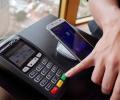
The opposition has intensified its criticism of the government's decision to impose a 0.4 per cent Merchant Discount Rate (MDR) on UPI transactions above Rs 2,000, effective October 15. Leaders like Rahul Gandhi and Jairam Ramesh allege the move is a result of US pressure, particularly from American card companies, and demand an immediate rollback, warning of increased costs for consumers.

The Congress party has accused the Indian government of imposing new charges on UPI transactions due to pressure from the United States, specifically to benefit American card companies. The opposition party demanded the withdrawal of the decision, calling it "anti-national" and alleging it fills the coffers of US firms while burdening Indian citizens. The government, however, clarified that the Merchant Discount Rate (MDR) charges apply only to commercial transactions above Rs 2,000 and are not levied on consumers, a stance supported by the BJP which accused Congress of spreading "fake news".

Union Education Minister Dharmendra Pradhan has resigned from his post, stating he sent his resignation to Prime Minister Narendra Modi to prevent 'anti-national forces' from exploiting the situation arising from widespread protests over examination irregularities.

Xi's bilateral meeting with Modi was substantial and readouts from both sides gave indications of rapprochement, if not a reset of bilateral relations between India and China, notes Ambassador T P Sreenivasan.

The Indian government has officially declared the Pakistan-based Shahzad Bhatti Network (SBN) a terrorist organisation under the Unlawful Activities (Prevention) Act (UAPA). This action, announced by Union Home Minister Amit Shah, targets a group involved in cross-border smuggling of arms, explosives, and narcotics, as well as inciting youth into terrorism and spreading hateful digital content. SBN is accused of threatening India's democratic structure, communal harmony, and internal security.

After six days of stalemate, a discussion on the anti-paper leak bill began on Tuesday in Lok Sabha with the government describing it as a reaffirmation of ruling dispensation's commitment to safeguard the welfare of students but opposition hit back over the lathi-charge on protesters, saying every blow on them hurt the government's prestige more than the backs of the youth.

Samajwadi Party MP Ajendra Singh Lodhi has been booked in Mahoba for allegedly assaulting a public official and promoting hate speech after referring to Prime Minister Narendra Modi as 'anti-national'. The BJP is staging protests across Uttar Pradesh in response to the remarks.

Prime Minister Narendra Modi's 'dimagi Naxal' (intellectual Naxal) remark, made during his Independence Day address, has ignited a significant political debate, with Union Minister Kiren Rijiju clarifying that the comment targets those who support Maoists and separatists, not opposition leaders, while opposition figures like P Chidambaram have embraced the label in defiance.
The opposition has strongly criticised the government's decision to introduce a 0.4% Merchant Discount Rate (MDR) on UPI transactions above Rs 2,000 for merchants, effective October 15. They allege the move is a result of US pressure and will lead to increased commodity prices, calling it a "betrayal" of the common man. The government, however, clarifies that customers will not be charged, and the MDR applies only to merchants for larger transactions.
Left parties have strongly condemned the government's decision to impose charges on UPI payments exceeding Rs 2,000, with CPI General Secretary D Raja alleging the move was made under "US pressure" to favour foreign payment companies. Both CPI and All India Forward Bloc demand the withdrawal of this "anti-people decision," arguing it burdens consumers and merchants while undermining UPI's role as a public digital infrastructure. They highlight concerns that the charges weaken India's digital sovereignty and serve commercial interests of foreign corporations like Visa and Mastercard.

AICC general secretary K C Venugopal announced that the Congress would not withdraw its candidate Milan Pradhan from the Nandigram Assembly bypoll in West Bengal, despite his recent arrest. Pradhan was apprehended in connection with a 2007 anti-land acquisition movement case, shortly after the Trinamool Congress extended its support to him. Venugopal alleged political pressure and questioned the Election Commission's silence, vowing to elevate the issue to a national level.

The Indian government has introduced a 0.4% fee on UPI transactions above Rs 2,000 for merchants, effective October 15, sparking strong opposition from political parties and traders. Despite accusations of foreign influence and demands for a rollback, the finance ministry and top functionaries have stated there will be no reversal, citing the need for a self-sustaining digital payments ecosystem.

New Delhi was told it had given something up; in reality it had stopped talking about it, notes Dr Abhishek Puri.

A parliamentary standing committee on Information Technology has demanded a personal apology from Meta CEO Mark Zuckerberg for the temporary removal of Prime Minister Narendra Modi's video from Facebook. The committee also discussed potential legal action and the withdrawal of safe harbour protection, while questioning Meta officials on algorithmic bias and accountability.

The BRICS New Delhi Declaration condemned the April 2025 terror attack in Pahalgam, Jammu and Kashmir, advocating for zero tolerance towards state-sponsored cross-border terrorism. The declaration also addressed global terror, illegal financial flows, cyber fraud, and emphasised accountability for those involved in terror activities.

Aam Aadmi Party convenor Arvind Kejriwal has strongly criticised the Central government's crackdown on Cockroach Janta Party (CJP) protesters, comparing the police brutality to that of the British Raj. He announced the launch of a helpline to provide medical and legal aid to injured protesters and their families.

Dharmendra Pradhan's resignation is significant because it punctures, however slightly, the perception that the Modi government never retreats under pressure. Every long-serving government eventually reaches a point where every institutional failure is identified with the leader himself. Removing the minister may have prevented that political burden from falling directly on Modi. Whether it also resolves the underlying crisis is another matter, notes Ramesh Menon.

The Union Cabinet has approved a draft bill to introduce stricter punishments for examination paper leaks, following Prime Minister Narendra Modi's announcement. This new legislation builds upon the Public Examinations (Prevention of Unfair Means) Act, 2024, aiming to curb cheating in public examinations conducted by various central agencies amidst recent controversies like the NEET and NET paper leaks.

Opposition leaders have sharply criticised Prime Minister Narendra Modi's appeal to 'forgive' young protesters who used abusive language, accusing him of deflecting from issues of alleged police action and a 'broken education system'.

President Donald Trump is a big fan of India and Prime Minister Narendra Modi, US Secretary of State Marco Rubio said on Monday, seeking to dismiss allegations of rising anti-India rhetoric in the US.

Parliament on Thursday passed a bill to amend the anti-paper leak law to introduce stricter punishments, with the government expressing its commitment to go the extra mile to safeguard the interests of students, who are the country's future.

Prime Minister Narendra Modi will launch a 100-week nationwide campaign, 'Nasha Mukta Yuva for Viksit Bharat Sankalp Abhiyaan', on August 2 to combat rising drug abuse in India. Led by MY Bharat youth, the initiative will involve various activities and aims to unite over one crore young people in a pledge against substance abuse, addressing alarming statistics from the Narcotics Control Bureau.

The article details instances where the Narendra Modi government has yielded to public and political pressure since 2014, leading to policy reversals and ministerial resignations. It highlights the recent resignation of Education Minister Dharmendra Pradhan over the NEET paper leak, alongside past events like the withdrawal of land acquisition amendments, M.J. Akbar's resignation, the repeal of farm laws, and other policy retreats.

BJP President Nitin Nabin has summoned three Delhi MPs, Kamaljeet Sehrawat, Ramvir Singh Bidhuri, and Yogender Chandolia, expressing strong displeasure over their controversial visit to the residence of former Congress MP Sajjan Kumar, who was convicted in the 1984 anti-Sikh riots case. This action comes amidst strong condemnation from other BJP leaders and highlights the ongoing political sensitivity surrounding the 1984 anti-Sikh riots.

'If you listen to a rowdy in a class, he will keep on bullying you.' 'India can say do whatever you want. We will not compromise on anything.'

'The Chinese military cannot advance much in Ladakh, even if they want to.' 'Similarly, in Arunachal Pradesh, they can rename a village or two, intrude here or there, but cannot do much more realistically.'

On camera, youngsters gave their names, where they'd come from, where they were studying or working - and then proceeded to criticize Modi. On camera, they held up posters mocking Modi, points out Jyoti Punwani.

Prime Minister Narendra Modi addressed the Indonesian parliament, emphasising India's commitment to development over expansionism and advocating for a free, open, and inclusive Indo-Pacific. He highlighted the strong historical ties between India and Indonesia, calling for enhanced cooperation in various sectors, including defence, technology, and counter-terrorism, amidst growing concerns over regional security.

Congress leader Priyanka Gandhi criticised Prime Minister Narendra Modi, stating he needs to change his "dil ka angle" (heart's perspective) rather than camera angles to connect with Gen Z, following his Instagram outreach to student protesters. She also condemned the government's handling of student protests and the widespread issue of paper leaks.

President Droupadi Murmu has given her assent to the Public Examinations (Prevention of Unfair Means) Amendment Bill, 2026, which introduces fast-track courts and significantly enhances punishment for those involved in public examination question paper leaks.

For India, the goal is not simply to host another grand diplomatic gathering. It is to prove that a diverse coalition of emerging powers can still deliver.
