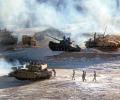
India's national security strategy needs to be revised periodically since the global and regional geopolitical situation is dynamic, points out Commodore Venugopal Menon (retd).
'The world is silent because your rhetoric is dishonest and rings hollow,' says former RAW officer Tilak Devasher.

'It could have moved from the use of small arms to artillery fire.' 'Anything could have happened like what happens on the LoC.'

'China, much more than Pakistan, is a credible potential adversary with the ability to hurt our interests.' 'It must figure higher in our national security concerns,' says Vice Admiral Premvir Das (retd).

Ambassador Natarajan Krishnan and Ambassador Shankar Bajpai helped shape Indian foreign policy at a glorious, but difficult, time in history, recalls Ambassador T P Sreenivasan.

Naresh Chandra -- distinguished civil servant and diplomat -- passed into the ages on Sunday, July 9. Ambassador T P Sreenivasan salutes a patriot like none other.<

'All the benefits of democracy will flow to Kashmir now. This has not happened in the last 70 years.'

'Such incidents can only exacerbate the sense of alienation among the Kashmiri people, in particular the Kashmiri youth.' 'It is as if for some of our political figures and misguided youth, Kashmir is a piece of real estate over which we assert our claim, but the people there are dispensable,' notes former foreign secretary Shyam Saran.
If India takes care of the economic investments, then it will open up the space to dampen or circumvent some of the political burdens

'Amid the frequent cries that the defence budget falls short of what is needed, we tend to ignore the reality that any enhancement in the allocation is just not possible, and the armed forces have no option but to operate within this constraint.' 'So, unless deadwood -- especially manpower -- is identified and eliminated, we simply cannot have a modern military of the type that India needs,' says Vice Admiral Premvir Das (retd).
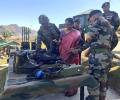
'We must look at the entire question of military preparedness anew, taking into account the new realities,' says Vice Admiral Premvir Das (retd).

'Our equations with China require engagement and not confrontation; its interfaces with Pakistan and with some other South Asian neighbours also add to the complexities,' says Vice Admiral Premvir Das (retd).
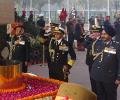
''At this stage we are closer to military confrontation than at any time since 1971.' 'Given the known positions of the two governments, it will not be surprising if this happens sooner rather than later,' says Vice Admiral Premvir Das (retd).

'The Andaman and Nicobar Islands are an asset that any country aspiring to become a major power would give anything to own.' 'It is disappointing that India has not capitalised on this potential,' says Vice Admiral Premvir Das (retd).

Ajit Doval is now India's all-powerful security boss. This concentration of power disrupts our layered security system. Will it not weaken whatever remains of the power and authority of the home, defence and finance ministers? asks Shekhar Gupta.
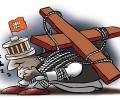
'Poor home work, and a subsequent loss of nerve.' 'This sums up the Modi government's current travails, the stall in key sectors, fading momentum, irritability,' points out Shekhar Gupta.

'Cooperation at sea involves not just ships going out together and carrying out exercises over a couple of days, but understanding the whys and the wherefores,' points out Vice Admiral Premvir Das (retd).
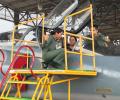
'Make in India is one of the priorities identified by Minister Sitharaman and this is our great weakness,' warns Vice Admiral Premvir Das.
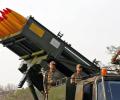
'Even though an India-China military conflict scenario seems unlikely, its possibility gets enhanced if our capabilities are seen to be inadequate by the adversary,' warns Vice Admiral Premvir Das (retd).
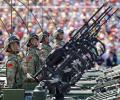
'Whether it is the One Belt One Road project or building relationships in the Indian Ocean Region -- supposedly our area of concern -- the Chinese are seriously outpacing us,' points out Vice-Admiral Premvir Das (retd).

'There is no holistic picture of our own goals and objectives.' 'For some inexplicable reason, the decision makers find it best to listen to their inner souls in dealing with these issues rather devising a carefully thought-out, structured plan,' says Vice Admiral Premvir Das (retd).

'The intrusion in Chumar, during and beyond the Chinese president's visit, is unprecedented and has qualitatively changed the tone of the India-China relationship,' says Jayadeva Ranade, a member of the National Security Advisory Board.

Rubbishing reports that China has occupied Indian territory in Ladakh, Defence Minister A K Antony on Friday asserted that there is no question of ceding any part of the country and all steps are being taken to safeguard national security.
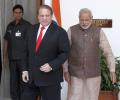
'Instead of isolation, India should respond militarily to every act of terrorism assessed to have come from across the border, unilaterally declare Pakistan a State that supports terrorism and cease all economic dealings with it.'
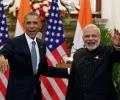
'At a time when the entire India-US relationship needs to be defined by President Trump and Prime Minister Modi, a fresh look at the liability issue has become urgent,' says Ambassador T P Sreenivasan, former Governor for India at the IAEA.

'For India, the phase of pure restraint has passed.' 'Restraint has failed to reform Pakistan or rein in terrorism,' says Vivek Gumaste.
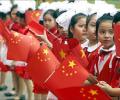
Chinese leaders may well respond to challenges with heightened rhetoric.

'It will make good sense for military men on that side of the table to be confronted by our own.'

'There is no danger of the suggestion being accepted in a hurry, as we are still discussing the design of an IFS tie and trainee officers are still taught how to handle forks and knives.'
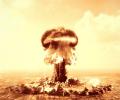
The new government must initiate a comprehensive review of India's nuclear weapons doctrine and posture. Ajai Shukla explains
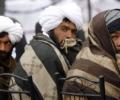
We should be prepared for a phase of increased tensions in India-Pakistan relationship thanks to the evolving situation in Afghanistan, says Shyam Saran.

A disparate global network of violent fundamentalist Islamic groups threatens India's eastern flank as much as the north and west with a real possibility of these spilling over into our borders, says Shyam Saran.

If the aim is to become a player with some strategic space of its own, not just in the Indian Ocean region but also in the adjoining region, then greater interaction with China is desirable, even necessary.
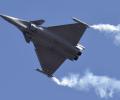
Every demand of the armed forces remains essentially anchored to 1964 and its fulfilment or otherwise largely a function of money availability

'India's military posture has become significantly stronger than China's on the 3,500-kilometre Line of Actual Control.' 'This is enhancing confrontation between the two sides,' points out Ajai Shukla.

To be at Kakkathuruthu when the sun sets, according to National Geographic, is a surreal experience. Ambassador T P Sreenivasan tells us how the tiny island gradually charmed him.

India's first indigenous nuclear-powered submarine is a considerable achievement -- and should have an impact on security strategy

The Nobel Prize for Malala may have caused deep divisions across the globe and disturbed the peace, while the award to OPCW, though not without critics, may have served the cause of peace by eliminating a weapon of mass destruction from the face of the earth, says Ambassador T P Sreenivasan.

President Xi Jinping's visit may put relations between India and China on a new trajectory
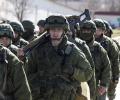
Humanitarian intervention has little meaning unless the international community is willing to engage in the aftermath, says Shyam Saran.
 © 2026 Rediff.com - Investor Information - Advertise with us - Disclaimer - Privacy Policy - Sitemap - Feedback - About us - Terms of use - Grievances