
Researchers at IIT Bombay have discovered that heatwaves in the Indo-Gangetic Plains are primarily caused by local land and weather conditions, rather than hot air originating from elsewhere, emphasising the need for location-specific early warning systems.

Two young men were killed by a lightning strike while travelling to a temple near Mahakala village in Jalna district, Maharashtra. Another person was injured in the incident. The tragedy occurred during unseasonal rains in the region.

The India Meteorological Department (IMD) has predicted below normal monsoon rains for India this year, citing the potential emergence of El Nino conditions. This could significantly impact the country's agriculture-dependent economy.
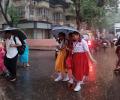
At least 19 people have died in Karachi, Pakistan, due to severe rainstorms, thunderstorms, and strong winds, causing building collapses and electrocution.

A poor monsoon could drag overall economic growth and compound the impact of the West Asia conflict on the Indian economy.

'During the hot season (April to June), above-normal minimum temperatures are likely over most parts of the country, except in some regions of Maharashtra and Telangana, where minimum temperatures are expected to be normal to below normal,' IMD said.
Unseasonal rainfall could damage standing wheat crops, especially late-sown fields nearing maturity and grain-filling stages.

Delhi experienced a foggy morning with a dip in temperature and improved air quality following recent rainfall. The air quality index (AQI) reached 'satisfactory' levels for the first time in five months.

A new western disturbance brought thunderstorms and rain to parts of northern India, with hailstorms and snow reported in several regions. The weather caused flooding in Jammu and Kashmir and prompted a yellow alert in Delhi.

Several states in north India, including Rajasthan and Himachal Pradesh, experienced varied weather conditions, including light to moderate rainfall, fog, and temperature fluctuations.

Earthquake tremors were felt in Kolkata and adjacent districts of West Bengal after a 5.5 magnitude earthquake jolted parts of Bangladesh. People rushed out of buildings in panic, but there were no immediate reports of damage or casualties.
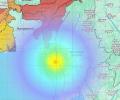
An earthquake of magnitude 6 with its epicenter in Myanmar jolted Kolkata and its adjoining areas, causing tremors and concern among residents.

A severe cold wave has gripped North India, with temperatures plummeting to near-freezing levels in several areas. The cold wave has disrupted daily life, with dense fog affecting visibility and forcing people to stay indoors.

Early morning rain in Delhi lowers temperatures. The weather office predicts cloudy conditions and thunderstorms for the day due to a western disturbance.

Fresh snowfall in Kashmir, including Srinagar, leads to flight cancellations and highway closures, disrupting normal life.

Delhi recorded its coldest January morning in three years with the minimum temperature dropping to 3 degrees Celsius. Cold wave conditions are expected to persist, and air quality has deteriorated to the 'very poor' category.

On the weather front, dense fog led to a sharp drop in visibility, with Palam recording 50 metres visibility under dense fog conditions with west-southwesterly winds at 5 kmph at 8 am, while Safdarjung reported 100 metres visibility with calm winds at the same time.

The national capital was in the grip of a cold wave, with the sun largely obscured by clouds and pollutants lingering in the atmosphere, leading to reduced visibility. At least 129 flights were cancelled at the Delhi airport on Saturday due to dense fog, according to an official.

Dense fog disrupted operations at Delhi airport, leading to cancellations and delays of hundreds of flights. Airlines are offering refunds and rescheduling options.

A severe cold wave has intensified across North India, with Delhi recording its lowest temperature of the season. Rajasthan experienced sub-zero temperatures, and several states have issued alerts and closed schools due to the extreme conditions.

The India Meteorological Department (IMD) reports that ash clouds from volcanic activity in Ethiopia, which impacted flight operations in India, are drifting towards China and will move away from India by 7.30 pm on Tuesday.

Above-normal cold wave days are expected in some areas of central India, eastern Uttar Pradesh and Bihar during January 2026.

The civil aviation ministry is monitoring the impact of volcanic ash plumes from Ethiopia on flight operations, leading to cancellations and delays. The situation is being closely monitored, and necessary precautions are being taken.

Delhi experiences a biting chill with 'cold day' conditions and dense fog, coupled with 'very poor' air quality. The IMD forecasts continued cold weather and potential light rain.
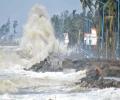
Cyclone Ditwah is moving towards the Tamil Nadu coast, bringing the threat of heavy rainfall. The state government is reviewing preparedness measures, and a red alert has been issued for southern and delta districts.

Delhi's air quality deteriorated to the 'severe' category, prompting the implementation of Stage-IV GRAP measures and hybrid classes for schools.

Delhi choked under a thick blanket of smog on Monday, with the Air Quality Index (AQI) settling at 498, which falls in the higher spectrum of 'severe' category.

A thick layer of toxic smog enveloped the national capital on Saturday as air quality deteriorated sharply, prompting the Commission for Air Quality Management (CAQM) to invoke the strictest curbs under Stage IV of the Graded Response Action Plan (GRAP) across Delhi-NCR.

The winters could be cooler in the plains due to the prevailing La Nina conditions though it does not have a direct relationship and also due to influence of the polar vortex.

Several people in Kolkata and other districts were seen coming out on the streets as a precautionary measure.

A 5.7 magnitude earthquake struck Dhaka and surrounding areas in Bangladesh, resulting in at least 10 deaths and over a hundred injuries. The quake caused building damage and fires, raising concerns about future seismic activity in the region.

Delhi's air quality deteriorates to 'very poor' levels, sparking a blame game between AAP and BJP over the causes and responsibility for the pollution.
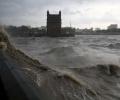
The wind speed, reaching 45-55 kmph and gusting to 65 kmph, is likely to prevail over the North Maharashtra coast between October 3 and 5.

"Montha over westcentral Bay of Bengal moved north-northwestwards with a speed of 17 kmph during the past six hours and lay centred at 2.30 am on October 28 over the same region about 230 km south-southeast of Machilipatnam (and) 310 km south-southeast of Kakinada," said the Met Department in a release.

Cyclone Shakhti, the first cyclonic storm of the post-monsoon season in the Arabian Sea, has intensified.

Heavy rains continue to batter Tamil Nadu, causing a rise in reservoir levels and prompting a red alert. Schools and colleges are closed in several districts as authorities prepare for potential flooding.

The India Meteorological Department (IMD) has issued a 'red alert', warning of extremely heavy rainfall in Mumbai, Thane, Raigad and Palghar districts on Sunday, extending the wet patch in the region.

The Odisha government has initiated evacuations and deployed disaster response teams in anticipation of Cyclone 'Montha', which is expected to impact the southern and coastal regions of the state.

Cyclone Ditwah exits Sri Lanka after causing widespread destruction and over 120 deaths, heading towards the Indian coast. Heavy rains and high winds are expected to continue.

The Andhra Pradesh government has prepared an action plan for relief and essential supplies in pre-cyclone preparedness for Cyclone Montha, expected to cross the coast on October 28.
 © 2026 Rediff.com - Advertise with us - Disclaimer - Privacy Policy - Sitemap - Feedback - About us - Terms of use - Grievances