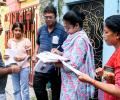
The Election Commission has issued instructions to district election officials in West Bengal regarding voters marked as 'unmapped' due to technical issues during the digitisation of the 2002 electoral rolls.
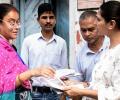
The Election Commission reports a discrepancy of nearly 26 lakh voters' names in West Bengal's current electoral rolls when compared to the 2002 voter list.

Chandra Kumar Bose, grandnephew of Netaji Subhas Chandra Bose, criticizes the ongoing electoral roll revision in West Bengal, calling it 'sheer harassment' and lacking clarity.

Protests erupted across several districts of West Bengal over alleged harassment of people in the ongoing Special Intensive Revision (SIR) exercise, leading to road blockages and tyre burning. Demonstrations were held in South 24 Parganas, North 24 Parganas, Jhargram, and Purba Medinipur.

'A breakout above 158,000 to 160,000 could trigger the next leg higher toward 165,000 to 170,000.'
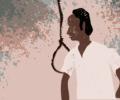
A 57-year-old man was found dead on Tuesday near Siliguri in West Bengal, with family members alleging that he was under stress over the hearing into special intensive revision (SIR) of voter rolls, the police said.

Kaziranga remains a critical stronghold for tiger conservation in India, but the recent deaths underscore the growing challenges of managing a thriving population within a limited landscape.

The second phase of the Systematic Integration of Rolls (SIR) in West Bengal is causing distress among elderly, disabled, and vulnerable voters, leading to political accusations ahead of the assembly polls.

Hearings under the Special Intensive Revision (SIR) of electoral rolls were underway in West Bengal, focusing on 'unmapped' voters who are unable to establish linkage with the 2002 electoral roll. Many people are being asked to prove their citizenship.

This is also the time when South Indian films started doing well, commercially and critically, on a Pan-India scale.

The Enforcement Directorate (ED) has approached the Calcutta High Court, seeking a CBI investigation into the role of West Bengal Chief Minister Mamata Banerjee, senior police officials and others for allegedly obstructing its raids in Kolkata against political consultancy firm I-PAC and its director in connection with an alleged coal scam.

The Supreme Court has directed the Election Commission to display the names of those on the 'logical discrepancies' list at various public offices in West Bengal, addressing concerns about irregularities in the voter rolls.

Admiral Prakash, who has been settled in Goa since his retirement, said SIR forms should be revised if they are not "evoking" the required information.

Since 2004, 12 states have added 160 million people to their rolls.
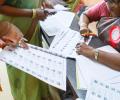
The Election Commission removed 6.5 crore electors from the draft electoral rolls of nine states and three Union territories as part of the Special Intensive Revision (SIR). The removals are due to voters being absent, shifted, deceased, or duplicates.
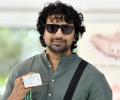
The Election Commission has issued a notice to Trinamool Congress MP and actor Deepak Adhikari, popularly known as Dev, to appear for SIR hearing, officials said on Monday.
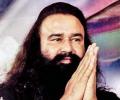
Dera Sacha Sauda chief Gurmeet Ram Rahim Singh, convicted of rape and murder, has been granted a 40-day parole, marking the 15th time he has been released since his conviction in 2017.

The central government has provided armed security to West Bengal's Chief Electoral Officer following potential threats related to the ongoing Special Intensive Revision of electoral rolls.

The Supreme Court has sought a response from the Election Commission on a plea by Trinamool Congress MPs alleging irregularities in the revision of electoral rolls in West Bengal.

Trade analyst Girish Wankhede puts together a curated list of the 25 biggest hits in the first 25 years of the century.
The application claimed that since the inception of the SIR process in the state, the EC has issued instructions to officers at the ground level through "informal and extra-statutory channels", such as WhatsApp messages and oral directions conveyed during video conferences, instead of issuing formal written instructions.

'My next target for the whole year is very important. I have always set my goals in life. So now I have only one goal in my mind, that is we must win a gold medal in the Asian Games and directly qualify for the Olympics.'

Just who are the big winners of the 83rd edition of Golden Globes awards?

Masashi 'Jumbo' Ozaki, one of only two Japanese golfers to be inducted into the World Golf Hall of Fame, died at 78 after a battle with colon cancer.
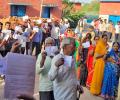
The draft electoral roll for Uttar Pradesh was published after a special intensive revision exercise, with 12.55 crore voters retained out of 15.44 crore listed earlier. Around 2.89 crore voters were excluded due to deaths, migration, or multiple registrations.
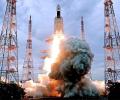
ISRO is developing a third launch pad at Shriharikota to accommodate heavier satellites and next-generation launch vehicles. The new facility will support both crewed and uncrewed missions.
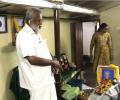
The Tigers refused to forgive Douglas Devananda and tried to assassinate him repeatedly. He later said: "(LTTE chief Velupillai) Prabhakaran cannot kill me." Destiny proved him right.

Luca Zidane, son of French World Cup-winner Zinedine, said his grandfather had supported him in switching international allegiance to Algeria, after playing for France at junior level.

Vaibhav Suryavanshi, aged 14 years and 272 days, shattered former South African cricketer AB de Villiers' record for the fastest 150 in men's List A cricket.

'Trump had done a deal with the current regime minus Maduro. The current regime is giving Trump entry into Venezuelan oil. They are obeying him and doing whatever he says.' 'They are happy because they have saved their heads by sacrificing only two, Maduro and his wife. Thousands of Venezuelan military leaders would have been jailed or killed in American action had Maduro stayed in power.'
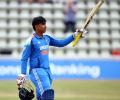
Congress MP Shashi Tharoor has dropped the ultimate cricket compliment, comparing 14-year-old Bihar batting sensation Vaibhav Suryavanshi to the legendary Sachin Tendulkar.

Stanislas Wawrinka will hang up his racquet at the end of 2026, the three-times Grand Slam champion announced on Friday, bringing down the curtain on a 24-year professional career that saw him gatecrash tennis's elite during the sport's golden era.

Former England captain Hussain won the toss in the first Ashes Test of the 2002/03 series, electing to field first at the Gabba in a decision that dumbfounded some of his teammates.

'The CCI will first need to take a prima facie view on whether IndiGo's role warrants a detailed investigation.'
14-year-old Vaibhav Suryavanshi produced an exhibition of magnificent strokeplay, smashing 171 from just 95 balls, including 14 sixes and nine fours.

A new book reveals that Atal Bihari Vajpayee rejected an offer to become President of India, a move that would have made Lal Krishna Advani Prime Minister. Vajpayee believed that a sitting PM becoming President would set a bad precedent for Indian democracy.

The Election Commission released the names of deleted voters in West Bengal ahead of the publication of the draft electoral rolls for the upcoming assembly elections.
Sex workers in Sonagachi, Asia's largest red-light district, are pleading for relief from stringent voter ID rules that they say are impossible to meet, potentially leading to exclusion from the voters' list.

The teams that have qualified for the 2026 World Cup, to be hosted by the US, Mexico and Canada from June 11 to July 19.

'Our problem is not a budget deficit but a trust deficit. We need to trust our institutions and industries to innovate and lead. That is the way forward for India.'
 © 2026 Rediff.com - Investor Information - Advertise with us - Disclaimer - Privacy Policy - Sitemap - Feedback - About us - Terms of use - Grievances