
Four-time Formula 1 world champion Sebastian Vettel drove Michael Schumacher's legendary Ferrari F2002 at Monza, paying an emotional tribute to his childhood idol.

Padma Shri awardee Harekal Hajabba has received an election notice due to a name mismatch in the electoral rolls. While his official documents identify him as "Harekal Hajabba," the 2002 electoral roll listed him simply as "Hajabba." He is confident the issue will be resolved after presenting his documents to local authorities.

The Greater Bengaluru Authority (GBA) clarified that no notice was issued to Bharat Ratna awardee Prof C N R Rao regarding an electoral roll discrepancy. Instead, the Booth Level Officer recommended including his name despite a variation in how it was recorded over the years, ensuring his inclusion in the final electoral roll.

Ferrari is set to commemorate Michael Schumacher's first Italian Grand Prix win and his decade with the team (1996-2006) at this weekend's Monza GP.

Former Asian Games gold medallist Shiv Kapur expresses strong confidence in India's golf squad for the upcoming Aichi-Nagoya Games, stating that anything less than a gold medal would be a disappointment given the talent pool. He highlights the potential of both men's and women's teams, including top players like Aditi Ashok and Diksha Dagar, to end India's long wait for a golf gold. The article also touches upon the healthy competition between Indian golf leagues.

Brazil football legend Cafu has advised the Indian national team to view their upcoming friendly against Brazil on October 3 in Kolkata as a crucial learning experience rather than just a spectacle. He emphasised the match's importance for India's preparation for the 2030 World Cup cycle and highlighted Brazil's deep connection with Kolkata, referencing Pele's historic visit. Cafu also discussed the future of Brazilian football and his unique World Cup record.
Brazil's legendary captain Cafu advises the Indian national football team to view their upcoming friendly match against five-time world champions Brazil as a crucial learning experience for future World Cup cycles, rather than just a spectacle. He highlights Brazil's strong connection with Kolkata and identifies promising young Brazilian talents for the future.

A tragic road accident in Delhi Cantonment involving a speeding Thar SUV and a motorcycle has resulted in the deaths of two individuals.

Former Brazil captain Cafu discussed India's upcoming friendly against Brazil, highlighting the learning opportunity despite ranking differences. He also suggested India popularise football among children for growth, commented on Brazil's World Cup drought, and reflected on the evolving role of fullbacks in modern football.

Deep Dasgupta said Sourav Ganguly's "I am the king" mindset transformed India's response to sledging, encouraging teammates to openly give back instead of silently channelling their anger.

'Now the institutions which have the might of law invested in them think that whatever they do is right.'

Argentina stunned hosts Netherlands 3-1 in a shootout after a 1-1 draw, ending the Dutch bid for a fourth straight title and securing their third World Cup crown.

Anil Kumble's relentless on-field intensity was so intimidating that even his wicketkeeper sometimes appealed despite knowing the batter was not out.

Oriental Insurance has insured around 100 Ganesh pandals this year compared with only 20-30 last year.

A 40-year-old woman in Bengaluru has been accused of killing her four-month-old twin daughters before attempting suicide. Police registered an FIR based on her husband's complaint, who stated she had been suffering from postpartum depression and abnormal behaviour after IVF treatment.

Five Raksha Bandhan ads that stayed with us long after the festival was over...

Kuku Kohli is famously credited with introducing superstar Ajay Devgn to Hindi cinema with the 1991 blockbuster hit Phool Aur Kaante.

A recent Central Vigilance Commission (CVC) report reveals that over 70,500 corruption complaints were lodged against various government bodies last year, with banks and the Railways accounting for the highest numbers. While a significant portion of these complaints has been disposed of, thousands remain under process, highlighting ongoing challenges in addressing corruption within public sector entities.

The Delhi High Court has ruled that Booth Level Agents (BLAs) of political parties are not liable for false details in electoral enumeration forms that cannot be personally verified. The court clarified that BLAs are only responsible for verifiable information, such as an elector's photograph, and struck down the Election Commission of India's mandate requiring BLAs to provide personal undertakings for all details.

Mirzapur: The Movie brings back some familiar faces, resurrects a few dead ones and adds a fresh crop of actors to its blood-soaked big-screen world.

'Hanuman Ansh has demonstrated that content is king, and the audience is the ultimate judge.'

Germany retained the Men's Hockey World Cup with a disciplined 1-0 victory over Spain, matching Pakistan's record four titles, while Argentina secured bronze by defeating the Netherlands.

The Indian mixed disability cricket team secured a significant 118-run victory over England in the final T20I, celebrating their win by emulating Sourav Ganguly's famous shirt-waving act at the Lord's balcony.

Brazil football icon Ronaldinho has arrived in Italy after joining Serie C club Ravenna FC, where he has also taken a stake. While his last competitive match was in 2015.

A special MP-MLA court acquitted all six accused, including Ayodhya MLA Abhay Singh, in a 24-year-old Nadesar shootout case involving former Jaunpur MP Dhananjay Singh due to insufficient evidence.
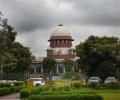
The Supreme Court has directed the release of a 70-year-old man by suspending his sentence as it termed the nearly half century long litigation in a double-murder case from Jharkhand a "failure of judicial system."

If Khalifa: The Ruler continues to bleed at the box office, the odds of a big-budget sequel materialising drop to practically zero. The harsh reality of franchise filmmaking is incredibly simple: If the 'ruler' fails to conquer, absolutely no one is going to care about the 'legacy', no matter how many superstars you cram onto a poster.

The Supreme Court on Monday agreed to hear a plea against the Punjab and Haryana high court order acquitting Dera Sacha Sauda chief Gurmeet Ram Rahim Singh in the 2002 murder case of a journalist.

This article details the process and requirements for a vote of no confidence against the FIFA President, Gianni Infantino, following challenges to his leadership.

Cristiano Ronaldo has fuelled speculation about his retirement plans after saying the upcoming year will probably be the last of his playing career.

A constable in Uttarakhand's Pithoragarh district, Sher Singh, has been dismissed from service for participating in a political demonstration in New Delhi and violating service rules. A departmental inquiry found him guilty of gross misconduct. Singh had previously gone viral for alleging corruption in state recruitment exams and was already suspended for unauthorised absence, besides being named in a land-grabbing FIR.

Two-time Olympic medallist Neeraj Chopra has lauded the performance of Indian junior athletes at the World Athletics U20 Championships in the USA, where they secured two silver and one bronze medal.

Prime Minister Narendra Modi delivered his fourth shortest Independence Day speech on Saturday, lasting 75 minutes, marking his shortest address in four years. This analysis compares his recent speech lengths to his previous addresses and those of other former prime ministers.

'It is not because of the war in West Asia, which began on February 28.' 'Petroleum product prices are already going through the roof. They are bound to have a serious inflationary impact.' 'A country's leadership is tested in trying times. It is here that the current leadership is failing.'

Yash's Toxic continues a fascinating trend in Indian cinema where a single star portrays both father and son, often leading to intense on-screen conflicts.

Former Australian all-rounder Shane Watson has described India as his 'second home,' stating he felt more welcomed and supported by Indian cricket fans than in Australia, attributing this strong connection to his IPL career and the country's appreciation for the sport.

Former India cricket captain Sourav Ganguly has publicly addressed the alleged death threats received by him and his family over the past six months, stating that the matter has been reported to the police and expressing confidence in their action.

Yuvraj Singh rang the five-minute bell at Lord's on Sunday to signal the start of play for the third One-Day International between England and India.

India faces a tough challenge against world No. 3 England in a crucial FIH Men's Hockey World Cup Pool D match. India, coming off a win against Wales, needs to improve its open play finishing and overcome a 32-year World Cup jinx against England. The outcome will significantly impact their path to the knockout stages.

From a child star to a superhero icon and horror favourite, Hayden Panettiere left behind a memorable body of work far beyond her years.
