
The national capital was in the grip of a cold wave, with the sun largely obscured by clouds and pollutants lingering in the atmosphere, leading to reduced visibility. At least 129 flights were cancelled at the Delhi airport on Saturday due to dense fog, according to an official.

The attack, which took place near a heavily guarded complex housing All India Radio and Doordarshan Kendra near the Tourist Reception Centre, comes a day after security forces eliminated a top Pakistani commander of Lashkar-e-Tayiba in the Khanyar locality of downtown Srinagar.

The Delhi High Court dismissed appeals by the sons of Hizbul Mujahideen chief Syed Salahuddin and others, challenging the framing of charges against them in terror funding cases, citing the interlocutory nature of the order.

Delhi Police have increased security measures across the city following the recovery of suspected ammonium nitrate and arms in Faridabad, Haryana. The heightened security includes increased surveillance at border points and sensitive zones.

A doctor at a Saharanpur hospital denies rumors of his detention following the arrest of a colleague accused of having links with the Jaish-e-Mohammed terror group.

Two unidentified terrorists were killed and three soldiers injured in an encounter in Kulgam district of Jammu and Kashmir on Monday, officials said in Srinagar.
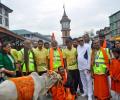
The Akhil Bhartiya Gau Sewa Foundation has organised an ambitious 180-day journey to raise awareness about cow protection across India, including in Jammu and Kashmir.

Christmas was celebrated with devotion and festive gaiety across India, with churches decked in lights, midnight masses, and community events spreading cheer. Leaders extended greetings, and celebrations took place in various states with prayers for peace and harmony.

The winters could be cooler in the plains due to the prevailing La Nina conditions though it does not have a direct relationship and also due to influence of the polar vortex.
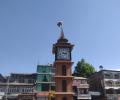
It's a different Srinagar from what Rediff.com's Syed Firdaus Ashraf encountered 24 years ago. Tourists throng the Kashmir Valley post-Article 370, azaadi appears dead, and everyone says one man is responsible for this change, so what if his poster is nowhere to be seen.

Nazir Ahmed Wani, the main accused in the 1993 Deoband bomb blasts, has been arrested in Srinagar after evading capture for 31 years. Wani, wanted for his involvement in the bomb attacks, was arrested by a joint operation of the Uttar Pradesh Anti-Terrorism Squad (ATS) and local police. The blasts occurred during communal violence in Deoband following the demolition of the Babri Masjid in 1992.

Police have cordoned off areas within a 200-metre radius of the red Ford EcoSport car allegedly linked to suspects behind the deadly blast in Delhi, a day after it was seized from Haryana's Faridabad district, police sources said on Thursday.

As excitement builds for Sunday's India-Pakistan Asia Cup final, cricket fever has spread to the Kashmir Valley.
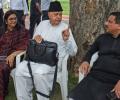
Aam Aadmi Party convenor Arvind Kejriwal took a jibe at the Centre after former Jammu and Kashmir Chief Minister Farooq Abdullah was not allowed to meet MP Sanjay Singh, who went to Srinagar to protest AAP MLA Mehraj Malik's arrest.

The officer has been banned from taking any domestic, international or non-scheduled flights operated by the airline during this period, they added.

The troops noticed suspicious movement along the LoC in Kupwara late on Monday night and challenged the intruders. There was a brief exchange of fire between the two sides, the officials said.

One Pakistan terrorist belonging to the Lashkar-e-Taiba has been gunned down in the ongoing encounter.
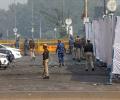
The accused, identified as Dr Bilal Naseer Malla, a resident of Jammu and Kashmir's Baramulla, was nabbed by an NIA team from Delhi.
Records stretching back to 1947 suggest a consistent strategy by Pakistan's military and intelligence apparatus, the Inter Services Intelligence (ISI), of using terrorism as a state policy against India.

Shaheen was taken to Faridabad to corroborate some leads the NIA learnt to have known during interrogation of other suspects and the seventh accused Soyab, a resident of Dhauj in Faridabad.

Security measures were heightened across Uttar Pradesh following a car blast in Delhi. Anti-terror agencies and police conducted searches in multiple cities, including Lucknow, in response to the incident.
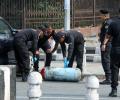
Indian authorities have uncovered a Jaish-e-Mohammad (JeM) terror plot involving doctors from south Kashmir, a Faridabad university, the recovery of 2,900 kg of explosives, and a car bomb near the Red Fort. Eight people have been arrested in connection with the plot.

On Monday, December 18, 2023, freestyle football champion Agnieszka 'Aguka' Mnich from Poland and German footballer Patrick Bauer performed football tricks in the presence of a huge crowd at the historic Ghanta Ghar at Lal Chowk in Srinagar.
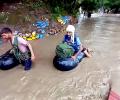
Flood crisis intensifies as rescue operations expand across Akhnoor, Jammu, Telangana and Himachal Pradesh.

The All India Football Federation (AIFF) tweeted, "Real Kashmir FC have withdrawn from AIFF Super Cup 2025-26, as VISAS for their foreign players could not be secured. They will be replaced by Dempo SC."

In a historic moment, on Thursday October 31, 2024 night, Srinagar's Ghanta Ghar at Lal Chowk lit up with thousands of diyas to celebrate Diwali for the first time.
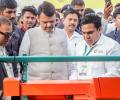
Maharashtra Chief Minister Devendra Fadnavis addressed concerns about discriminatory fund allocation and reports of a rift with Deputy CM Eknath Shinde, dismissing both as unfounded.

Jammu and Kashmir Lieutenant Governor Manoj Sinha and Chief Minister Omar Abdullah along with scores of Srinagar residents participated in a Tiranga Yatra along the famed Dal Lake.
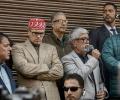
The NC has won every assembly election in Budgam whenever it has fielded a candidate from the Shia-dominated segment. The only time the seat was not represented by the NC was in 1972 when the party had boycotted the polls across J-K.
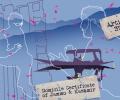
Syed Firdaus Ashraf/Rediff.com tried to buy a house on his recent visit to Srinagar.

On Tuesday, August 5, 2025, on the 6th anniversary of the abrogation of Article 370 and Article 35A, Jammu and Kashmir Lieutenant Governor Manoj Sinha along with J&K Police Director General Nalin Prabhat and Chief Secretary Atal Dulloo handed over government job appointment letters to family members of terror victims in Srinagar.
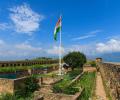
A 100 foot tall national flag has been installed within the premises of the Hari Parbat fort in Srinagar.
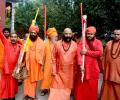
Amid tight security, the Chhari Mubarak, the holy mace of Lord Shiva, left Srinagar on Monday, August 4, 2025 for the Amarnath cave shrine. This signifies the culmination of the annual Amarnath Yatra.

Jammu and Kashmir Lieutenant Governor Manoj Sinha claims a significant reduction in the fear of terrorism in the Kashmir Valley, citing increased industrial activity in Pulwama and a decline in local terror recruitment.

A woman doctor arrested in connection with an inter-state terror module was part of Jamaat-ul-Mominaat, an organization launched by Jaish-e-Mohammed, officials said.
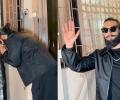
This time, Ranveer Singh's OTT gesture broke the internet.
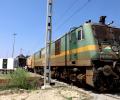
On Thursday, September 11, 2025, following the closure of the Srinagar-Jammu national highway, the Indian Railways arranged for special parcel vans to transport apples from Kashmir's orchards to Delhi.

The inauguration plaque placed inside the shrine has the national emblem etched in the stone, drawing sharp criticism from various quarters.

Police in Faridabad continue their investigation into a suspected terror module after a large quantity of explosives was found in rented rooms. The probe is also examining potential links to a recent blast near Delhi's Red Fort.
