
Maharashtra Deputy Chief Minister Eknath Shinde on Monday attributed early arrival of the southwest monsoon and heavy rainfall in a short span for the inundation of low-lying areas in Mumbai, which disrupted road and railway traffic.

Glimpses from India and around the world that will make you smile and cry.

The remark triggered sharp reactions from opposition leaders, who accused the minister of being insensitive to the plight of those affected by floods.

Houses in low lying areas of Kerala were flooded in the heavy rains, while the accompanying strong winds uprooted trees, damaged homes and caused power disruptions, throwing normal way of life into disarray across the state.

According to a statement from the Rudraprayag police, the landslide was triggered by continuous heavy rainfall, which caused large amounts of debris and stones to fall onto the trekking route, blocking and damaging the walkway to Kedarnath Dham.
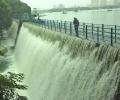
The scenic Powai Lake in Mumbai overflowed on Wednesday morning following heavy rains in its catchment areas for the last two days, a civic official said.

Heavy overnight rain and morning showers caused widespread waterlogging and traffic congestion in Delhi, leaving commuters stranded and facing significant delays.

Raja Raghuvanshi (29) and his wife Sonam had gone missing on May 23, hours after they checked out of a homestay at Nongriat village in Sohra area
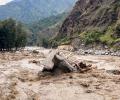
While two bodies were recovered on Wednesday, the death toll climbed to four on Thursday after the recovery of two more bodies from the Indira Priyadarshini Hydroelectric project site in Kangra district.

Mumbai Indians were the first team to leave the field while Delhi players stayed back doing light training but were eventually forced to call it off.

After record rains wreaked havoc in Jammu and Kashmir over the past two days, the death toll in related incidents rose to 41, most of them victims of the landslide on a Vaishno Devi pilgrimage route, while there was some let-up in the showers on Wednesday, allowing relief efforts to pick up pace.

The Met Office has issued a yellow alert, warning of moderate rain which could cause more problems to the residents of Delhi.
'China could intentionally release excess water.' 'The North East is already flood-prone during the monsoon, and even a controlled release from Chinese dams (during the monsoon) could worsen flooding.'
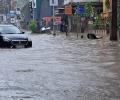
The IMD issued a "Nowcast" warning, forecasting thunderstorms accompanied by lightning and intense spells of rain with gusty winds reaching 50-60 kmph at isolated places in Mumbai in the next three to four hours.

Even if you have a comprehensive motor insurance policy, it may not provide sufficient protection against monsoon-related risks.

Heavy rains lashed several parts of Maharashtra, including Mumbai, on Monday, resulting in one death and the rescue of 48 people from inundated areas. The state received widespread rainfall, with Pune, Satara, Solapur, Raigad, and the Mumbai Metropolitan Region (MMR) experiencing significant precipitation. Mumbai recorded 135.4 mm of rainfall in the past 24 hours, leading to waterlogging and power outages in some areas. The India Meteorological Department has predicted more rain in Mumbai over the next 24 hours, accompanied by thunderstorms and strong winds.

This was a soaring evening that sent hearts aflutter and for a few brief moments we tasted the breath of pure freedom that has been missing in this country for the past several years.

A massive landslide struck the old track to the Vaishno Devi shrine in Reasi district of Jammu and Kashmir on Monday, leaving one pilgrim dead and 10 others injured, officials said.

The city received about 104 mm of rainfall in the last 24 hours, inundating many low-lying areas and leading to traffic pile-up, prompting the BJP to launch a scathing attack on the ruling Congress.
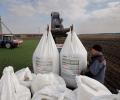
'China reduced its exports of urea to India gradually.' 'In 2020-2021 we imported 28 lakh tonnes of urea which reduced to 16 lakh tonnes in 2022-2023 and that has now reduced to 1 lakh tonnes in 2024-2025.'

Glimpses from India and around the world that will make you smile and cry.
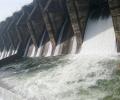
64 years after the Panshet Dam burst claimed 1,000 lives, the tragedy stands as both a haunting memory and a vital lesson in engineering caution.

Rainfall in August is predicted to be below normal (less than 94 per cent of LPA), but the situation is expected to improve comparatively in September, the IMD said.
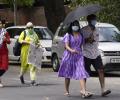
The India meteorological department said heatwave conditions will persist for at least two more days.

In Professor Sulochana Gadgil's passing, India has lost a scientific giant, a fierce intellect, and a compassionate soul, remembers Dr Madhavan Nair Rajeevan.

A steady drizzle in the evening brought premature end to evening practice sessions of Kolkata Knight Riders and Royal Challengers Bengaluru on the eve of their IPL 2025 opening match on Saturday.

'Nobody asked us to work on this. It was on our own that we decided to embark on this journey.'

Unseasonal rain coupled with lightning and thunderstorm lashed parts of Mumbai in the wee hours of Thursday, bringing some respite from the hot and humid weather in the city, civic officials said.

Airfares on major domestic routes from Chennai surged as flight operations at the airport were disrupted due to strong winds and torrential rain that lashed the city in the wake of Cyclone Michaung on Monday. According to ixigo data, on December 5, one-way spot airfares from Chennai to cities like Mumbai, New Delhi, Hyderabad, Bengaluru, and Kolkata rose between 52 per cent and 171 per cent compared to prices three to seven days prior. The Chennai-Mumbai route, the busiest flight route from Chennai airport, saw airfares surge 68.6 per cent from Rs 3,728 to Rs 6,286 in the aforementioned period.
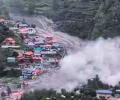
A cloudburst in the high altitude villages of Dharali in Uttarkashi district of Uttarakhand led to flash floods, causing damage to houses and sweeping away structures. Several people are feared buried under debris.

So far, over 30 people have died across Northeastern states due to heavy rainfalls, floods and landslides, according to media reports.

Anushka and Virat were seen sharing a laugh and exchanging high-fives after winning a point together.

'The global climate system doesn't look at where the carbon dioxide is coming from. 'It may be emitted by the US, but it will not remain above the US alone but covers the whole world.'

This would be due to early monsoon onset, abundant precipitation in the soil and the government's higher minimum support price (MSP) for farmers, the USDA said in its assessment.
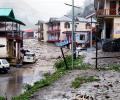
'...they always address problems superficially, never tackling root causes.' 'Currently, the policy response will focus on immediate relief -- getting people to safety, providing facilities, clearing debris.' 'This is necessary, but once immediate relief operations end, everything returns to 'normal' without addressing underlying vulnerabilities.'
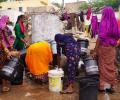
In Rajasthan's Karauli district, a decade ago, rampant drought and dwindling water sources forced many men into a life of dacoity, leaving their families in fear. However, the women of Karauli, tired of the despair, took matters into their own hands. They persuaded their husbands to give up their lives of crime and together they began reviving old water bodies and constructing new ones with the help of a local NGO. This community-led effort, which included building pokhars (water bodies) and reviving the Serni River, resulted in a remarkable transformation, bringing stability and hope to the region, and turning former dacoits into thriving farmers.

At least 14 people have died in rain-related incidents as thunderstorms, strong winds and dust storms battered several parts of Gujarat, India. The India Meteorological Department (IMD) has forecast thunderstorms with lightning and strong winds of up to 50-60 kmph across the state for the next few days. Strong winds uprooted trees, hoardings, and pillars, and parts of houses collapsed in several districts, leaving many injured. The deaths were reported in Ahmedabad, Anand, Kheda, Dahod, Aravalli and Vadodara districts of Gujarat on Monday and Sunday. The IMD has also forecast heavy rainfall in isolated parts of Banaskantha, Kutch, Sabarkantha, Aravalli and Anand districts in the next three days.
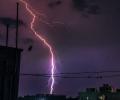
At least 25 people were killed in lightning strikes and hailstorms in several districts of Bihar, India, on Thursday. The India Meteorological Department has issued an 'orange alert' for a number of districts, forecasting heavy rainfall on Friday and Saturday. The state capital, Patna, recorded an average of 42.6 mm rainfall till 5.30 pm.

The students were trapped in the school located at Pandarsoli on the Haldipokhar-Kowali Road in Kowali police station area since Saturday night after the premises got flooded due to heavy rain.

The Delhi government is likely to take disciplinary actions against officials responsible for waterlogging at the Minto Bridge underpass after overnight showers. A junior engineer and pump operator responsible for the underpass will be suspended and the assistant engineer will be issued a show cause notice for supervisory lapses.
