
Union Education Minister Pralhad Joshi announced that revised NCERT textbooks for classes 10 to 12 are being prepared in "mission mode," while textbooks for classes 1 to 9 under the new National Curriculum Framework have already been released. He emphasised NCERT's role in building a 'Viksit Bharat' and highlighted the need for curricula to evolve with AI advancements and the importance of India's young population as a global asset.

A parliamentary panel flagged staffing shortages at NCERT and CBSE, inadequate education spending, falling enrolment and poor internet connectivity in government schools.

The National Council of Educational Research and Training has reconstituted the Textbook Development Team for class 11 and 12 political science with a mandate to integrate cultural rootedness, Indian knowledge systems and inclusion, with at least four of the members having direct or indirect links with the RSS.

'Now that NCERT has received the status of a deemed university, it will start its own MA courses, postgraduate courses, and doctoral research in education, fully funded by the government.'

Anjali Saikia's extraordinary act of breastfeeding an orphaned palm civet alongside her infant son in 2009 has been immortalised in a CBSE Class X English supplementary reader, 'Words and Expressions Part Two', inspiring students across India with a lesson on empathy and coexistence.

The NCERT Class 8 social science textbook has undergone significant revisions, including a tweaked narrative on the 1947 Partition, the inclusion of VD Savarkar's demand for Swaraj, and the removal of references to Adolf Hitler and Nazi ideology. These changes follow a Supreme Court intervention regarding controversial content on the judiciary.

The NCERT's Class 9 Social Science textbook now includes the Special Intensive Revision (SIR) of electoral rolls, explaining its purpose to ensure accurate voter lists. The textbook also commends the Election Commission of India (ECI) for conducting impartial polls despite challenges, highlighting the scale and autonomy of India's electoral process.

A new Class 9 NCERT textbook describes the judiciary as an "impartial and independent institution" that safeguards citizens' rights and upholds the Constitution, contrasting with a previous Class 8 textbook that sparked controversy over its depiction of judicial corruption. The new textbook was prepared before the Class 8 controversy erupted.
Michel Danino, one of the NCERT academics previously barred by the Supreme Court over a controversial chapter on the judiciary, maintains the content was 'correct' and defends its inclusion in the textbook.

The Supreme Court has modified its previous order regarding three academics involved in a controversial NCERT textbook chapter on corruption in the judiciary, allowing government bodies to make independent decisions about their association with the academics.

The NCERT has included in the class 9 social science textbook a section on Emergency, which it described as "one of the major challenges to democracy in India" with Education Minister Dharmendra Pradhan hailing the move saying future generations should know about the "dark deeds".

The Hazaribag district administration in Jharkhand has filed a police case against three shopkeepers for allegedly selling counterfeit NCERT books. Raids were conducted following complaints, and investigations revealed discrepancies in holograms and page quality.

The National Council of Educational Research and Training (NCERT) has altered the iconic 'Dancing Girl' figurine from Mohenjo-daro in its new Class 9 arts textbook, covering its bare torso with shading. This change has drawn criticism for misrepresenting the original artefact and sparking a debate on what is considered 'age-appropriate' in educational materials.

The NCERT has issued a public apology and withdrawn a social science textbook for Class 8 after the Supreme Court objected to a chapter on judicial corruption. The court imposed a ban on further publication of the book.
An explainer on the process of how NCERT textbooks are prepared, in light of a recent controversy over a class 8 textbook chapter on 'judicial corruption' that led to a Supreme Court ban.
The chapter, State and Society up to 1000 CE, says the Vedic period is 'often described as a period during which women held a high and respectful position in society'.
The new NCERT Class 9 mathematics textbook, 'Ganita Manjari', integrates ancient Indian mathematical systems and historical context, marking a shift from previous editions by emphasising indigenous contributions and linking concepts to ancient texts and scholars.

The Supreme Court has urged the Central Board of Secondary Education (CBSE) to consider exempting Class 6 students from its three-language policy for the current academic year. The policy, which mandates the study of three languages including two native Indian languages, is challenged by petitioners who question CBSE's jurisdiction over classes 6-8. The court emphasized finding a solution that avoids student pressure and suggested a potential deferral for Class 6.
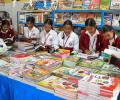
Delhi Police have arrested a Delhi University graduate and seized over 5,000 pirated NCERT textbooks from a godown in outer Delhi, dismantling a syndicate involved in the distribution of counterfeit educational material.

The NCERT has apologised for 'inappropriate content' in a Class 8 textbook chapter discussing judicial corruption, following Supreme Court criticism. The textbook will be rewritten, and its circulation has been put on hold.

Union Education Minister Dharmendra Pradhan has expressed strong disapproval of a chapter in an NCERT Class 8 textbook addressing judicial corruption, prompting government action and a Supreme Court ban on the book's circulation.
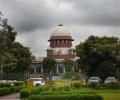
Three academics involved in drafting a controversial NCERT textbook chapter on corruption in the judiciary have approached the Supreme Court to defend their work, stating it was a collective effort and not the view of any single individual.
The NCERT's class 8 textbook is under scrutiny for its content on judicial corruption, potentially leading to its removal after government concerns and objections from the judiciary.
IIT-Gandhinagar is reviewing Michel Danino's position as guest professor after the Supreme Court directed institutions to disassociate from him due to a controversy over a chapter on judicial corruption in a withdrawn NCERT textbook.
The Centre has directed the NCERT to review all textbooks after the Supreme Court raised concerns about 'offending' content on corruption in the judiciary in a Class 8 social science book.
The Supreme Court has asked the CBSE to consider deferring the implementation of its three-language policy for Class 6 students, which mandates two native Indian languages, until the academic session starting 2027. The CBSE stated it would consider the suggestion. The policy, aligned with NEP-2020, makes two native Indian languages compulsory for Class 6 and Class 9, with provisions for foreign languages as additional options and no board exams for the third language in Class 10.
The apex court ordered that the Centre and state authorities comply with its directions immediately, and warned of 'serious action' if directions are defied in any form.
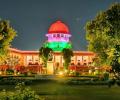
The Supreme Court has initiated suo motu action regarding an NCERT class 8 textbook that references corruption in the judiciary, raising concerns about potential defamation and the integrity of the judicial system.

A report by Scholars at Risk, 'Free to Think 2026', states that academic freedom in India is "severely restricted" due to increasing government influence over higher education, university governance, and curbs on student expression. India is listed among six countries in this category, with its Academic Freedom Index score sharply declining. The report cites instances of faculty dismissals, event cancellations, and pressure on student protests, highlighting the alleged use of the UGC as a vehicle for state influence.

The Supreme Court has urged the CBSE to reconsider the implementation of its three-language policy for Class 9 students, emphasising that children should not be subjected to undue pressure. The court highlighted concerns about infrastructure, the starting point of the policy, and the definition of 'native' languages.

The question for the next 20 years is not whether India can become a $5 trillion or $10 trillion economy. Those are attractive targets, but the real question is whether India can create enough productive jobs, educate its children properly, make its cities liveable, and give hundreds of millions of people a substantially better life, asserts Ramesh Menon.

Three National Testing Agency (NTA) subject experts, P V Kulkarni for chemistry, Manisha Sanjay Havaldar for physics and Manisha Gurunath Mandhare for botany and zoology, were the primary sources of the NEET paper leak, according to the Central Bureau of Investigation's chargesheet.
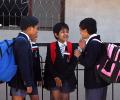
The Bihar Education Department has directed all private and government-aided schools to adhere to NCERT guidelines, ensuring school bag weight does not exceed 10 per cent of a child's body weight. Schools must install weighing scales and monitor bag weights regularly, with violations leading to action.

How did hundreds of errors slip through multiple stages of drafting, editing, proofreading, expert review and final approval before making their way into classrooms?
The six-page section, titled The Ghaznavid Invasions, states that Mahmud of Ghazni conducted 17 campaigns in India, returning each time with large quantities of treasure. The old NCERT class 7 history textbook had a paragraph on Mahmud of Ghazni.

The National Eligibility-cum-Entrance Test Undergraduate (NEET UG) 2026 toppers are Punjab's Aryan Gupta and Haryana's Panshul Bansal, who secured joint All India Rank 1 with 715 out of 720 marks each.

The Indian History Congress (IHC) has criticized NCERT's new Partition Horrors Remembrance Day modules, alleging they spread falsehoods with communal intent by depicting the Congress as complicit in Partition while absolving the British.
A controversy has erupted after an NCERT Class 8 textbook depicted present-day Rajasthan as part of the Maratha Empire, drawing criticism from royal families and political leaders who call the depiction factually incorrect and misleading.

The Election Commission's Special Intensive Revision (SIR) of electoral rolls has completed one year, leading to the deletion of nearly six crore voters across 19 states and Union territories. This exercise, which began in Bihar, has faced opposition criticism but was upheld by the Supreme Court. The purification drive has significant implications, including linking voter data to social security benefits in some states.

The National Council of Educational Research and Training (NCERT) is developing a special classroom module on Operation Sindoor to help students learn about India's defence strategy and diplomatic response, according to sources.
