
A joint report by OPPI and EY reveals that India's pharma Global Capability Centres (GCCs) contribute an estimated USD 10.5 billion in GVA and employ 120,000 professionals. These centres, operated by 80% of top biopharma companies, are expanding beyond delivery to global mandates in science, technology, and business, leveraging India's talent, cost advantage, and digital strength. The report highlights their role in India's transition to a global pharma powerhouse driven by research and innovation, with AI becoming central to operations.

Indegene has been announced as the inaugural industry partner for the India-UK Life Science Corridor, a collaborative initiative between the Centre for Cellular and Molecular Platforms (C-CAMP) and Imperial College London. This partnership aims to foster cross-border innovation, knowledge exchange, and talent development in critical areas like digital health and antimicrobial resistance, leveraging Indegene's expertise in life sciences.

PwC India has launched its Future AI Experience Lab in Gurugram, offering businesses a platform to simulate scenarios and prototype AI, robotics, and digital twin solutions. The lab features over 90 pre-validated AI solutions across various sectors, aiming to help clients achieve measurable outcomes like revenue growth and productivity improvements.
The Infosys Science Foundation announced the winners of the Infosys Prize 2026 across six categories: economics, engineering and computer science, humanities and social sciences, life sciences, mathematical sciences, and physical sciences. The prize now focuses on researchers under 40, recognising early exceptional talent with a gold medal, citation, and USD 100,000.
Telangana IT Minister D Sridhar Babu stated that Gen Z will be the driving force behind the next wave of AI and green innovation. He urged young innovators to use their skills to solve real-world challenges, particularly in sustainability. The launch of the Green Skills and Applied AI Centre of Excellence in Hyderabad, a partnership between Telangana's IT Ministry, Microsoft, 1M1B, and MeitY Startup Hub, aims to equip graduates with industry-relevant skills in AI, green pharma, solar energy, EVs, and wind energy, with 100 job offers already announced.
IBM India and South Asia MD Sandip Patel states that technology, especially AI, should not be "artificially paused." He advocates for vigilance and proactive governance to foster innovation while addressing potential risks. Patel also highlights IBM's India-specific initiatives like Bharat Core and a sovereign AI stack, and discusses the impact of AI on jobs and global supply chains.

India is proposing the Data Empowerment and Protection Architecture (DEPA) for AI Training, a national framework designed to enable startups, researchers, and companies to train AI models using data from hospitals, banks, and public agencies while ensuring privacy and security. This initiative aims to unlock significant AI-driven value for India's GDP by 2030.

India's drug price regulator, the National Pharmaceutical Pricing Authority (NPPA), has significantly reduced the maximum retail prices (MRPs) of 543 cancer drug brands and pack sizes, with some reductions reaching up to 93 per cent. However, expensive innovator drugs from multinational corporations, including high-selling Bevacizumab and immunotherapy Keytruda, remain unaffected, highlighting limitations in the price control intervention.

Tata Power has partnered with Norway's Ocean Sun to introduce innovative membrane-based floating solar technology to India. A 300 kWp pilot project will be undertaken at Tata Power's Mulshi reservoir in Maharashtra to evaluate the technology's performance, reliability, and cost-effectiveness under Indian conditions. This collaboration aims to leverage India's significant floating solar potential and contribute to its renewable energy goals.

Assam Chief Minister Himanta Biswa Sarma launched the North East Seva Innovation Challenge (NESFIC), envisioning the region as India's 'living laboratory' for technology and problem-solving. The initiative aims to empower young innovators to address real-world challenges faced by government, industries, and citizens, with a focus on practical implementation and government procurement.
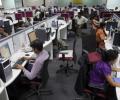
Samsung India has launched an Innovation Campus in Karnataka, in partnership with Nrupathunga University, to train 2,000 young individuals in industry-relevant AI skills. This initiative aims to support Karnataka's goal of building an AI-native ecosystem and developing a future-ready technology workforce, expanding access to practical AI education.

The Tata Aeris iCNG, evolving from the Tigor, offers a modernized exterior and a feature-rich interior. It boasts innovative twin-cylinder CNG technology for maximum boot space, premium comfort features like ventilated seats and a 360-degree camera, and a smooth driving performance. Priced competitively, it aims to challenge rivals in the segment while offering enhanced practicality.
Salesforce executives, including South Asia CEO Arundhati Bhattacharya, predict a significant shift in India towards wider enterprise AI adoption, moving from experimentation to production deployments. The company plans to invest in physical infrastructure and talent upskilling in India. Salesforce's vision for the "agentic enterprise" involves a four-layer architecture, emphasising the need for robust security and governance for autonomous agents. Executives also highlighted the evolving nature of jobs, with AI handling repetitive tasks and creating new specialised roles, positioning India as a potential leader in agentic innovation by 2030.
British aircraft-engine maker Rolls-Royce has announced a joint research project with the Indian Institute of Technology (IIT) Kanpur. This six-month collaboration aims to develop advanced cabin noise-reduction technologies, specifically focusing on structure-borne noise from engine vibrations to enhance aircraft cabin comfort. The initiative strengthens industry-academia ties and supports India's advanced engineering ambitions.

Panjab University Vice Chancellor Prof Tankeshwar Kumar urged faculty and researchers to thoughtfully adopt artificial intelligence (AI) tools to enhance teaching, learning, and research. Speaking at a workshop, he highlighted AI's potential across all disciplines and stressed the importance of integrating these tools for productivity and innovation, while also addressing ethical considerations.

Technology giant Google has announced a USD 5 million funding initiative for IIT Kharagpur to accelerate advanced AI research and cultivate scientific talent in India. The funding will support research in areas like Indic languages, agriculture, and educational technology, alongside expanding AI training and curriculum development for students and faculty. Google CEO Sundar Pichai highlighted the importance of this partnership in advancing India's innovation landscape.

Prince William and Princess Catherine of Wales are set to conclude their three-day visit to India next week with a meeting with Prime Minister Narendra Modi in New Delhi. Their trip will also include attending the 2026 Earthshot Prize ceremony in Mumbai, focusing on climate action, innovation, and strengthening UK-India ties across various sectors.
Global firm Rolls-Royce and IIT Kanpur have launched a six-month joint research project focused on reducing aircraft cabin noise by understanding structure-borne noise from engine vibrations. This collaboration, formalised by an MoU earlier this year, aims to validate Rolls-Royce's numerical methodology using an experimental test-rig at IIT Kanpur, enhancing aircraft comfort and advancing India's engineering capabilities.
The Prince and Princess of Wales, Prince William and Kate Middleton, are set to undertake their first joint overseas visit since the Princess announced her cancer diagnosis, travelling to Mumbai for the 2026 Earthshot Prize awards ceremony and other engagements in India.
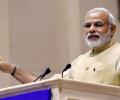
Prime Minister Narendra Modi, in his Independence Day address, highlighted technology and innovation as central to India's goal of becoming a developed nation by 2047. He called for India to lead in emerging technologies like AI, quantum computing, and space, announcing a massive AI skilling initiative for one crore youth. Modi stressed the importance of becoming a global innovation hub, bolstering energy security with nuclear power, and strengthening cybersecurity.

Kiran Mazumdar-Shaw, Executive Chairperson of Biocon Ltd, stated that Artificial Intelligence (AI) could drastically reduce the drug development timeline from five-to-seven years to just one or two. Speaking at the Bengaluru Tech Summit, she highlighted AI's potential to revolutionise drug discovery, clinical trials, and precision medicine, urging for regulatory frameworks to keep pace with these advancements.
Two Bengaluru-based schools, EuroSchool Bannerghatta and Inventure Academy, have been named among the top three finalists for the World's Best School Prizes 2026. EuroSchool was recognised for Environmental Action, while Inventure Academy was a finalist for Community Collaboration. The awards, founded by UK-headquartered T4 Education, celebrate schools making significant impacts globally.
Researchers at NIT Rourkela have devised an electrochemical method to extract struvite, a phosphate mineral fertiliser, from human urine. This innovative process addresses waste disposal and resource conservation challenges by offering a sustainable, chemical-free alternative to traditional energy-intensive fertiliser production.

'More than 200 stakeholders representing 13 sectors and stakeholder groups participated in the consultations.'

India's markets regulator, Sebi, is set to issue comprehensive guidelines for the responsible use of Artificial Intelligence (AI) in capital markets, aiming to balance technological innovation with robust investor protection. The guidelines will focus on disclosures, accountability, and human oversight in critical AI-driven decisions.

Cognizant has launched Phase-1 of its Immersive Learning Center (CILC) in Chennai, aiming to develop talent for AI-powered solutions. The facility, spread across 165,000 square feet, features modern learning infrastructure and supports the company's commitment to scaling its Frontier-certified workforce.
Simplify Alpha, a Chicago-based healthcare technology company, has inaugurated its AI Engineering Centre in Hyderabad, aiming to expand its workforce to 1,000 professionals within two years. The centre will leverage AI and healthcare domain expertise to address complex operational challenges in the US healthcare industry, reinforcing Hyderabad's status as a global innovation hub.
Abhiroop Chatterjee, a PhD researcher from Jadavpur University, has been selected for the 2026 Google PhD Fellowship Programme, becoming the first from the institute to receive this global distinction. His research focuses on advancing machine learning and AI models, particularly in developing efficient representation learning approaches and addressing challenges like semantic drift and memory loss in large AI models.

India and Gujarat leg-spinner Ravi Bishnoi discusses the increasing challenges for bowlers in fast-paced T20 cricket, emphasising the need for constant variation and skill upgrades, including mastering yorkers, to counter aggressive batting and survive in the modern game. He highlights how the game has become batter-friendly and the importance of being proactive.

The Securities and Exchange Board of India (Sebi) is investigating the feasibility of creating a domestically governed artificial intelligence (AI) model for the securities market through a collaborative effort with market participants. This initiative aims to make AI-based regulatory tools secure, affordable, and accessible, especially for smaller regulated entities.

A 17-year-old Indian AI entrepreneur, Raul John Aju, gained overnight fame after his selfie with Russian President Vladimir Putin at the AI Journey conference in Moscow went viral. Aju, founder of AIRealm Technologies and known as the 'AI Kid of India', expressed gratitude for the unexpected opportunity.

Indian Railways is reportedly considering scrapping its 'Reservation Against Cancellation' (RAC) facility, which allows two passengers to share one berth. Senior railway officials argue that digital innovations in ticket checking have rendered the system obsolete, while also highlighting concerns about passenger inconvenience and potential for unfair practices.

Hindustan Zinc and IIT Madras have collaborated to develop an electric three-wheeler prototype featuring a zinc-air battery. This innovative battery supplements the traditional lithium-ion pack, aiming to extend the vehicle's driving range and offer a safer, more cost-effective energy storage solution using India's abundant zinc resources.

Tata Elxsi has partnered with Sarla Aviation to develop the Shunya air taxi platform. Tata Elxsi will provide engineering support for avionics, software integration, and certification, while Sarla Aviation will lead the design and type certification of the electric vertical take-off and landing (VTOL) aircraft.
Devesh K Hegde, founder of Fly Camp, is making drone flying accessible to the general public through his innovative venture. Showcasing at the Bengaluru Tech Summit, Hegde aims to popularise drone technology beyond tech enthusiasts, drawing inspiration from global experience centres. His startup, supported by Karnataka Startup Elevate and IIMB, plans to expand drone awareness programmes across the state.
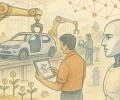
Indian companies showcased their quadruped robots at the Bengaluru Tech Summit, with General Autonomy's Param winning a race. The event highlighted India's growing capabilities in robotics and Physical AI, with robots designed for defence, industrial surveillance, and security applications.

Karandeep Kochhar led Krishna Punjab Raptors GC to victory in the X-Golf contest at the Auro Realty Invitational 2026, securing a double win after his individual play-off triumph. The innovative X-Golf format, combining precision, speed, and teamwork, saw Punjab Raptors overcome Mumbai Garudas and Bengaluru in a thrilling final, with Kochhar playing a pivotal role throughout the tournament.
Researchers at NIT Rourkela have developed a patented method to convert inactive proteins, typically discarded by pharmaceutical companies, into hydrogels. These hydrogels show potential for applications in wound healing, tissue regeneration, and drug delivery, offering a sustainable solution for protein waste.

Japan inaugurated the 20th Asian Games in Nagoya with a vibrant opening ceremony that seamlessly blended advanced technology and rich cultural traditions, despite earlier organisational challenges.

NetApp CEO George Kurian advocates for harmonised global AI regulations to simplify compliance and foster business growth. He highlights the complexities arising from diverse regulatory frameworks and the importance of a unified approach, similar to cyber resilience standards. Kurian also notes India's significant role as NetApp's fastest-growing market in Asia, driven by its Bengaluru global capability centre.
