
Air India Express, Air India, Akasa Air, and IndiGo have cancelled flights to Riyadh, Saudi Arabia, following reported attacks by Houthi militants on Riyadh and Abha airports, with cancellations extended until at least October 9-10.

India has issued a fresh advisory for its nationals, particularly Umrah pilgrims, in Saudi Arabia due to ongoing flight cancellations and regional tensions. The Indian Consulate in Jeddah is providing assistance, coordinating with Saudi authorities, and helping facilitate the early return of affected individuals amidst disruptions caused by drone and missile attacks.

Air India has extended the cancellation of flights to Saudi Arabia until October 20, 2026, due to escalating tensions and Houthi attacks in the region. IndiGo and Akasa Air have also extended their flight suspensions to Saudi cities, with passengers offered full refunds.

GE Aerospace is set to significantly increase its supply chain spending in India, targeting USD 400 million by 2030, up from USD 200 million in 2025. This expansion reflects the company's commitment to India's burgeoning aviation market, driven by substantial aircraft orders and the strategic importance of its manufacturing and technology centres in Pune and Bengaluru.

Boeing has identified a software issue in some 737 MAX planes that could disengage the automated flight guidance system after a missed landing approach. The company is developing a permanent solution and has advised operators on interim procedures. Indian carriers Air India Express and Akasa Air operate these aircraft, with Akasa Air stating no impact on their safety.

The Civil Aviation Ministry has requested Adani Airports to postpone the partial relocation of international flights from Mumbai to Navi Mumbai airport, a move initially proposed due to renovation of Mumbai's Terminal 1 and opposed by airlines. Discussions are underway to formulate a revised transition plan.

India has issued an advisory for its nationals in Saudi Arabia to remain vigilant and stay indoors due to an escalating security situation involving Houthi attacks on civilian infrastructure, including airports. The advisory also cautions against circulating related news and confirms the normal functioning of Indian diplomatic missions. Flight services from India to Riyadh have been cancelled by Air India and Air India Express until October 10 following the attacks.
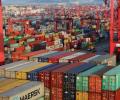
Civil Aviation Minister K Rammohan Naidu announced significant opportunities for Micro, Small, and Medium Enterprises (MSMEs) within India's rapidly expanding aviation sector. With Indian airlines ordering over 1,600 aircraft and the aerospace market projected to double by 2035, there's a massive scope for Indian suppliers to integrate into global aerospace supply chains, moving beyond assembly to design and manufacturing.
Mumbai International Airport is set to reduce 265 weekly international flights from October 25 to facilitate the redevelopment of Terminal 1. This move, impacting 46 airlines including IndiGo and Air India, has raised concerns among carriers and global aviation bodies like IATA, who advocate for collaborative planning over mandated relocations.

India's domestic air passenger traffic experienced a 6.34 per cent year-on-year decline in August, reaching 121.26 lakh passengers, according to data released by the Directorate General of Civil Aviation (DGCA).

French aerospace and defence major Thales views India as a highly dynamic market for avionics, with significant growth potential as Indian airlines expand their fleets. The company, which has a substantial presence and MRO facilities in India, is also exploring opportunities to replicate India-developed solutions globally and sees increased use of AI in development.

China Southern Airlines is set to resume its Guangzhou-New Delhi passenger service from September 21, ending a six-year suspension. This move is part of a broader normalisation of India-China relations, following recent high-level diplomatic meetings and previous flight resumptions by other carriers.

An Indian pilot and several passengers are being hailed as heroes after thwarting a co-pilot's alleged attempt to crash a flydubai flight en route to Tel Aviv. The incident involved a mid-air struggle, a rapid descent, and an emergency landing in Saudi Arabia, with international leaders praising the bravery that saved 174 lives.

The broader conflict in West Asia, the largest international market for Indian carriers, has forced a sharp reduction in daily flights relative to the summer schedule.
Domestic air passenger traffic in India decreased by 4.80 per cent in July 2026 compared to the previous year, reaching 1.20 crore, with major airlines experiencing a drop in load factor, according to DGCA data. Despite the overall dip, IndiGo and Air India Group increased their market share.

Regional Indian airline FLY91 has placed a significant order for 40 new ATR 72-600 turboprop aircraft, valued at nearly USD 1 billion. This marks the single largest order for ATR planes by a regional carrier globally and is set to dramatically expand FLY91's network, connecting more unserved and underserved cities across India. Deliveries are scheduled from late 2027 to 2032, supporting the airline's goal of operating over 60 aircraft.
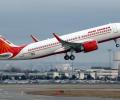
GE Aerospace is utilising artificial intelligence solutions, developed by its Bengaluru team, to significantly improve aircraft engine inspection, analytics, and maintenance. These innovations have reduced turnaround times by at least five days, enhancing engine durability, reliability, and time on wing, with specific tools like the AI-enabled Blade Inspection Tool cutting inspection times by 50%.

Indian airlines are expected to cancel 444 international flights due to airspace restrictions in the Middle East following attacks on Iran by Israel and the US. The civil aviation ministry is closely monitoring the situation and coordinating with airlines to ensure passenger safety and minimize disruptions.

Due to airspace restrictions resulting from the conflict in the Middle East, Indian domestic carriers have cancelled 278 international flights. Some airlines are operating limited services and special flights to assist stranded passengers.
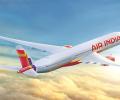
An Air India flight from Delhi to Amritsar briefly entered Pakistan airspace during a go-around manoeuvre at Amritsar airport. India's aviation regulator, DGCA, has taken interim action against an air traffic controller and the operating crew for failing to report the incident, which is now under internal investigation by Air India.

'We may be able to wind back some of the schedule reductions we'd taken in recent months.'

Akasa Air, despite facing headwinds from the West Asia conflict and rising aviation turbine fuel prices, expects to maintain a 30-40 per cent growth trajectory over the next five years and aims for an initial public offering (IPO) within two to four years, according to CFO Ankur Goel.
Parents of Kashmiri students studying in Iran have appealed to the Indian government to evacuate their children due to ongoing tensions and protests in the country. They cite difficulties in communication and travel arrangements.
Indian airlines are resuming normal services to Kathmandu after the airport reopened following unrest in Nepal. Air India and IndiGo will operate additional flights to bring back stranded passengers.

India has extended the ban on Pakistan planes from using its airspace until May 24, continuing a measure in place since April 2025 following the Pahalgam terror attack.

The support will be provided to oil-marketing companies (OMCs) in the form of interest-free advances through the ministry of petroleum and natural gas. The OMCs, in turn, will use the fund to provide ATF price stabilisation support to Indian carriers operating domestic and international flights.

Airlines are cutting not only international services but also domestic flights, especially on routes projected to remain unprofitable in the coming weeks due to weak demand and high fares.

Air India has deferred annual salary increments for its staff by at least one quarter and urged a "relentless focus on costs" due to external headwinds like the closure of Pakistan airspace, West Asia conflict, rupee depreciation, and a significant surge in aviation turbine fuel prices, though the airline has assured there will be no layoffs.
Following through announcements with enforcement of measures is key, as a run through recent Indian economic history shows, points out A K Bhattacharya.
The government has suspended its directive requiring airlines to offer at least 60% of seats on flights without additional charges, following industry concerns about the impact on fares and pricing structures.
Newly appointed Kerala CM V D Satheesan seeks guidance from senior Congress leaders A K Antony and V M Sudheeran, receiving advice on navigating the challenges of leadership and addressing the state's financial and developmental issues.
IndiGo, Air India, and SpiceJet are opposing the government's directive to offer 60% of seats for free selection, arguing it will lead to increased airfares to compensate for lost revenue.

Air India, IndiGo and SpiceJet have told the government that the country's airline industry is under extreme stress and on the verge of "stopping operations", as they sought revision in ATF pricing and financial support.
IndiGo has the lowest pilots-to-aircraft ratio among domestic airlines in India, according to data presented in Parliament. SpiceJet and Akasa Air have the highest ratios. Air India Express employs the most expat pilots.
The operations of many global carriers, including Qatar Airways, have also been impacted due to the airspace curbs in the wake of the Middle East tensions.

Aviation fuel prices for domestic airlines remain unchanged, providing stability for local carriers, while commercial LPG and 5-kg cylinders see a significant rate hike due to rising international energy costs.
The Indian government disclosed that 176 aircraft operated by non-scheduled and general aviation operators lack flight data and cockpit voice recorders, raising safety concerns. The disclosure was made in response to a query in the Rajya Sabha.
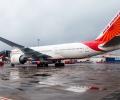
Indian carriers have cancelled over 10,000 flights since the onset of the West Asia conflict, as escalating tensions and airspace restrictions disrupted international operations, a senior government official said.
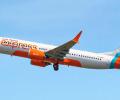
Indian airlines are likely to face additional weekly expenses of Rs 77 crore for international flights operated from north Indian cities as the airspace curbs result in increased fuel consumption and longer flight duration. An analysis of the number of overseas flights and back-of-the-envelope calculations based on increased flight time as well as approximate expenses by PTI showed that the additional monthly operational costs could be over Rs 306 crore.

Airports across the country have been placed on operational alert to manage potential flight diversions, unscheduled landings and passenger facilitation requirements.
