
'De-escalation was visible.'

The US is planning to increase tariffs on China, India, and several other countries as early as this week, citing concerns over excess industrial production that harms American companies. This move follows a US Trade Representative (USTR) investigation under Section 301 into 16 economies for alleged unfair trade practices and subsidies. India and the US are currently negotiating a bilateral trade agreement, with India seeking lower tariffs for its goods.

India and China are in what experts call 'a cooperation-versus-competition situation'.

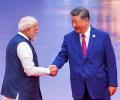
Prime Minister Narendra Modi, in bilateral talks with Chinese President Xi Jinping, emphasized that both nations must show sensitivity to each other's core issues and be guided by mutual respect, sensitivity, and interest. Modi highlighted the critical importance of peace and tranquillity along the Line of Actual Control for the development of India-China relations, while also addressing concerns regarding Taiwan and Tibet.

During the 18th BRICS Summit in New Delhi, Chinese President Xi Jinping and Prime Minister Narendra Modi held a bilateral meeting, outlining a four-point approach for the steady and long-term development of China-India relations. The leaders stressed strategic understanding, win-win cooperation, mutual respect, and inclusive multilateral engagement, reaffirming their commitment to resolving the boundary question and addressing economic concerns. They also discussed global challenges and strengthening people-to-people ties.

The women's hockey final at the Asian Games between India and China was delayed by 45 minutes due to a traffic snarl. India is competing for a historic gold medal, which would also secure direct qualification for the 2028 Los Angeles Olympics, aiming to end a 44-year wait since their last victory in 1982.

In July, tension emerged in Taksing, a remote village in the Upper Subansiri district of Arunachal Pradesh after locals sighted PLA soldiers.

India and China have agreed to advance discussions on an "Early and Substantial Harvest" of boundary delimitation and border management during the 25th round of Special Representatives talks between National Security Advisor Ajit Doval and Chinese Foreign Minister Wang Yi in Beijing. Both sides reached an eight-point consensus, committing to the 2005 Agreement on Political Parameters and Guiding Principles for Settlement. Key outcomes include enhancing border management, improving understanding of the Line of Actual Control, establishing new meeting points and hotlines, and continuing cooperation on trans-border rivers and pilgrimage.

Xi's bilateral meeting with Modi was substantial and readouts from both sides gave indications of rapprochement, if not a reset of bilateral relations between India and China, notes Ambassador T P Sreenivasan.

Indian and Chinese military officials have held corps commander-level talks in Arunachal Pradesh to review the Line of Actual Control (LAC) situation, following recent Special Representative discussions aimed at de-escalating border tensions and fostering bilateral ties.

Foreign Secretary Vikram Misri held extensive discussions with China's Vice Foreign Minister Hua Chunying and other senior officials in Beijing, reviewing bilateral relations, trade, cultural exchanges, and emphasising peace and tranquillity in border areas. His visit aims to advance the vision of both nations as development partners.

India has reiterated that any code of conduct for the South China Sea must align with international maritime law, particularly the UN Convention on the Law of the Sea (UNCLOS). This statement comes as China and ASEAN continue negotiations on a pact for the contested region, where concerns over China's expansive claims and military activities persist.
'Eastern Ladakh set the relationship back by about 10 steps. So far, especially since Galwan, we may have taken just 4 steps forward.'

India on Tuesday conveyed to China the importance of maintaining peace and tranquility along the Line of Actual Control (LAC) for overall bilateral ties as national security advisor Ajit Doval held talks with Chinese Foreign Minister Wang Yi focusing on delimitation of the frontier and sustaining work on trans-boundary cooperation.

Indian and Chinese armies held their first high-level commanders' flag talks in the Arunachal Pradesh sector, following Special Representatives dialogue. These talks, aimed at maintaining peace along the Line of Actual Control, occurred amidst reports of aggressive military posturing and just days before Chinese President Xi Jinping's visit to India for the BRICS summit.
Defending champions India, having already secured a semifinal spot with three consecutive wins, are set to face higher-ranked China in their fourth round-robin match of the Women's Asian Champions Trophy. India leads the standings, showcasing strong performances from key players like Mumtaz Khan and Deepika. Coach Sjoerd Marijne expressed satisfaction with the team's adaptability and depth, acknowledging China and Japan as significant challenges for continental supremacy.

Chinese Foreign Minister Wang Yi stated that President Xi Jinping and Prime Minister Narendra Modi reached a crucial consensus during the BRICS summit, agreeing that China and India should be partners, not rivals. The leaders pledged to maintain peace and tranquility in border areas, deepen cooperation, and support each other in multilateral forums, aiming to strengthen the Global South and promote a multipolar world order.

The Indian women's hockey team secured a dominant 6-2 victory over Olympic silver medallists China in the Women's Asian Champions Trophy, marking their fourth consecutive win.

India defeated China 5-2 in the Asian Champions Trophy hockey tournament, securing their second consecutive win. Skipper Harmanpreet Singh and striker Sukhjeet Singh both scored a brace, with Jugraj Singh adding another goal. China managed to score two goals from penalty corners, but India maintained control throughout the match.

India-China border trade via Uttarakhand's Lipulekh Pass is set to resume on August 1 after a gap of more than six years, with the neighbouring country granting permission to 20 Indian traders to visit Purang (Taklakot), according to officials.

External Affairs Minister S Jaishankar stated that India's border with China has become "more alive," necessitating a greater and sustained commitment of Indian troops. He highlighted India's enhanced military capabilities along the LAC since the 2020 Galwan Valley clashes and the significant infrastructure development in border areas over the last decade. Jaishankar also discussed the economic asymmetry between India and China, attributing it to India missing industrialisation opportunities in the 1980s and outlining India's current strategy to address this imbalance.
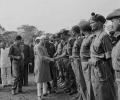
The conversations on July 22 and 23, 1962, meetings in Geneva between V K Krishna Menon, India's defence minister at the time, and Chinese vice premier Chen Yi are important because, had they been followed up, the subsequent border war may perhaps have been avoided, notes former foreign secretary Shyam Saran.

Former CDS Anil Chauhan stated that China poses a long-term and comprehensive challenge to India, with the boundary issue remaining unresolved due to differing perceptions of the Line of Actual Control. However, he emphasised that India's ties with Beijing cannot be solely defined by border disputes, advocating for engagement through platforms like SCO and BRICS. He also highlighted the broader global geopolitical flux and instability in India's neighbourhood as significant security concerns, stressing the need for self-reliance.

Beijing published the world's first global framework for vocational standards. If India does not act swiftly, it will be compelled to certify its workers by someone else's rulebook, cautions Abhay Jere, ex-Vice Chairman, AICTE.

Indian men's hockey team chief coach Craig Fulton expressed satisfaction with his side's consistent performance across all four quarters in their 5-2 victory over China at the Asian Champions Trophy. This marks India's second consecutive win in the tournament, following a dominant 13-0 triumph against Bangladesh. Fulton highlighted the third quarter as particularly strong and praised the team's penalty corner defence, while also acknowledging China's efforts.

'Therefore, Beijing comes to wrong conclusions.'
India and China held diplomatic talks to review the situation along the Line of Actual Control (LAC), discussing boundary delimitation, border management, and trans-border cooperation. Both nations stressed the importance of maintaining peace and tranquillity for bilateral relations and agreed to continue using existing channels to resolve outstanding issues.

The US House of Representatives is debating a bill that would authorise the President to impose sanctions on Russia and steep tariffs on its oil and gas trading partners, including India and China. The bill, aimed at pressuring Russia over the Ukraine war, has faced opposition but is expected to be put to a vote.
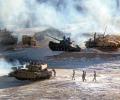
While tensions have eased at several friction points and mechanisms for managing the boundary have been reactivated, underlying differences persist. Disputes over naming practices in Arunachal Pradesh, continued infrastructure development on both sides, and unresolved questions regarding patrolling rights indicate that the structural gap remains, notes Dr Kumar.

Five-time champions India, fresh off a dominant win against Bangladesh, are set to face a youthful and unfamiliar Chinese side in their second Asian Champions Trophy round-robin match on Thursday. Coach Craig Fulton acknowledges the challenge of playing an unknown opponent, while veteran striker Mandeep Singh's hat-trick against Bangladesh signals his return to form.

Sivakasi, India's fireworks capital, is eyeing global markets as green crackers, rising demand and interest from overseas buyers offer a chance to challenge China's dominance.

Union Minister Kiren Rijiju criticised the Congress party and Rahul Gandhi's "compromised PM" remark against Prime Minister Narendra Modi. Rijiju posed four questions to the Congress, including about the 1962 India-China war and India's economic history, while also alleging the party abandoned armed forces during the 1962 conflict. This political exchange follows Gandhi's comments on Modi's absence from a trilateral meeting at the APEC summit.

Beijing has strongly criticised new US export controls on advanced semiconductor chips to five countries, viewing them as an attempt to prevent diversion to China. This condemnation comes just before US President Donald Trump's visit to Shenzhen for the APEC summit, where geopolitical tensions, including China's opposition to the Quad, are also in focus.

Chinese President Xi Jinping is in New Delhi for the 18th BRICS Summit, where he is scheduled to hold bilateral talks with Prime Minister Narendra Modi. This visit, his first to India in nearly seven years, comes amidst efforts to normalise India-China relations following the 2020 Eastern Ladakh standoff and is expected to have significant implications for bilateral ties and BRICS cooperation.

External Affairs Minister S Jaishankar stated that the stability of the Line of Actual Control (LAC) is essential for normalising India-China relations, asserting that border disturbances will have consequences. He connected trade and investment growth to border peace and highlighted significant economic issues, including a severe trade imbalance and lack of market access for India in China. Jaishankar also referenced the 2020 Galwan clashes as a critical turning point, underscoring the profound impact of border tranquillity on the overall bilateral relationship.

'China has built highways on its side and enjoys a geographical advantage. If we cannot build roads, how can we expect our forces to transport equipment and other essential supplies to defend the borders?'

Russian President Vladimir Putin stated that Moscow would not interfere in the "delicate" bilateral relations between India and China, expressing confidence in their ability to resolve border disputes amicably. He also discussed Russia's independent partnerships with both nations, touched upon India-Pakistan ties, and highlighted ongoing and proposed defence cooperation with India, including the BrahMos missile and a potential Su-57 fighter jet project.

'We are open to all countries around the world as long as we get a fair deal, as long as we are ensured continuity in the engagement.'

China has voiced strong opposition to India's recent decision to standardise names for 28 strategic locations and geographical features in Ladakh.

One should not expect the blue wave to reverse some of Mr Trump's hostile measures against India on immigration and on trade. The Democrats are unlikely to ease the limits placed on the entry of Indian professionals into the US. They are equally unlikely to ease up on Mr Trump's protectionist policies cautions former foreign secretary Shyam Saran.
