
A Union Cabinet note said, "There seems to be no scope for doubt that he died in the air crash of 18th August 1945 at Taihoku. Government of India has already accepted this position. There is no evidence whatsoever to the contrary."
'Modi's political economy is more inspired by Indira Gandhi than Vajpayee.' 'She so wanted an Opposition-mukt Bharat.' 'Sounds familiar?' asks Shekhar Gupta.

'The only effective defence against a suicide attack is 'pre-emptive' destruction of the attacker,' says Colonel Anil A Athale (retd).

Rediff.com takes a look at a few brilliant efforts which, unfortunately, were in a losing cause.
From Swachh Bharat to spearheading the Make in India campaign, the PMO seems to be at the centre of all policies, writes Nivedita Mookerji.
'For half a century, Delhi has not seen a truly powerful ruling party president.' 'The Cabinet, chief ministers, and even the heads of the most powerful departments and agencies now acknowledge where power lies, besides the prime minister's office,' says Shekhar Gupta.
The files, digitised and given "preliminary conservation treatment" by the National Archives of India, were released on the birth anniversary of Netaji.

Terming corruption as a "major stumbling block" in the country's progress, President Pranab Mukherjee on Tuesday asked the central vigilance commission to lead the way in cleansing the government.

The AAP government on Tuesday moved a resolution against the Centre's notification giving absolute powers to the Lt Governor.

Having made farmer suicides a campaign issue, Modi and the BJP should have no complaints in now having to live with it, says Aakar Patel.

'When war is thrust on you as in 1962 and 1965 or is tempting as in 1971, ensure that all other fronts are kept quiet, leaving your army free to deal with one,' says Shekhar Gupta.

If India is to follow a smart cultural diplomacy, it has unmatched advantages over both China and Pakistan, says Colonel Anil A Athale (retd).

'The Indian Air Force wanted to fight. My squadron leaders and flight lieutenants, all of us were eager to fight. Unless they are keen I can't have confidence.' Marshal of the Air Force, the legendary Arjan Singh, on the 1965 War.

20 years ago this day, May 11, 1998, India conducted its second nuclear test at Pokharan in Rajasthan. In a fascinating interview on Rediff.com, K Subrahmanyam revealed how Indian PMs reacted to nuclear ambitions.

'Nehru is often portrayed as a visionary with his head in the clouds. But he had his feet firmly planted on the ground when it came to building and nurturing institutions and setting them on the right path with the right traditions,' says B S Raghavan.

Sumit Bhattacharya paradrops into the eastern Uttar Pradesh temple city to find it enjoying its moment in the national sun.

'One wonders if he has decided on the disastrous course of taking after Manmohan Singh, sitting like a Madam Tussaud wax figure, the same expressionless face, eyes unblinkingly staring in front, and making absolutely no difference, and no contribution, to the House proceedings,' asks B S Raghavan.

Terrorism and Afghanistan were the focus points of Prime Minister Narendra Modi's talks with Uzbek President Islam Karimov on his first visit to Central Asia.

'All of Indira Gandhi's bad economic ideas are being strengthened, from nationalised banks to anti-poverty, handout yojanas,' says Shekhar Gupta.

'Today you have 30 to 40 per cent of bureaucrats who are not parrots of the government, but what happens if you change the system?' 'If implemented, this can disrupt the system, which will have more adverse consequences than demonetisation.'

To look for lessons from Nehru's life to find a way out of the Congress' quagmire is probably futile, says Rahul Jacob

Wielding the broom, Prime Minister Narendra Modi on Thursday launched the country's biggest-ever cleanliness drive that is expected to cost over Rs 62,000 crore, asserting that the "Swachh Bharat" mission is "beyond politics" and inspired by patriotism.

'Modi and Shah know their politics. That is why the alarmed switch to reservations, and raising the threat from 'vote bank' politics,' says Shekhar Gupta.

'Narendra Modi might not have made 145 in Maharashtra, but it is definitely true that the Congress, and other dynastic parties, are well and truly stumped.'
One cannot but infer that this brouhaha is a crafty ploy to create an issue out of a non-issue. An overview of post-independent India's history reveals that it is not the BJP or the Sangh Parivar but Marxist historians who have been guilty of debasing history to suit their vested interests, says Vivek Gumaste.

'How can a State, which claims to be a responsible power, unilaterally grab a "disputed" area to build a road on it?' asks Claude Arpi.
On this one issue that touches the raw nerve of Tamil Nadu, Modi had better heed M Karunanidhi's sage words conveying "the desire and appeal of all well-wishers of the nation that Prime Minister Modi should focus on accelerating economic growth and social development" and not, let me add, let his ministers embark on disruptive escapades, says B S Raghavan.
'Modi's victory is his own victory. Now what he has done thereafter, it seems to me, leads us to believe that he was a bit too prolific with his promises.' 'One achievement of Modi's I will praise is that he has put the fear of God among his ministers and officials.' 'Indira Gandhi's sentiment of controlling everything, centralising power in to her hands is the quality that persists in Modi' Veteran journalist Inder Malhotra casts his experienced gaze on one year of the Modi Sarkar.

Mahesh Rangarajan, director of the historic Nehru Memorial Museum and Library in New Delhi, tells Sheela Bhatt how the first prime minister will always remain relevant, and the efforts being made to keep his legacy alive.

Attacking the Congress and United Progressive Alliance on price rise at a massive BJP rally in Bengaluru, Narendra Modi tells the crowd that Congress is worried sick about the BJP's growing popularity. Vicky Nanjappa reports.
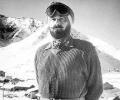
Lieutenant General Harbakhsh Singh, GOC, Western Command, disobeyed the then army chief and took on a superior Pakistani armoured column. The Indian Centurion tanks outgunned the more modern Pakistani Patton tanks in the battle at Khem Karan, that proved the turning point of the 1965 War. Brigadier Gurmeet Kanwal (retd) salutes the Soldiers' General.
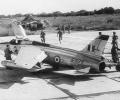
'As the IAF kicks off another round of myth-making -- launching a year-long commemoration of the 50th anniversary of the 1965 India-Pakistan war -- it is worth remembering how little there was to celebrate in those September days when the underdog PAF got the better of the IAF in raid after raid, dogfight after dogfight.'

'The question now is how long the exercise in perfection he created will last once his influence isn't there any longer,' says Sunanda K Datta-Ray.
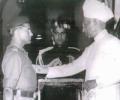
Decorated with a Vir Chakra for leading an attack that destroyed four tanks, Risaldar Ayub Khan shared a name with the Pakistani president who ordered the invasion of India in 1965. India's Ayub came from a family of soldiers and made his country proud.
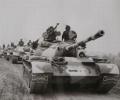
The 1965 war teaches us that war by escalation is a real possibility. Despite clear threats, Pakistan never believed that India will ever cross the international border. In the age of nuclear deterrence, this failure to deter Pakistan is the central lesson of 1965, says Colonel Anil Athale (retd).
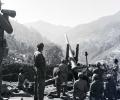
Fifty years ago, India and Pakistan fought a short but bloody war. The author finds out how Sainik Samachar, the defence ministry's journal, reported it.

'News is rife that Pakistan will attack the next day. They have no idea that this is where they will take on the might of 1 Armoured Division of Pakistan in a three-day bloody battle that will be remembered in military history as the Battle of Asal Uttar.' Rachna Bisht Rawat salutes the brave men turned the tide of the '65 war.

'The BJP is not the party it was 10 years ago. It has changed. It is emerging like the Congress.' 'Sometimes, I feel the BJP has taken the Congress' space.' 'Its politics is also resembling the Congress.'

'Renu Raj has exploded many civil services myths.' 'The popular belief is that unless they come from English speaking, sophisticated and affluent families, prepare at a young age, get educated in a first rate college, go to a coaching class in one of the metro cities, take the examination several times, the aspirants cannot make it to the civil services list, particularly its very top.' Ambassador T P Sreenivasan -- who serves in an honorary capacity at the NSS Academy where Renu coached for the IAS -- on how she surprised even herself by topping the UPSC exam.

Cairn India CEO has a tough task at hand.
 © 2026 Rediff.com - Advertise with us - Disclaimer - Privacy Policy - Sitemap - Feedback - About us - Terms of use - Grievances