
A UN Security Council report states that The Resistance Front (TRF) claimed responsibility for the Pahalgam terror attack and published a photograph of the attack site. The report also cites assertions that the attack could not have happened without the support of Pakistan-based Lashkar-e-Tayyiba (LeT).

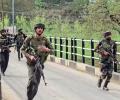
A head constable on Amarnath Yatra security duty was killed in a terror attack in Anantnag, Jammu and Kashmir. The Resistance Front (TRF) has claimed responsibility for the attack, prompting security forces to launch a search operation.
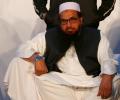
The National Investigation Agency (NIA) has filed a supplementary chargesheet naming Lashkar-e-Taiba (LeT) chief Hafiz Saeed as an accused in the Pahalgam terror attack, charging him with waging war against India and hatching a cross-border conspiracy.

A special NIA court in Jammu has issued a non-bailable warrant against Hafiz Saeed, the Pakistan-based chief of Lashkar-e-Taiba, in connection with the ongoing investigation into the Pahalgam terror attack. This action follows a supplementary chargesheet filed by the NIA, which also links Saeed to the 2008 Mumbai attacks.

An anti-terror operation in Jammu and Kashmir's Shopian district resulted in the killing of a Lashkar-e-Taiba (LeT) terrorist. Security forces had maintained a five-day cordon in the Meemandar area, leading to intermittent exchanges of fire.

Sheikh Sajjad Gul, the head of Lashkar-e-Taiba proxy The Resistance Front (TRF), has been identified as the mastermind behind the Pahalgam terror attack that killed 26 people in April. Gul, who is based in Pakistan, has a history of planning terror attacks in Kashmir, including targeted killings, grenade attacks, and ambushes of police personnel. He was designated a terrorist by the NIA in 2022 and a reward of Rs 10 lakh was placed on his head. The TRF claimed responsibility for the Pahalgam attack, where tourists were shot at point-blank range after being asked their religion. Gul's history includes a 2002 arrest in Delhi for planning serial blasts and a subsequent 10-year prison sentence. After his release, he moved to Pakistan and became the leader of the TRF in 2019, a move orchestrated by the ISI to present a facade of an indigenous terror movement in Jammu and Kashmir.
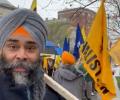
Rajasthan's Anti-Terrorism Squad (ATS) has identified a Punjab-based suspect for allegedly sharing pro-Khalistan and pro-Pakistan content on social media platforms.

The Centre has appointed lawyer Karambir Singh Nalwa as Special Public Prosecutor to lead the trial in the Pahalgam terror attack case, which resulted in the deaths of 25 tourists and a local pony operator on April 22 last year.
"More than 85,000 domiciles have been issued to non-locals, creating a pathway for demographic change in Jammu & Kashmir. These non-locals arrive posing as tourists, obtain domiciles, and then begin to act as if they own the land. Consequently, violence will be directed toward those attempting to settle illegally," TRF said in a statement which could not be independently verified by Rediff.

The Union Home Ministry has designated 23 individuals based in Pakistan and Pakistan-occupied Jammu and Kashmir (PoJK) as terrorists under the Unlawful Activities (Prevention) Act (UAPA) for their involvement in infiltration, recruitment, logistics, financing, and operational planning targeting India.

India has strongly criticised Pakistan at a UN Security Council meeting, asserting its right to defend itself against cross-border terrorism and warning of consequences for Pakistan's support of such activities.
India has strongly criticised Pakistan at a UN Security Council meeting, asserting its right to defend itself against cross-border terrorism and warning of consequences for Pakistan's support of such activities.

An NIA court has sentenced three men for their involvement in an Al-Qaeda-linked terror conspiracy to carry out attacks in Uttar Pradesh. The convicts received jail terms ranging from 5 years to life imprisonment.
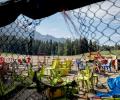
A memorial has been erected in Pahalgam to honour the victims of a terror attack last year. Security has been increased across Kashmir ahead of the anniversary.
The camera was activated on January 30, 2024 at Dongguan--an industrial metropolis in China, and is among various material objects and electronic devices found and examined by the investigators connected with conspiracy.
It is also the first time that TRF has been mentioned in any UN document. This marks the first mention of the LeT and any other Pakistan-based terror group in the report since 2019.
'Another demonstration of strong India-USA counter-terrorism cooperation. Appreciate the Department of State for listing The Resistance Front (TRF) as a designated Foreign Terrorist Organization and Specially Designated Global Terrorist.'
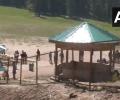
The National Investigation Agency (NIA) filed a chargesheet against seven accused in the Pahalgam terror attack case, including Pakistan-based Lashkar-e-Taiba (LeT) and its proxy The Resistance Front (TRF).
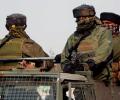
The gunfights broke out in Goplapora and Pombay areas of the South Kashmir district. Two terrorists each were killed in the twin encounters, a police official said.
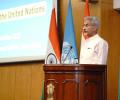
External Affairs Minister S Jaishankar criticizes Pakistan's attempts to protect a terror group at the UN Security Council, highlighting the need for urgent reforms within the global body.

External Affairs Minister S Jaishankar clarified that there was no third-party intervention in the ceasefire with Pakistan during Operation Sindoor. He asserted that halting the operation was not linked to trade and refuted claims of mediation by US President Donald Trump.

US President Donald Trump claimed that "five jets were shot down" during the conflict between India and Pakistan in May and repeated his assertion that the fighting ended following his intervention. India has maintained that the two sides halted their military actions following direct talks between their militaries without any mediation by the US.
An Indian delegation met top officials of the United Nations Office of Counter-Terrorism (UNOCT) and Counter-Terrorism Committee Executive Directorate here even as New Delhi stepped up efforts to designate The Resistance Front, a Lashkar-e-Tayyaba proxy, as a UN-listed terror outfit for its alleged involvement in the Pahalgam attack.

External Affairs Minister S Jaishankar discusses India's approach to cross-border terrorism following the Pahalgam attack, emphasizing a firm response and no compromise on nuclear blackmail.
Records stretching back to 1947 suggest a consistent strategy by Pakistan's military and intelligence apparatus, the Inter Services Intelligence (ISI), of using terrorism as a state policy against India.

The National Investigation Agency conducted searches at nearly a dozen places linked to The Resistance Front terror group in Jammu and Kashmir on Thursday, days after its announced cash rewards of Rs 10 lakh each on information leading to the arrest of its four cadres.

In his address, Jaishankar warned that those who condone nations that sponsor terror will find that it "comes back to bite them".

Trump also repeated his claim that seven fighter jets or more were shot down during the hostilities.

Security agencies have released sketches of three men suspected of being involved in the terror attack near Pahalgam in south Kashmir that killed 26 people, mostly tourists. The suspects, identified as Asif Fauji, Suleman Shah and Abu Talha, were also involved in terror related incidents in Poonch. The sketches were prepared with the help of survivors. The Resistance Front (TRF), a shadow outfit of the banned Pakistan-based Lashkar-e-Taiba terror group, claimed responsibility for the attack.
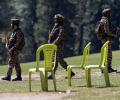
The officials said that intelligence agencies had been alerted about the possibility of a terror attack, but the inputs were utilised at another place, some 90 kilometres away from the site where the attack took place, resulting in a key security lapse.
A team from India's National Investigation Agency (NIA) has reached Pahalgam in Jammu and Kashmir to assist local police in investigating a deadly terrorist attack that killed 26 people, mostly tourists, on Tuesday. The NIA team visited the site of the attack, Baisaran meadow, known for its scenic beauty. Security agencies have released sketches of three suspected Pakistani terrorists involved in the attack, identified as Asif Fauji, Suleman Shah, and Abu Talha. The Resistance Front (TRF), a shadow outfit of the Lashkar-e-Taiba terrorist group, claimed responsibility for the attack.

The government stated that Operation Sindoor was launched in response to a 'barbaric' attack by 'Pakistan-sponsored terrorists,' focusing on dismantling terror infrastructure and neutralizing terrorists likely to be sent across to India.
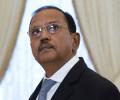
National Security Adviser Ajit Doval on Tuesday called for shunning double standards in combating terrorism and urged members of the Shanghai Cooperation Organisation (SCO) to hold accountable perpetrators, organisers and financers of cross-border terrorism, seen as reference to Pakistan.
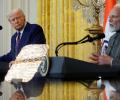
US President Donald Trump said on Friday that there has always been tension between India and Pakistan and the two countries will figure it out between themselves. Trump was asked about tensions between India and Pakistan in the wake of the Pahalgam terror attack, in which 26 civilians were killed, and if he would be talking to the leaders of the two nations. He said that he knows both leaders and that there is great tension between Pakistan and India, but there always has been.
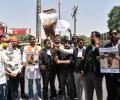
Kash Patel pledged full support to India, calling the act a reminder of the constant threats that the world faces from the evil of terrorism.
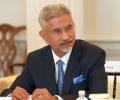
External Affairs Minister S Jaishankar says Operation Sindoor conveyed India's resolve to act against terrorism, following UN Security Council's call to bring Pahalgam attackers to justice.
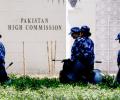
Pakistan has expressed condolences over the deaths of tourists in a terror attack in Pahalgam, Jammu and Kashmir, that killed 26 people. The Foreign Office spokesperson said Pakistan is concerned at the loss of tourists' lives and wished the injured a speedy recovery. The attack, claimed by The Resistance Front (TRF), a proxy of the banned Pakistan-based Lashkar-e-Taiba (LeT), is the deadliest in the Valley since the Pulwama strike in 2019.

Prime Minister Narendra Modi cut short his two-day visit to Saudi Arabia and returned to New Delhi on Tuesday night following a deadly terrorist attack in Jammu and Kashmir. Modi, who held bilateral talks with Saudi Crown Prince Mohammed bin Salman in Jeddah, skipped an official dinner hosted on Tuesday to address the crisis. He was originally scheduled to return to India on Wednesday night. The attack, claimed by The Resistance Front (TRF), a proxy of the Pakistan-based Lashkar-e-Taiba (LeT) terrorist group, prompted an urgent internal meeting at the Ritz Carlton hotel in Jeddah, attended by Modi, National Security Adviser Ajit Doval, and other senior officials.

Former Indian Army chief General Shankar Roychowdhury (Retd) has blamed "intelligence failure" for the recent terror attack in Pahalgam, Jammu and Kashmir, which claimed the lives of 26 civilians. He demanded accountability at the highest levels, stating that there must be someone responsible for the negligence and they must be held accountable for the consequences.
Former spinner Danish Kaneria suggested that Pakistan has a role in the Pahalgam terror attack in India which led to 26 deaths.
