
From believing that only women get breast cancer to assuming that a painless lump is harmless, Dr Shiv Shankar Mishra busts common myths and explains why early detection can make all the difference.

Researchers at Delhi's Indraprastha Institute of Information Technology have developed 'MutAIverse', a generative AI platform designed to decode DNA damage and identify potential causes of cancer. Tested on head and neck cancer patients in Guwahati, the platform successfully traced exposure to smokeless tobacco as a contributing factor. This innovation aims to shift focus from just diagnosis to understanding causative factors, potentially aiding in prevention and protection.

Researchers at IIT Indore have developed a non-invasive technique to detect early signs of oral cancer using saliva and a swab sample. This method is economical, quick, and aims to make early screening more accessible, especially in rural areas, offering an alternative to painful biopsies. The findings, published in the British Journal of Cancer, show distinctive molecular changes before the disease becomes clinically obvious.
Robotic surgery is poised to transform healthcare in Delhi, expanding access to specialised expertise through the Indian-developed SSI Mantra system. Delhi is emerging as a hub for advanced surgical care, with successful implementations at Rajiv Gandhi Cancer Institute, including pioneering telesurgery. This technology aims to make robotic surgery more accessible and sustainable, fostering an ecosystem for training and innovation.

Tata Trusts, India's largest philanthropic group, disbursed Rs 1,556.31 crore in the year to March 2026 and announced plans to establish a network of 40 to 50 not-for-profit general hospitals, with funding from paying patients supporting care for those who cannot afford it.
Researchers at the Indian Institute of Science (IISc) in Bengaluru have discovered that oral cancer cells are vulnerable to low-frequency ultrasound, a technique that can selectively destroy them while leaving healthy cells unharmed. This vulnerability is linked to reduced levels of the mechanosensory protein Tropomyosin 2.1. The study suggests ultrasound mechanostimulation could offer a safer, more targeted treatment for oral and other accessible cancers.

The unusual location of the food stall has fuelled public concern over compliance with food safety and sanitation norms.
Scientists from Agharkar Research Institute (ARI), Pune, have developed a biodegradable nanocarrier platform for targeted gene therapy in breast cancer. This strategy uses mesoporous silica nanoparticles to deliver siRNA molecules, effectively inhibiting tumour growth and reducing off-target effects, offering a promising new approach to cancer treatment.
Researchers have discovered a method to externally manipulate a cell's automatic waste clearance process, known as autophagy. This breakthrough, involving the protein LC3, could offer new therapeutic targets for diseases like cancer and Parkinson's, where cellular cleansing mechanisms are often impaired.

'It is very significant that she mentioned that the issue of her foreign origin was not restricted to the BJP or Sangh Parivar, but was also very much alive in her own party.'

Union Agriculture Minister Shivraj Singh Chouhan announced plans to establish a unit of the Tata Memorial Hospital in Vidisha, Madhya Pradesh, to provide advanced cancer treatment locally. He also inaugurated a free cancer screening camp and urged public awareness about early detection and prevention, including a social movement against substance abuse.

A country that makes the isotope sets the timetable for everyone who needs it.

A patient admitted to Sanjay Gandhi Postgraduate Institute of Medical Sciences (SGPGI) in Lucknow was found dead in his hospital bed with his throat slit. Police are investigating the circumstances surrounding the death of the 61-year-old cancer patient.

India does not need to win the model race to win the AI era. It needs to be the country that cannot be switched off, can be trusted by its citizens, and is useful to the rest of the world, asserts Rajeev Srinivasan.

A patient admitted to Sanjay Gandhi Postgraduate Institute of Medical Sciences (SGPGI) in Lucknow was found dead in his hospital bed with his throat slit. Police are investigating the circumstances surrounding the death.
Banaras Hindu University (BHU) has received approximately Rs 15 crore in funding from the Indian Council of Medical Research (ICMR) for six biomedical research projects. These projects aim to address critical national health priorities, including cancer detection, antimicrobial resistance, and pediatric septic shock, fostering advanced research and improving patient care.

US President Donald Trump on Monday (local time) defended his decision to bar CNN, MS NOW, and POLITICO from the White House, characterising the media access ban as an action against "fake news" rather than an attack on constitutional press freedoms.
Researchers at BRIC-RGCB in Thiruvananthapuram have developed a novel nanopore-based sensing technology. This innovation allows for the early and highly sensitive detection of biomarkers associated with neurodegenerative diseases like Parkinson's and ALS, addressing a critical challenge in current diagnostic methods. The technology, published in Nature Nanotechnology, uses self-assembling dual-diameter nanopore sensors to identify disease-specific biomarkers even at low concentrations.

'I had narrated a script to Nana Patekar, and four days before the end, he told me that once he returned from Goa, he would take the project forward. I still can't believe he is never coming back. He was always so fit, proudly flexing his muscles and urging me to work out.'
Odisha-based Serendipity Space successfully demonstrated drug crystallisation processes on a satellite prototype in a near-space mission. This breakthrough aims to enable pharmaceutical manufacturing in low Earth orbit, leveraging microgravity to create superior drug crystal structures for enhanced solubility, stability, and effectiveness. The mission tested core technologies, including an autonomous pharmaceutical factory, and was inspired by advancements made on the International Space Station.

'If a parent was diagnosed at 50, the child should start screenings 5 to 10 years earlier (around 35 to 40).' 'Awareness of family history and age of onset helps catch the disease early.'

When the Internet reduced Katrina Kaif to her post-pregnancy body, it exposed how society prioritises cruel 'bounce back' ideals over genuine postpartum healing.
New research using zebrafish suggests that changes in gene activity can lead to the hardening of spinal discs, a major cause of neck and back pain. The study identified potential drug targets, including existing osteoporosis medication and pathways related to fat and phosphate metabolism, offering new avenues for treating intervertebral disc degeneration (IVDD) beyond surgery.

Tulsi Gabbard has resigned from her position as Director of National Intelligence to support her husband, Abraham Williams, who has been diagnosed with a rare form of bone cancer. Her resignation will take effect on June 30, with Aaron Lukas set to take over as acting intelligence chief.

Late-stage diagnosis is a major issue, with over 75 per cent of cases being detected at advanced stages (50 per cent at Stage 3 and 25 per cent at Stage 4). This significantly reduces survival rates.

Kiran Mazumdar-Shaw names niece Claire Mazumdar as successor at Biocon. Explore the leadership transition, strategy, and future plans.

'When young doctors see limited protection, unpredictable careers and an absence of institutional support, they hesitate.'

'While she was particularly attached to Sanju, she'd spew expletives at him, and hit him with chappals when he misbehaved.' 'She'd even beat me when I was rude to my elder sister Namrata.' 'Today you can't whack your child, but we have grown up with two-three whacks a day.'

Union Minister Jitendra Singh inaugurated a new biotechnology facility and dedicated a national facility for recombinant cells and sensors at the Rajiv Gandhi Centre for Biotechnology in Thiruvananthapuram, highlighting India's focus on biotechnology and its potential for economic growth.
A new study reveals that AI chatbots often provide inaccurate and incomplete medical information, raising concerns about their use in healthcare communication.

The preventive aspect of cancer is strengthened under comprehensive primary healthcare through the Ayushman Bharat Health and Wellness Centre scheme by the promotion of wellness activities and targeted communication at the community level.

The Jammu and Kashmir government has terminated the services of two employees for their alleged links with terror outfits, including Lashkar-e-Taiba and Hizbul Mujahideen.

The BJP has released its election manifesto for West Bengal, promising a hardline stance on infiltration, financial assistance for women and unemployed youth, and the implementation of the Seventh Pay Commission for state employees.

Harish Rana, the first person in India to be granted passive euthanasia, has died at AIIMS-Delhi after being in a coma for over 13 years. His case led to a landmark Supreme Court judgment allowing passive euthanasia and sparked discussions about the right to die with dignity in India.

'Why can't we work towards a dignified end of the person when a cure is not possible and the end is inevitable?'

A new study reveals that widely used heart disease risk calculators may not accurately identify Indians at risk, potentially leading to underestimation of risk and delayed treatment.

AIIMS-Delhi has begun implementing the Supreme Court's decision to allow passive euthanasia for Harish Rana, who has been in a coma since 2013. A specialised medical team has been formed to oversee the process, which is expected to take two to three weeks.

Harish Rana, the first person in India to be granted passive euthanasia, has died at AIIMS-Delhi after being in a coma for over 13 years. His case led to a landmark Supreme Court judgment allowing passive euthanasia and sparked discussions about the right to die with dignity in India.
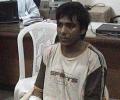
'The jail staff told me Kasab was served only jail food and not biryani.' 'They told me that Kasab was beaten regularly after court proceedings.' 'And they filled Kasab's bottle with urine so that whenever he felt thirsty he used to drink urine.'

''Women are coming into public spaces in larger numbers than ever before. They are educated, capable, opinionated, and determined.' 'But the more women push for access to public space, the harder they are pushed back -- through attacks like this, through discrimination, through the glass ceiling, through the deliberate denial of recognition.'
