
The landmine exploded when the troops were patrolling in a forward area in Digwar sector this afternoon, the officials said.

The Indian Army's Romeo Force has intensified search and surveillance operations in the Pir Panjal ranges of Poonch district in Jammu and Kashmir amid heavy snowfall in the region.
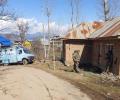
Security forces reported suspected drone activity in forward areas along the International Border (IB) and Line of Control (LoC) in Samba, Rajouri, and Poonch districts of Jammu and Kashmir. A search operation has been launched.

BCCI president Mithun Manhas announced plans to construct new cricket stadiums in Jammu and Kashmir to further develop cricket in the region after their maiden Ranji Trophy title win.

After months of dry weather, fresh snow covered Shimla. The weather forced a closure of the Srinagar-Jammu highway. Flights were also cancelled for safety reasons.
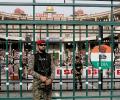
The intruder, who is in his early 20s, was taken into custody by Army troops soon after he entered into this side from across the LoC.
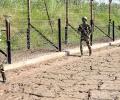
"A 35-year-old Pakistani national, identified as Shehnaz Akhtar of the Gimma area of Kotli district in PoK, was apprehended by Army troops from the Dabbi forward area in the Balakote sector on Tuesday," they said.

Protests erupted in Kashmir following the killing of Iran's Supreme Leader Ayatollah Ali Khamenei, leading to restrictions on movement and mobile internet speeds.
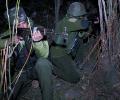
Indian Army troops fired upon and took down multiple suspected Pakistani drones that entered Indian territory from across the Line of Control (LoC) in the Rajouri district of Jammu and Kashmir. This is the second such incident in three days.

'China continues to perceive its relations with India through the prism of India-US relations, with the US using India to counter balance against China in the Indo-Pacific and beyond.'
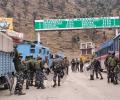
Five soldiers were killed and five others were injured when an Army vehicle carrying them skidded off the road and rolled down into a gorge in Jammu and Kashmir's Poonch district. The accident occurred in the Gharoa area when the vehicle was on its way to Banoi in the district. Rescue teams have recovered five bodies. The vehicle plunged into a gorge, approximately 300-350 feet deep.

Rahu Ketu crams in a clumsy social commentary on corruption and social evils, along with flashy dance numbers, trying to do everything and too much all at once, before ending up as khichadi, notes Mayur Sanap.

Heavy snowfall in the Kashmir Valley and Jammu region disrupted traffic and air services, leading to the closure of the Jammu-Srinagar highway and cancellation of flights. Rescue and road clearing operations are underway.

Police on Saturday claimed to have busted a Pakistan-linked narcotics racket with the arrest of two peddlers here with three kilograms of heroin, valued at around Rs 15 crore.

Poonch district alone accounted for 13 civilian deaths among 28 fatalities in the Pakistani shelling and drone attacks in Jammu and Kashmir after the Indian armed forces carried out missile strikes on terror infrastructure across the border under Operation Sindoor in May in retaliation to the April 22 Pahalgam terror attack that left 26 persons, mostly tourists, dead.

Suspected terrorists fired upon a convoy of vehicles carrying security personnel in the Poonch district of Jammu and Kashmir on Friday evening, prompting security forces to launch a search operation, officials said.
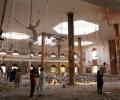
'Some success has been achieved in raising the costs of terrorism for Pakistan.'

Additional security personnel were deployed in the Poonch district on Monday even as a search operation was ongoing in the forested terrain of Dera ki Gali, where two Army vehicles were ambushed by heavily armed terrorists from across the border last week.
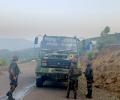
The attack took place near Shashidhar in the evening when the vehicles were moving towards Sanai Top in the district's Surankote area.
They said a well-coordinated joint operation by the army and police is underway in many areas, including Shahsitar, Gursai, Sanai and Sheendara Top, to neutralise the terrorists.
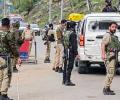
Jammu and Kashmir Police have intensified their crackdown on terror operatives and overground workers (OGWs) across the Jammu region, conducting extensive search operations in multiple districts.

Five IAF personnel were injured in the attack on Saturday evening near Shahsitar and one of them later succumbed to injuries at a military hospital.

The officials said a massive joint search operation by the Army and the police is in progress in several areas including Shahsitar, Gursai, Sanai, Lasana and Sheendara top for the third day but there was no trace of the terrorists so far.

The BJP knows how to play with people's lives and bodies, former Punjab Chief Minister Charanjit Singh Channi said.

Security and defence experts have called for immediate strengthening of the security management and intelligence network along the Line of Control (LoC) in Jammu region, which witnessed the killing of 59 people, including 24 security personnel and 28 terrorists, in terror incidents this year.

Punjab Chief Electoral Officer Sibin C on Tuesday said that Congress leader Charanjit Singh Channi terming the Poonch terror attack, in which an Indian Air Force soldier was killed, a 'poll stunt' violated the model code of conduct.

It was a joint operation by the army and Jammu Kashmir Police carried out on the intervening night of July 16-17 in the Krishna Ghati Sector of Poonch district, he said, adding arms and ammunition were also recovered from the site.
Records stretching back to 1947 suggest a consistent strategy by Pakistan's military and intelligence apparatus, the Inter Services Intelligence (ISI), of using terrorism as a state policy against India.

Over 30 suspects have been questioned during the past few days and several of them have been released.
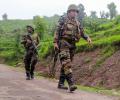
According to sources, a group of armed terrorists tried to enter into Battal forward area of the Krishnagati belt but alert troops picked up their movement and immediately took action.
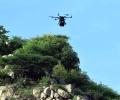
The movement of the drones from across the border was picked up over Balakote, Langote and Gursai nallah in Mendhar sector at 9.15 pm on Sunday, the officials said.

The three civilians were allegedly picked up by the Army for questioning in the wake of the killing of four Army jawans in an ambush by unidentified terrorists in Poonch on December 21.
A top police officer in Jammu says that the presence of foreign terrorists in the region's dense forests is a major challenge, and that efforts are underway to neutralize them. He also noted the use of technology like drones by terrorists and criminals.

Following the Pahalgam terror attack, the Indian Army launched Operation Sindoor, targeting Pakistani terror infrastructure and posts in the Poonch sector of Jammu and Kashmir. Over 600 artillery shells were fired in three days, decimating 20 Pakistani posts used for infiltrating terrorists into India. The precision strikes crippled enemy logistics, material, and morale, prompting retaliatory attacks by Pakistan on civilian areas. Despite the retaliation, Indian Army officers described the operation as a success, highlighting the high morale of the troops and the effective coordination between artillery and air defense units. The article details the intensity of the artillery shelling and the impact on both sides, highlighting the strategic significance of the Poonch sector and the ongoing tension between India and Pakistan.

A joint operation was launched by the Army and police in the Sindhara top area of the Surankote belt on Monday night which led to a firefight, they said.

Army Commander Lt Gen Upendra Dwivedi visited the twin border districts of Rajouri and Poonch and took stock of the ongoing operation, the officials said, adding he asked the troops to be relentless in their pursuit.

The worst-hit in the Pakistani shelling was Poonch district which accounted for all the civilian deaths, the officials said, adding 28 persons were also injured and the condition of some of them was stated to be critical.
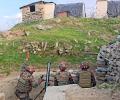
Army troops opened fire after noticing suspicious movement in a forward area near the Line of Control (LoC) in Rajouri district, while security forces conducted searches at more than a dozen places in Poonch, Samba, and Kathua districts of Jammu and Kashmir on Tuesday, officials said.

Defence Minister Rajnath Singh on Wednesday assured justice to the families of three civilians who were found dead last week after being allegedly picked up by the Army following an ambush on two of Army vehicles in Jammu and Kashmir's Poonch district.

Heavy rains battered Jammu and Kashmir, triggering floods, damaging infrastructure, and disrupting normal life. Authorities issued advisories and rescue operations were conducted.
