
A search operation to track down the fleeing terrorists continues near the scene of the ambush, while mobile internet services remained suspended in the twin districts for the second day on Sunday, they said.

Official sources said mobile Internet services were suspended both in Poonch and Rajouri districts as a precautionary measure to check rumour-mongering and prevent miscreants from creating any law and order problem.

The Jammu and Kashmir administration on Saturday announced compensation and jobs to the kin of the three civilians who were found dead in Poonch district as a massive search operation was underway to track down terrorists behind the recent ambush on two Army vehicles that left five soldiers dead.
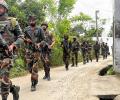
Security forces in the Jammu region are maintaining a strong vigil and conducting operations to track down 40 to 50 terrorists active in the area. Multi-tier security measures, including anti-drone strategies and intensified night operations, are in place.
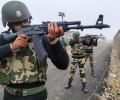
While the Indian Army made no mention of any casualty on the Pakistan side, official sources said five enemy soldiers were injured in the explosion and the subsequent firing between the two sides.

People along the Line of Control and International Border in the Jammu region continue to live under the shadow of death, with unexploded mortar shells fired by Pakistani troops still embedded in farmlands and residential areas even though hostilities have stopped for nearly a week. IMAGE: Kindly note that this image has been posted for representational purposes only. Photograph: / Rediff.com Despite the May 10 understanding between India and Pakistan, locals describe the border areas as a 'death trap'. Sixty-two-year-old Balvinder Singh, who returned to his home in Pargwal sector on May 14, recounted a narrow escape. "Two shells exploded in our compound, damaging our house. Three more landed on our farmland. We were terrified and told our family to stay away from the fields until the Army could help," Singh told PTI. Army engineers later came to the village and safely defused the unexploded shells, bringing a temporary sense of relief. "Fear is writ large on the faces of people to these death traps in border hamlets", he said. Scenes of destruction are evident rooftops torn apart, broken houses, windows punctured by shrapnel, and carcasses of cattle lying in pools of blood. The acrid smell of gunpowder still lingers in the air. Sardar Gurmeet Singh faced a similar ordeal. His family could not re-enter their home as a live mortar shell had sunk into the compound in a village close to the International Border. "The army's bomb disposal squad removed it after four days, allowing us to finally enter, back home," he said. Indian Army engineers have launched a sweeping clearance operation across border districts, defusing over 80 unexploded shells in the past five days -- including 6 in Pargwal, 19 in Rajouri, 42 in Poonch, and 12 along the IB. "These shells, mostly 120 mm calibre, have a range of 15 to 30 km and pose a serious threat to both civilian and military targets," an Army officer said. "Many of them were fired by Pakistan during recent hostilities." On May 7, the Indian Army launched Operation Sindoor, conducting precision strikes on nine terror hubs in Pakistan and Pakistan-occupied Jammu and Kashmir (PoJK) in response to the April 22 terror attack in Pahalgam that killed 26 people, most of them tourists. The subsequent retaliation by Pakistan pushed the region to the brink of war. From 7 to 10 of May, 27 civilians were killed and over 70 injured in Pakistani shelling in the Jammu region. Farid Din Gujjar, a resident near the border, expressed fear about returning to his fields. "Several shells created deep craters in our paddy land. We cannot resume work until all unexploded ordnance is cleared. It's a death trap," he said. Army units, in coordination with Jammu and Kashmir Police, have evacuated high-risk zones and issued stern warnings to residents not to touch any suspicious objects or unexploded shells. In one major operation, 42 live shells were safely destroyed in the Poonch villages of Jhullas, Salotri, Dharati and Salani. "All safety protocols were followed. The shells posed a serious danger to local lives," an Army spokesperson said, calling the effort a 'continued commitment to protect civilians and restore normalcy'. Poonch saw the vast majority of deaths due to shelling. Security officials said that Pakistan used a mix of mortar shells, armed drones, and missiles during the shelling spree, specifically targeting civilian habitations and border towns in Jammu, Samba, Kathua, Rajouri, and Poonch. As clearance operations continue, the border residents are slowly returning to their homes, but with caution, fear, and lingering uncertainty about shelling that may yet happen in the future.

Another soldier was seriously injured in the incident and was evacuated immediately to the Army Hospital at Rajouri, they said.

In a post on X, the additional directorate general of public information posted: "Pakistan again violates the Ceasefire Agreement by firing artillery in Bhimber Gali in the Poonch-Rajouri area. Indian Army is responding appropriately in a calibrated manner."
Pakistani troops continued to violate the ceasefire along the Line of Control (LoC) by resorting to unprovoked firing in Jammu and Kashmir's Poonch and Kupwara districts, army officials said. This was the fourth consecutive night that Pakistan resorted to unprovoked firing along the LoC and came amid heightened tension between New Delhi and Islamabad following last week's terror attack in Pahalgam. Indian troops responded swiftly and effectively.

Terror outfits in Jammu and Kashmir are now constructing elaborately-designed underground bunkers deep inside thick forests and elevated ridges instead of taking shelter in local houses, officials said. This tactical shift, fuelled by eroding local support, presents a new challenge to the Army and other security forces.

More than 118 Pakistani forward posts and their surveillance system were completely destroyed by the BSF during Operation Sindoor, dealing a major blow to the neighbouring country, Union Home Minister Amit Shah said on Friday.
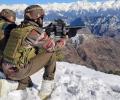
Pakistan's troops have engaged in unprovoked firing along the Line of Control (LoC) and International Border (IB) in five districts of Jammu and Kashmir, prompting retaliation from the Indian Army. This marks the eighth consecutive night of such incidents, following heightened tensions stemming from a recent terror attack in Pahalgam. Civilians residing along the LoC and IB are preparing their bunkers in anticipation of potential escalation.

A police officer and his eight siblings, including five sisters, were deported to Pakistan on Wednesday despite a court order granting them temporary relief. The nine members of the extended family, who have been living in Jammu and Kashmir for generations, were among more than two dozen people, mostly from Pakistan-occupied Kashmir (PoK), who were served deportation notices following the April 22 Pahalgam terror attack. The deportation has sparked outrage, with protests and appeals for intervention from the home minister and lieutenant governor. The family members claim they are not Pakistani nationals and have been living in the region for generations, presenting revenue records to support their claims. The court has ordered a detailed report on the case within two weeks and will hear it again on May 20.

The firing exchanges are taking places in five districts out of seven border districts of Jammu and Kashmir. So far, there has been no firing reports along International Border in Samba and Kathua districts.
Pakistani troops continued unprovoked small arms firing in different sectors along the Line of Control (LoC) in Jammu and Kashmir for the 10th consecutive night, prompting effective retaliation by the Indian army. The ceasefire violations, which started after the April 22 terror attack in Pahalgam, were reported from eight places across five districts in the Union Territory during the intervening night of Saturday and Sunday. Indian Army responded promptly and proportionately to the unprovoked firing, a defence spokesperson said.

The reopening brought a sense of relief to students, teachers, and parents across the region.

Over 5,000 people have been evacuated from flooded areas in the Jammu region following heavy rains and flash floods. Rescue and relief operations are underway to restore essential services and provide assistance to those affected.
The recent ambush of an Army truck in Jammu and Kashmir's Poonch bears a "striking resemblance" to a terrorist attack on a police vehicle in neighbouring Rajouri district 22 years ago, security officials have said, expressing serious concerns.
'The precision strikes were well planned and excellently executed. The world will be studying this operation.'

The sources said two group of seven to eight terrorists, are believed to have engineered the attack.

Fourteen people were detained for questioning, officials said, adding that some of them have been let off.

The Pakistan Army continued shelling along the Line of Control (LoC) in four sectors of Jammu and Kashmir, prompting a befitting response by the Indian Army, officials said on Thursday. The intensity of cross-border firing was less than Wednesday, when Pakistan Army carried out one of the most intense artillery and mortar shelling in years targeting the forward villages in J-K following missile strikes by India as part of 'Operation Sindoor'.

The Border Security Force (BSF) destroyed five Pakistani posts and a terrorist launch pad across the Jammu border in an operation, an officer said. The BSF retaliated after Pakistan targeted civilian areas and Indian establishments in a systematic manner, the officer said.
The development comes in view of twin terror attacks in Jammu and Kashmir's Rajouri district in which six people of a minority community including two children were killed and 11 others were injured.
The armies of India and Pakistan on Thursday held a brigade commander-level flag meeting along the Line of Control (LoC) in Jammu and Kashmir's Poonch district to discuss issues related to border management.

An Army personnel died of a bullet injury from his own service rifle near the Line of Control (LoC) in Jammu and Kashmir's Poonch district, a police official said on Wednesday.

Security forces on Friday launched a massive cordon and search operation in the forest area of Jammu and Kashmir's Poonch district, a day after five army personnel were killed and two others injured in a terrorist attack.
For Ali, who hails from Mendhar sub-division near the Line of Control (LoC) in Poonch district, the uniform is more than a job -- it's a calling. He has dedicated nearly half his life in the police force, serving its various wings with distinction and earning multiple commendations for his courage and unwavering commitment to duty.

The entire area has been cordoned off while drones and sniffer dogs are being used to sniff out the terrorists that might be hiding in the area, they said.
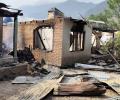
Hundreds of residents along the Line of Control (LoC) and the International Border (IB) in Jammu and Kashmir were evacuated to safer zones after Pakistani shelling following Indian airstrikes on terror targets in Pakistan. The shelling killed 12 people, including four children and two women, and injured over 50. The evacuations come amid heightened tensions between India and Pakistan following the April 22 terror attack in Pahalgam that left 26 civilians dead. The government has provided temporary shelter for those evacuated.

Incessant rains and flooding have caused widespread disruption in northern India, with states like Himachal Pradesh, Delhi, Punjab, and Jammu and Kashmir facing landslides, road closures, and displacement. Rescue efforts are underway as authorities grapple with the aftermath of the deluge.
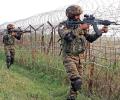
Pakistan troops have violated the ceasefire agreement for the 11th consecutive night, firing on Indian posts along the Line of Control (LoC) in Jammu and Kashmir. The firing began in Kupwara and Baramulla districts and spread to other sectors, including Poonch, Rajouri, Mendhar, Naushera, Sunderbani, and Akhnoor. The Indian Army responded promptly and proportionately. The ceasefire violation comes despite a recent phone call between the Directors General of Military Operations (DGMOs) of India and Pakistan on April 29. This marks the latest escalation of tensions between the two countries, following a terror attack in Pahalgam in April.

More than 40 persons have been detained for questioning as part of a massive operation currently underway to track down the terrorists involved in the Poonch terror attack, officials said on Monday.

Authorities in Jammu and Kashmir on Sunday asked border villages residents, who were evacuated to safer places in view of cross border shelling by Pakistan, not to rush back to homes as they are yet to sanitise and clear these areas of any unexplored shells.

Security agencies have released sketches of three men suspected of being involved in the terror attack near Pahalgam in south Kashmir that killed 26 people, mostly tourists. The suspects, identified as Asif Fauji, Suleman Shah and Abu Talha, were also involved in terror related incidents in Poonch. The sketches were prepared with the help of survivors. The Resistance Front (TRF), a shadow outfit of the banned Pakistan-based Lashkar-e-Taiba terror group, claimed responsibility for the attack.

The party in an editorial in its mouthpiece 'Saamana' said even after the revocation of Article 370, which gave special status to Jammu and Kashmir, violence continues in the Kashmir Valley and there is still no peace there.

They said a sniper is believed to have targeted the truck from the front before the other terrorists sprayed bullets and lobbed grenades on it.

The real heroes of Operation Sindoor were not the armed forces or political leadership, but the ordinary citizens of India who refused to fall into the trap of communal provocation, asserts Colonel Anil A Athale (retd).
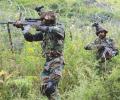
India and Pakistan on Friday held a flag meeting along the Line of Control (LoC) in Jammu and Kashmir's Poonch district in an effort to ease tension after several recent incidents of cross-border firing and an IED attack, official sources said.
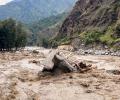
While two bodies were recovered on Wednesday, the death toll climbed to four on Thursday after the recovery of two more bodies from the Indira Priyadarshini Hydroelectric project site in Kangra district.
