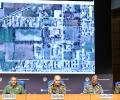
'We completely destroyed at least three posts, an ammunition depot, fuel storage facility, and gunnery, among other targets. Our retaliation was so devastating that it will take Pakistan at least 8-12 months to rebuild, possibly longer'
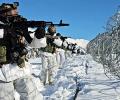
Pakistani forces allegedly violated the ceasefire along the Line of Control (LoC) in the Nowgam sector of Kupwara district, Jammu and Kashmir, on Friday, according to officials.
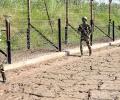
"A 35-year-old Pakistani national, identified as Shehnaz Akhtar of the Gimma area of Kotli district in PoK, was apprehended by Army troops from the Dabbi forward area in the Balakote sector on Tuesday," they said.

Lieutenant General Vinod Khandare (retired), former principal adviser to the Ministry of Defence, discusses the implications of Operation Sindoor, including its impact on India's diplomatic relations and the need for improved civil defense.
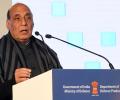
Defence Minister Rajnath Singh praised Jammu and Kashmir Chief Minister Omar Abdullah for his efforts to reduce the distance between the hearts of people in Jammu and Kashmir and Delhi. Singh asserted that the BJP government treats Delhi and Kashmir equally, emphasizing a commitment to bridge the gap between the regions. He criticized Pakistan occupied Kashmir (PoK) Prime Minister Chaudhry Anwarul Haq for his remarks against India and reiterated the importance of PoK as an integral part of Jammu and Kashmir.

The two policemen were injured by "hard and blunt instruments", while "two protesters with firearm injuries" were also brought to JPMC, the surgeon told Dawn.
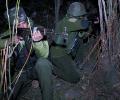
Indian Army troops fired upon and took down multiple suspected Pakistani drones that entered Indian territory from across the Line of Control (LoC) in the Rajouri district of Jammu and Kashmir. This is the second such incident in three days.

In a major counter-terror operation spanning three states, the Delhi Police has dismantled a Lashkar-e-Taiba (LeT) module comprising eight operatives, including seven Bangladeshi nationals who had illegally entered India and procured forged identity documents, an official said on Sunday.
'Had Haji Pir and/or Skardu been taken, the message would have gone out not just to General Asim Munir and his cohort in the Pakistan army but to the Pakistani people that every terrorist incident in India would lead to substantial loss of territory in PoK.'

Interacting with the Indian diaspora in Kuala Lumpur, Banerjee said, "We have been in talks with them (Pakistan) for decades, despite changes in various paradigms and governments. But one thing remains constant, the conflict with Pakistan."

'It was mad, obviously there were those attacks in Kashmir before everything really kicked off. Then within no time things just rapidly escalated and all of a sudden we're in the middle.'

The National Investigation Agency (NIA) will file a charge sheet in the Pahalgam terror attack case, in which 26 people, mostly tourists, were killed by Pakistan-based terrorists.

"In 1948, Indian armed forces were in a decisive position to take back Pakistan-occupied Kashmir but then PM Jawaharlal Nehru declared unilateral ceasefire," Amit Shah said. In 1971, Shah said, 93,000 Pakistani soldiers surrendered and India had 15,000 sq km Pakistan territory under control, but still PoK was not taken back. During the 1962 war with China, then PM Nehru bade goodbye to Assam in a speech on Akashvani, he said.

The Bharatiya Janata Party on Tuesday said it held a formal meeting with a Chinese delegation openly, given the "improved" relations between New Delhi and Beijing, unlike the Congress which, it alleged, "secretly" signed a memorandum of understanding with the neighbouring country's ruling party.
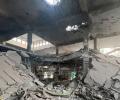
In a strong retaliation to the Pahalgam massacre, India's armed forces early Wednesday destroyed nine terror sites including that of Jaish-e-Mohammad and Lashkar-e-Taiba in Pakistan and Pakistan-occupied Kashmir (PoK) using deep strike missiles in a 25-minute-long 'measured and non-escalatory' mission.
The outcome of the investigations essentially formed the basis for the Department of Telecommunications (DoT) to issue a sweeping directive on November 28 last year, mandating that app-based communication services like WhatsApp, Telegram and Signal must be continuously linked to an active, physical SIM card within the device.

The Afghan Taliban attacked four locations in the Spin Boldak area of PoK's Balochistan province, which were effectively repulsed by Pakistani Forces, the army said.

Two days ago, External Affairs Minister S Jaishankar asserted that Pakistan-occupied Kashmir was, is and will always be part of India.

The tour was scheduled to start on November 16 and would run through November 24, allowing fans to view the prestigious trophy that Pakistan last won in 2017 under the captaincy of Sarfaraz Ahmed.

Shah said the present Lok Sabha elections are about "choosing between corrupt leaders of INDI alliance and honest politician Narendra Modi, who despite being Chief Minister and then Prime Minister never had an allegation of single paisa against him."

Prime Minister Narendra Modi has long harboured the dream of adding PoK to India's map, he said while speaking at a felicitation event organised by the Mahayuti alliance in Akola.
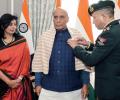
Defence Minister Rajnath Singh lauds the armed forces' restrained response during Operation Sindoor after the Pahalgam terror attack, highlighting coordination and improved connectivity in border areas.
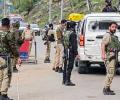
Jammu and Kashmir Police have intensified their crackdown on terror operatives and overground workers (OGWs) across the Jammu region, conducting extensive search operations in multiple districts.

If Patel had lived a few years more, he may or may not have become prime minister. But for sure, his presence would have kept Nehru in check, points out Harishchandra.
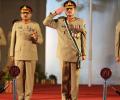
Vice Admiral K Swaminathan highlights concerns over Pakistan's arms procurement and China's growing assertiveness in the Indian Ocean Region.
Jammu and Kashmir Police detained over 50 people for alleged involvement in anti-state activities following raids across multiple districts. The crackdown targeted separatist networks, overground workers, and individuals linked to Pakistan-based Kashmiri natives.

Flash floods in Pakistan's Khyber Pakhtunkhwa province have resulted in a significant loss of life, with the death toll rising to 327 in the last 48 hours. The disaster has prompted relief efforts from the army and government agencies.
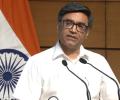
India carried out missile strikes on terror targets in Pakistan and Pakistan-Occupied Kashmir, including the Jaish-e-Mohammad stronghold of Bahawalpur and Lashkar-e-Taiba's base in Muridke, after the Pahalgam attack that killed 26 civilians. The Foreign Secretary said the actions were measured, non-escalatory, proportionate and responsible.

"As long as PoK exists, terrorist activities will continue. I request Prime Minister Narendra Modi that if Pakistan does not hand over PoK, we must declare war against them," Athawale said, calling for another surgical strike against the neighbouring country.
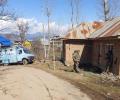
Security agencies are concerned about the increasing use of drones by terror groups in Jammu and Kashmir for surveillance and logistics, replacing human networks.
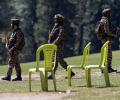
The terrorists chose Baisaran as the target due to its "high tourist presence", "relative isolation" and after considering that the "response (from the security agencies) would take time".
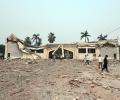
Months after India's precision strikes on nine terror camps across Pakistan and Pakistan-occupied Kashmir (PoK), a viral video of Lashkar-e-Taiba (LeT) commander Qaasim has surfaced.

India should refrain from playing cricket with Pakistan in view of the ongoing tension with the neighbouring country, Arvind Sawant (SS-UBT) said on Monday in the Lok Sabha.

In a post on X, he said the people of Balochistan have given their "national verdict" and that the world must no longer stay silent.

Prime Minister Narendra Modi addressed a gathering in Dhar, Madhya Pradesh, praising Indian soldiers and promoting the use of 'Swadeshi' goods. He also launched health and nutrition campaigns aimed at women and children.

Jain currently heads RAW's Aviation Research Centre (ARC), which deals with aerial surveillance, among others.

India has registered a strong protest with the United Kingdom over the visit to Pakistan Occupied Kashmir (PoK) by its High Commissioner to Islamabad along with another British official.
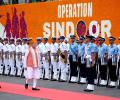
The bilingual -- Hindi and English -- invitation cards for I-Day anniversary celebrations carry this image on the top right corner of the invite, while the silhouetted image of the Chenab bridge, the world's tallest railway arch bridge, sits at the lower side of the cards, which have largely being issued online via 'Aamantran' website of the Ministry of Defence.

IAF Vice Chief Air Marshal Narmdeshwar Tiwari highlights Operation Sindoor as an example of how a limited number of weapons can bring an adversary to the negotiating table. He emphasized the cost-benefit of air power and the advantages of manned systems.

A woman arrested for allegedly promoting Al-Qaeda's agenda had appealed to Pakistan's Army chief to invade India to unify Muslim lands under Project Khilafat, officials said.
