
There should be an open discussion about finances in a relationship, suggests rediffGURU Ravi Mittal, a dating coach and CEO of online dating website Quack Quack and Rebounce, a matrimony platform.
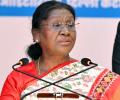
President Droupadi Murmu has returned the West Bengal government's proposed anti-goonda bill for reconsideration. The objection stems from a provision in the bill that may overlap with a central anti-narcotics law, specifically concerning offences under the NDPS Act, 1985, and the PITNDPS Act, 1988. This raises concerns about potential duplication and repugnancy under Article 254 of the Constitution.

The Bill proposes replacing employment-based Green Card preferences with a points-based immigration framework.

India has stated its commitment to protecting its economic interests and ensuring energy security after the US House of Representatives passed a bill allowing the US President to impose tariffs of up to 100 per cent on countries, including India and China, for purchasing Russian crude oil. The Ministry of External Affairs affirmed India's resolve to maintain diversified energy sourcing and has articulated its concerns to US interlocutors regarding the bill's potential implications.

The US House of Representatives has passed the Lindsey O Graham Sanctioning Russia and Iran Act of 2026, authorising President Trump to impose sanctions on Russia's energy sector and tariffs on countries like India and China that purchase Russian oil and gas. The legislation aims to curb Russia's ability to evade existing sanctions and reduce global dependence on its energy exports, despite some Democratic opposition to increased tariff authority for the President.

The US House of Representatives has advanced a bill that would empower President Donald Trump to impose 100 per cent tariffs on countries, including India, that purchase oil and gas from Russia, and also extend sanctions on Iran. The legislation, which previously passed the Senate, aims to curb Russia's energy revenue amidst the Ukraine conflict.

US lawmakers are racing to amend the Russia sanctions bill before recess. One amendment specifically names India, China, and other countries as potential targets for 100% tariffs due to their oil trade with Russia. Another significant amendment proposes to scrap the tariff section entirely, while others address presidential waiver powers and aid to Ukraine.

US President Donald Trump is expected to sign the Lindsey O. Graham Sanctioning Russia and Iran Act of 2026 later on Friday (local time). A White House official confirmed the development to ANI without revealing further details.

The US House of Representatives is debating a bill that would authorise the President to impose sanctions on Russia and steep tariffs on its oil and gas trading partners, including India and China. The bill, aimed at pressuring Russia over the Ukraine war, has faced opposition but is expected to be put to a vote.

Indian-American Congressman Raja Krishnamoorthi voted in favour of a Russia sanctions act in the US House, diverging from his Democratic party and other Indian-American lawmakers. The bill, which passed, imposes tariffs on Russian oil and gas buyers, potentially impacting India and China, and exempts US uranium purchases from Russia.

Lok Sabha Speaker Om Birla has made a rare move by nominating two Rajya Sabha members as "special invitees" to the Joint Parliamentary Committee (JPC) examining the Foreign Contribution (Regulation) Amendment Bill, 2026. This decision comes as the contentious Bill, referred to the 31-member JPC for detailed examination, faces opposition demands for its withdrawal.

A clerk at a private construction firm in Jharkhand's Giridih district was allegedly abducted and murdered after he refused to prepare inflated fuel bills, leading to the arrest of four individuals, including two company employees.
India's eway bill generation reached 139.08 million in August, marking the third-highest monthly count on record and indicating sustained momentum in goods movement and formal economic activity, according to official data.
The Goa government has decided not to introduce its anti-religious conversion bill during the ongoing monsoon session of the state assembly, following significant pushback from legislators representing the minority community.

President Donald Trump is set to sign the Sanctioning Russia and Iran Act, which includes tariffs on countries buying Russian oil and gas, such as India. India has voiced concerns over the potential impact on its ties with the US and the global energy market.

The Goa cabinet has approved the Goa Prohibition of Unlawful Conversions of Religion Bill, 2026, which proposes stringent penalties, including life imprisonment, for religious conversions carried out through force, fraud, or marriage. The bill will be tabled in the state assembly's monsoon session.

India's current account deficit could widen to 1.7 per cent of GDP, or about $71 billion, if crude oil prices stay above $90 a barrel for a significant part of the second half of FY27.

More than a dozen Shiv Sena functionaries, including district and city unit chiefs and an MLA's son, have been booked for allegedly assaulting, abusing, and threatening hospital staff in Palghar. The incident occurred after 'govindas' injured during Dahi Handi celebrations were brought for treatment, and a dispute arose over medical bills. The NCP (SP) has condemned the incident, calling it an attack on the medical system and the rule of law, and demanded strict action.
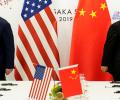
Top US and Chinese officials, including Vice Premier He Lifeng and Treasury Secretary Scott Bessent, held "candid, in-depth and constructive" talks in New York on economic and trade issues, with a specific focus on artificial intelligence. These discussions precede Chinese President Xi Jinping's anticipated visit to Washington and occur amidst new US sanctions targeting countries purchasing Russian oil and gas, and the US unveiling an "AI Force."

'The BJP has all the instruments with them and they do have a sense of purpose, so I don't think there will be a challenge.'

The Lok Sabha has referred the contentious Foreign Contribution (Regulation) Amendment Bill, 2026, to a 31-member joint parliamentary committee for thorough scrutiny.

The ongoing US conflict with Iran has cost the Trump administration an estimated $45.1 billion, according to a Pentagon estimate provided to the US Congress on Friday, CNN reported, citing two sources familiar with the matter.

More than half of the bills introduced in the 18th Lok Sabha have been passed by both Houses in the same session, a significant acceleration compared to previous terms, raising concerns about the time available for legislative scrutiny and stakeholder consultations.

The Lok Sabha introduced four significant bills on Monday, including amendments to mines and minerals regulations, the establishment of a National Tribunals Commission, and the renaming of Kerala to Keralam, all while facing continuous protests from opposition members demanding a discussion on the July 20 police crackdown on students.

Ten days after both Houses of Parliament were adjourned sine die, the Monsoon session is yet to end formally, giving rise to speculation that the government wants to pass a key legislation without convening a new session.

Maharashtra is grappling with an escalating drought crisis, with 305 talukas now declared drought-hit, prompting the state government to announce Rs 5,000 in financial aid for farmers before Diwali and extend comprehensive relief measures.

The Anti-Corruption Bureau (ACB) in Maharashtra's Beed district has arrested an education officer and a teacher for allegedly demanding a Rs 40,000 bribe. The bribe was sought from a school headmaster for a favourable inquiry report regarding alleged irregularities in online billing. The arrests followed a complaint and a trap laid by the ACB.
GSTN has put on hold its planned enhancements to the e-way bill system, providing businesses with crucial time to adapt to the proposed changes amid widespread industry concerns.

The directive comes amid concerns over steep mark-ups on medicines and medical consumables sold at hospital pharmacies.

The Tamil Nadu Assembly has adopted crucial resolutions against the National Eligibility cum Entrance Test (NEET) and the Foreign Contribution (Regulation) Amendment Bill, 2026, with the lone BJP member opposing both.

The Lok Sabha's monsoon session concluded on Thursday, marked by relentless opposition protests over critical issues like the NEET paper leak and police action on students, yet saw the passage of several key bills without extensive debate. Home Minister Amit Shah expressed readiness to debate the student protest issue, urging the speaker to allocate time.

External Affairs Minister S Jaishankar met US Secretary of State Marco Rubio on the sidelines of the UN General Assembly session in New York. India raised its concerns regarding the recently signed "Lindsey O. Graham Sanctioning Russia and Iran Act of 2026," which authorises tariffs on countries buying Russian oil and gas. Both leaders also discussed bilateral relations, regional priorities, and the situations in the Gulf and Ukraine.

Major bills, including those on women's reservation, delimitation, and the Foreign Contribution (Regulation) Act (FCRA), face an uncertain future in the ongoing Monsoon session of Parliament due to persistent opposition protests and a lack of consensus.

Punjab's Finance, Excise and Taxation Minister Harpal Singh Cheema announced the unearthing of a Rs 429.30 crore GST fraud, leading to an FIR in Ludhiana. The investigation, initiated after intercepting a vehicle on September 30, revealed a syndicate of 62 interconnected firms across multiple states using non-genuine documents to evade taxes.

The government is considering sending 'The Foreign Contribution (Regulation) Amendment Bill, 2026' to a joint committee of both houses of Parliament for further examination, even as the Congress and some other opposition parties have demanded that it be withdrawn, sources said on Tuesday.

President Droupadi Murmu gave assent to a bill which now provides 'Vande Mataram' with the same legal protection and status as India's national anthem, 'Jana Gana Mana'.

The Lok Sabha passed two Bills, including one to rename Kerala as Keralam, without debate as Opposition members continued their protests, demanding Union Home Minister Amit Shah's presence to address police excesses against student protesters and alleged Ram temple fund irregularities.

A case has been registered against two Brihanmumbai Municipal Corporation (BMC) engineers and a private individual for allegedly demanding a Rs 3.5 lakh bribe from a contractor. The bribe was sought to clear bills for civic works in Mumbai's M-East Ward. The Anti-Corruption Bureau (ACB) has registered a case and conducted searches.

Congress president Mallikarjun Kharge has said that the Congress will oppose the Foreign Contribution (Regulation) Amendment Bill and the issue will also be discussed at the meeting of floor leaders of opposition parties on Monday.

Parliamentary Affairs Minister Kiren Rijiju met Leader of Opposition Rahul Gandhi to discuss resolving the persistent deadlock in the Lok Sabha's monsoon session, focusing on the Delimitation Bill and FCRA Bill, though no immediate commitment was secured from the Congress leader.
