
State Bank of India (SBI) is extensively using artificial intelligence to underwrite nearly Rs 1 lakh crore in MSME loans and automate the processing of cheques up to Rs 10,000. This AI adoption aims to enhance efficiency, free up employee bandwidth, and improve customer service across various banking functions.

Hollywood veteran Jodie Foster has controversially suggested that Brad Pitt's recent film "F1" was created using Artificial Intelligence, citing its formulaic structure and dialogue. She discussed the growing influence of AI in the film industry, acknowledging its potential to replace jobs but also its utility if filmmakers can control the technology.

The Indian Institute of Management Ahmedabad (IIMA) has opened applications for the second batch of its two-year Blended MBA Programme in Business Analytics & Artificial Intelligence (BPGP: BA & AI). The programme, offered by the Krishnamurthy Tandon School of AI, aims to develop professionals who can integrate AI technology with management principles, addressing the industry's need for leaders capable of driving transformation and managing complex IT infrastructure, including data centres.

Union Minister Ashwini Vaishnaw announced that the Indian government will release a draft consultation paper on Artificial Intelligence (AI) regulations within the next 30 days, focusing on safety, a human-first approach, skilling, inclusivity, and harm restriction.

Mental Conditioning Coach Paddy Upton and Scientific Advisor Alan Tan, with the reported aid of Artificial Intelligence, were crucial in the Indian hockey team's Asian Games gold medal victory, focusing on present-moment play and team cohesion.

AI infrastructure firm AM Intelligence announced plans to invest over USD 20 billion in the next 15 months to significantly expand its data centre capacity, including firm orders for 20,000 NVIDIA Rubin GPUs. This expansion will bring its total capacity to 100 Megawatt initially, with a broader goal of 1 GW of compute-as-a-service capacity globally, establishing it as a major buyer of advanced AI hardware.

Paul Bettany and James Spader bring plenty of personality to VisionQuest, but the Marvel's latest series struggles to find the emotional soul its story needs.

An Indian-origin engineer couple, Anuradha and Vikas Sinha, have donated $20 million to the University of North Texas (UNT) to establish the Anuradha and Vikas Sinha College of Artificial Intelligence and Advanced Analytics. This significant gift aims to create new opportunities for students and faculty, focusing on building and deploying intelligent systems and understanding their operation within human contexts. The donation underscores the couple's belief in education and immigrant contributions to the American dream, supporting leadership, scholarships, professorships, research, and entrepreneurship.
Ericsson CEO Andres Vicente emphasised the critical need for technology alignment and ecosystem collaboration to ensure security in the age of Artificial Intelligence. Speaking on Wednesday, he highlighted that AI's benefits in productivity and innovation cannot be forgone, making shared security concerns across interconnected tech layers paramount. Ericsson is actively working with partners through the Trusted Tech Alliance to establish common AI-era security understandings.

Across 34 of 37 nations included in a Pew Research Center survey this year, the prevailing view is that artificial intelligence is more likely to displace workers than open up new employment opportunities.
Hollywood actor Paul Bettany, known for voicing J.A.R.V.I.S. and playing Vision in the MCU, expresses trepidation about the rapid advancements in artificial intelligence. He discusses potential dystopian futures and the need for democratised AI, while promoting his new series "VisionQuest" which started streaming on JioHotstar on Tuesday.
A World Bank report, 'The Promise of Artificial Intelligence', states that AI presents a historic opportunity for low- and middle-income countries to overcome development challenges, despite many being unprepared. It advises these nations to adopt and adapt existing AI tools rather than focusing on building frontier models immediately. The report also notes a significant gap in AI adoption and job automation between high-income and developing countries.

Nandini Gupta who interned at an IT firm explains how Artificial Intelligence can change our future.
Britain's AI Minister, Kanishka Narayan, issued a strong warning on Monday about the growing risks posed by artificial intelligence to cyber defences. He highlighted the potential for serious consequences from autonomous AI systems and announced new government measures, including a 'National Cyber Action Plan', to bolster the UK's resilience against cyber-attacks.

Tata Consultancy Services (TCS) plans for 80% of its new hires to possess digital and Artificial Intelligence (AI) skills, anticipating that the growing share of AI-led work will significantly boost its profit margins.

A new report by BinQle indicates India will face a significant demand-supply gap of artificial intelligence professionals by 2026, requiring 1.4 million AI experts against an available pool of 400,000. This shortage could hinder growth for enterprises and GCCs, driving up salaries and necessitating continuous reskilling and strategic talent development.
Telecom industry body COAI and the British High Commission signed an MoU to boost cooperation in AI, connectivity, and digital trust, fostering responsible tech innovation. The pact, signed at the CO.AI 2026 event, focused on AI's role in intelligent networks, security, and public services. Discussions highlighted AI's importance in combating fraud, improving network efficiency, and ensuring secure digital services. TRAI Chairman Anil Kumar Lahoti and Acting British High Commissioner Ben Mellor emphasised the need for balanced governance and international collaboration to ensure secure, inclusive, and responsible digital transformation.
Airtel Business CEO Sharat Sinha stated that evolving architecture and methodologies for safely deploying Artificial Intelligence, coupled with adequate guardrails, are essential to unlock productivity gains. He welcomed the government's upcoming consultation paper on AI regulation, focusing on safety, deepfakes, and a human-first approach. Sinha also highlighted AI's role in driving demand for digital infrastructure and Airtel's growth in cybersecurity and fraud prevention.

Zoho Corporation has paused annual pay hikes and reduced marketing expenditure, citing a four-fold increase in server prices for AI infrastructure and an uncertain software sector outlook, according to founder Sridhar Vembu.

India has secured a spot among the top 10 leading emerging-market performers in artificial intelligence (AI) readiness, with private investment in AI more than tripling to USD 4.1 billion in 2025, according to a new World Bank report.
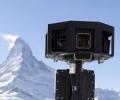
Google, which is working on projects including self-driving cars and robots, has become increasingly focused on artificial intelligence in recent years.

Former Supreme Court Justice Abhay Oka warned that major cities might be forced to adopt mandatory face mask usage within 20-25 years due to environmental degradation. He stressed that protecting the environment is a fundamental constitutional duty, countering the misconception that humans own the Earth. Justice Oka also encouraged students to study law and use AI responsibly.

Experts at the TIS-H Clinical AI Summit 2026 highlighted the critical need for real-world evaluation of AI solutions in healthcare. They stressed that promising results from development or pilot programmes do not guarantee effective and safe deployment in hospitals, emphasising clinical relevance, validation, and integration into existing workflows.
L&T Technology Services (LTTS) CEO Amit Chadha announced that artificial intelligence is a net positive for the company, with six key focus areas expected to contribute 80% of revenue in five years. These areas, including digital manufacturing and AI infrastructure, are projected to deliver higher growth and margins, offsetting pricing pressures in traditional IT services. LTTS also inaugurated an NVIDIA-powered AI manufacturing lab in Bengaluru.
Arunachal Pradesh Chief Minister Pema Khandu lauded the state's first 10-day artificial intelligence boot camp and hackathon at IIT-Guwahati. The programme aims to build AI skills, promote innovation, and create a future-ready digital workforce, offering hands-on training in AI/ML, Python, and NLP to 40 young participants.

Uttar Pradesh Chief Minister Yogi Adityanath announced the state's ambitious shift from mobile phone assembly to advanced microchip manufacturing, data centres, and artificial intelligence. He highlighted significant investments and growth in the digital economy, attributing the transformation to the "double-engine government's" alignment with national initiatives like 'Make in India' and 'Aatmanirbhar Bharat'. Adityanath also criticised previous administrations for hindering the state's potential.

An IIT Madras study reveals that financial cybercrime victims in India are often highly educated professionals, challenging the notion that only careless or financially unaware individuals are targeted. The research highlights that digital literacy doesn't guarantee protection, as fraudsters exploit stress and emotional vulnerabilities.
Bharti Airtel Chairman Sunil Mittal has called for proactive regulation of Artificial Intelligence, stating that waiting for an "accident" before implementing safeguards would be "foolish." Speaking at the Bloomberg New Economy Forum 2026, Mittal highlighted the struggle of governments to keep pace with AI's rapid growth and emphasised the need for a global regulatory framework, similar to the aviation sector, to ensure national security and responsible development.

Wadhwani AI is working on a 'vulnerability mapping' project which determines the probability of a disease breaking out in a particular area during a particular season or time.
Experts at a national symposium in Shillong discussed the role of Artificial Intelligence in tourism, emphasising that AI should support human judgment, local knowledge, and cultural values rather than replace them. Discussions highlighted the need for robust policies to address ethical concerns, safeguard livelihoods, and preserve cultural heritage while leveraging AI for innovation and sustainability in the tourism sector, particularly in Meghalaya.
Atomic Energy Commission chairman Ajit Kumar Mohanty stated that India is on the verge of a significant technological transformation, driven by advancements in AI, quantum technologies, and other fields. Speaking at BIT Mesra's convocation, he emphasised the need for strong indigenous capabilities, skilled professionals, and interdisciplinary collaboration to achieve a developed India. Other speakers, including BIT Mesra's Chancellor and Vice Chancellor, echoed the importance of continuous learning and contributing to national progress.
MI5 Director General Ken McCallum has issued a stark warning about artificial intelligence "supercharging" cybersecurity challenges and national security risks. He revealed that terrorists are already exploiting AI for attack capabilities and announced the launch of the AI Threat Assessment Centre (AITAC). McCallum also highlighted a fourfold increase in threats from hostile states like Russia, Iran, and China, urging public resilience.
A national study of top 75 Indian B-schools reveals a significant competency gap in AI skills among management graduates, with industry expectations far exceeding current MBA capabilities. A new framework by AIMS, EPSI, and IMC highlights the urgent need for management education to adapt to an AI-led workplace, emphasizing behavioural competencies alongside data fluency.
Zoho founder Sridhar Vembu has criticised the concept of Universal Basic Income (UBI), calling it an 'unimaginative and dystopian' vision. He argues that while AI threatens intellectual jobs, humans have endless tasks related to nature, nurture, culture, and spirituality that can provide purpose and sustenance, rejecting the idea of dependency on handouts.
ServiceNow has launched AI Workflow Factory and Autonomous Engineer, new solutions designed to help enterprises integrate and scale AI workflows, closing execution gaps caused by legacy infrastructure. These tools aim to accelerate business operations, with Indian partners already adopting them, reflecting India's faster AI operationalisation compared to the global average.

Industry leaders at an AIMA panel discussion emphasised the need for businesses to quickly adapt to changing market conditions and invest in technologies like artificial intelligence to build resilience and achieve long-term growth. They highlighted the current era of uncertainty driven by geopolitical tensions, supply chain disruptions, and rapid regulatory changes, stressing that tactical responses are as crucial as long-term strategy.
India's IT Ministry sources state the country will not slow down its Artificial Intelligence development, distinguishing its focus on people-centric applications from global concerns over frontier models. The government acknowledges AI safety risks and is tightening incident reporting norms, with IT Minister Ashwini Vaishnaw emphasising regulation for user safety.

Patrice Caine, Chairman and CEO of Thales, highlighted Artificial Intelligence as both a major cybersecurity challenge, accelerating attack speed and autonomy, and a crucial tool for defenders. He also warned about quantum computing's future threat to encrypted data. Thales introduced new AI-powered solutions like Luna 8 and CipherTrust DSPM at its Cyber Summit 2026 to combat these evolving threats.

Kerala Home Minister Ramesh Chennithala announced plans to strengthen the state police's Cyberdome to combat cybersecurity threats and deploy indigenously developed robots for traffic management and disaster response. He emphasised the need for coordinated efforts to address growing cyber challenges and protect critical infrastructure, while also highlighting the role of the CoCoN conference in sharing knowledge.

RBI Governor Sanjay Malhotra reiterated India's cautious stance on cryptocurrencies due to concerns over monetary sovereignty and capital flows, while actively promoting underlying technologies like distributed ledger technology and tokenisation. He also addressed the global rise in public debt and hardening bond yields, attributing it to increased government and private spending, including that driven by AI, and noted the implications of global interest rates on India's monetary policy.
