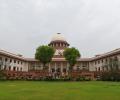
The Indian government has defended the Waqf (Amendment) Act, 2025 in the Supreme Court, arguing that there cannot be a blanket stay on the law as there is a presumption of its constitutionality. The Centre countered the pleas challenging the law's validity, asserting that the amendments were undertaken after a comprehensive study by a parliamentary panel. The government also highlighted the "reported misuse" of earlier provisions and the increase in waqf land, claiming that over 20 lakh hectares were added after 2013.

'When voting clause by clause on Waqf came up in the JPC, the TDP and JD-U supported the BJP on each and every clause.'

President Droupadi Murmu has given her assent to the Waqf (Amendment) Bill, 2025, which has sparked controversy and legal challenges. The Bill, passed by Parliament after heated debates, has been criticized by opposition parties as "anti-Muslim" and "unconstitutional". The government, however, maintains that the reform will benefit the Muslim community. Several petitions have been filed in the Supreme Court challenging the constitutional validity of the Bill, alleging discrimination against Muslims and undermining their religious autonomy. The Bill repeals the Mussalman Wakf Act, 1923, and introduces restrictions on Waqf properties and their management, which have raised concerns about the impact on the Muslim community.

The Supreme Court on Monday agreed to consider listing for urgent hearing the petitions challenging the constitutional validity of the Waqf (Amendment) Act, 2025.

'When the Bill was passed all have been exposed. There is no difference between communal and secular.'

The All India Muslim Personal Law Board (AIMPLB) has announced its intention to challenge the Waqf (Amendment) Bill in court, labeling it a "black law" that threatens the community's rights. The AIMPLB, a major organization representing Muslims in India, asserts that the Bill, if passed, would lead to the seizure of Muslim properties and undermine the autonomy of Waqf Boards. The organization plans to launch nationwide protests against the Bill, echoing the farmers' agitation, and has urged all citizens to resist the legislation. The Bill has been met with criticism from various quarters, including opposition parties, who claim that the Centre is rushing it through Parliament without adequately addressing concerns raised by the Joint Parliamentary Committee (JPC).

A major controversy has erupted in West Bengal after a TMC MLA announced plans to lay the foundation stone of a mosque modeled on the Babri Masjid, leading to political backlash and concerns over communal polarization.

The house of the BJP Minority Morcha's Manipur president, Asker Ali, was set on fire by a mob allegedly for supporting the Waqf Amendment Act. The incident happened at Lilong in Thoubal district on Sunday night. Ali had expressed his support for the Act on social media on Saturday. An irate mob gathered outside his residence around 9 pm, vandalised it and later set it on fire. Following the incident, Ali posted a video on social media, apologising for his earlier statement. He also expressed opposition to the Act.

A leading Catholic Church daily in Kerala has described the Waqf amendment bill as a crucial test of secularism in Parliament, urging MPs to support it. The editorial in Deepika daily comes as the union government prepares to table the bill for parliamentary consideration. The editorial calls the bill a test of secularism and warns MPs that failing to support it would mark them in history as endorsing religious fundamentalism. The paper added that the bill will also put an end to the injustices faced by thousands of Hindu, Christian, and Muslim citizens who have suffered due to the Waqf law. The editorial also recalled the recent statement addressed to Kerala MPs by Kerala Catholic Bishops' Council (KCBC) where the KCBC President Cardinal Mar Baselios Cleemis Catholicos urged amending provisions in the Waqf law that validate claims over land which people of Munambam have lawfully possessed. Opposition parties have slammed the bill as "unconstitutional" and against the interest of the Muslim community.
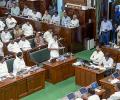
The Tamil Nadu Assembly passed a resolution on Thursday condemning the Centre's proposed Waqf Amendment Bill 2024, calling for its recall. Chief Minister M K Stalin argued that the amendment interferes with religious affairs and would negatively impact the Muslim minority. The resolution was unanimously passed by the Assembly, with support from all parties, including the opposition AIADMK and PMK. The BJP, however, walked out in protest, accusing the ruling DMK of engaging in divisive politics. The bill aims to streamline the Waqf Board's work and ensure efficient management of Waqf properties but has been criticized for potentially encroaching on religious freedom and autonomy. The Tamil Nadu government claims that the amendment would lead to government control over the Waqf Board and its properties, impacting its autonomy and potentially allowing for government acquisition of Muslim-owned lands.

Over one lakh Muslims gathered in Karnataka to protest the Waqf Amendment Act, 2025, which they say erodes the autonomy of Waqf institutions and threatens their rights. The protest, organized by the Karnataka State Ulema Coordination Committee, saw strong opposition to provisions in the amended law that they argue allow for coercive acquisition of Waqf properties. Leaders alleged that the amendment is part of a broader political agenda and urged the community to uphold their legal and constitutional rights.

The bill aims to include all the Muslims sects in the Waqf board, Rijiju said.

The Supreme Court expressed its disapproval of an analogy used by the Centre in support of the inclusion of non-Muslims in Waqf boards, stating that such logic would disqualify a bench of Hindu judges from hearing matters related to Waqf. The CJI questioned the Centre's stance on the provisions of the Waqf (Amendment) Act, 2025, which allows non-Muslim members in the Central Waqf Council and state waqf boards. The Solicitor General defended the provisions, emphasizing that the non-Muslim inclusion is limited and does not impact the Muslim composition of these bodies. However, the CJI asserted that judges shed their religious affiliations while serving on the bench and maintained their secularity in their judicial capacity.

Shiv Sena (UBT) chief Uddhav Thackeray has slammed the BJP over its stance on the Waqf Amendment Bill, accusing the party of a "fraudulent" approach and of trying to take away land for its industrialist friends. He also dared the BJP to remove the green color from its party flag if it disliked Muslims. Thackeray's comments come after the bill was passed by the Lok Sabha on Thursday.

The Indian government has claimed a significant increase in waqf land following the 2013 amendment to the Waqf Act, asserting that the addition of 20 lakh acres raises concerns about potential "misuse" of the provisions. In an affidavit to the Supreme Court, the Centre highlighted a 116% rise in auqaf area after the amendment and urged the dismissal of petitions challenging the Act's validity.

The opposition Peoples' Democratic Party and Peoples' Conference targeted the ruling National Conference over the meeting, and accused it of surrendering to the Bharatiya Janata Party without even a pretence over the passage of the Waqf act.

Introducing the bill, Rijiju said the consultation process of the Joint Parliamentary Committee (JPC) was the largest ever exercise carried out by a parliamentary panel in India's democratic history.

A three-judge Supreme Court bench will hear petitions challenging the constitutional validity of the Waqf (Amendment) Act, 2025, on April 16. The petitions, including those by politicians and the All India Muslim Personal Law Board (AIMPLB) and Jamiat Ulama-i-Hind, were filed in the top court challenging the validity of the newly-enacted law. The Centre has filed a caveat in the apex court, seeking a hearing before any order is passed.

Estranged TMC MLA Humayun Kabir's plan to build a mosque modeled on the Babri Masjid in Murshidabad has sparked a political firestorm in West Bengal, with accusations and warnings escalating tensions ahead of state elections.

Kerala Chief Minister Pinarayi Vijayan has accused the RSS of "majority communalism" over an article published in an RSS mouthpiece regarding the Catholic Church's property holdings in India. The article, which has since been removed from the website, called for the government to acquire the church's land, claiming it was illegally leased during the British era. Vijayan said the article reveals the "true mindset" of the RSS and its alleged plan to "target minority groups one by one and destroy them step by step." The Leader of the Opposition in the Kerala Assembly, V D Satheesan, echoed Vijayan's concerns, stating that the article shows the RSS's intent to target the Church's property. He also claimed that the article's publication coincides with the passing of the Waqf Bill in Parliament, suggesting a pattern of targeting religious communities. Meanwhile, the BJP state president, Rajeev Chandrasekhar, denied the article's accuracy and stated that the article was removed after it was found to be untrue. He also emphasized that owning land is not a crime, and countered allegations that the Congress and Waqf have illegally acquired land in Karnataka. Archbishop Joseph Pamplany of Thalassery, however, expressed confidence that the Church is not afraid of any "Church Bill", as its properties have been earned through hard work. He said the Church will take legal action if necessary.
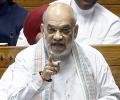
The Lok Sabha passed the Waqf (Amendment) Bill, 2025, with the ruling NDA defending it as beneficial for minorities while the opposition called it "anti-Muslim". All amendments moved by the opposition were rejected and the bill was passed with 288 votes in favor and 232 against. Union Minorities Affairs Minister Kiren Rijiju asserted that India is the safest place in the world for minorities, refuting claims of their insecurity.

Protests against the Waqf Act turned violent in parts of West Bengal on Friday, with demonstrators setting ablaze vehicles, disrupting traffic and rail movement, and injuring several policemen. The unrest erupted in Suti, Murshidabad district, where protesters defied prohibitory orders, hurled stones at security personnel, and torched police vans and public buses during processions. Police responded with lathi charges and tear gas, while some officers were forced to seek refuge in a nearby mosque. Similar protests were held in Malda and Kolkata, prompting Governor C V Ananda Bose to direct the state government to take swift action against those responsible. The governor also contacted Union Home Minister Amit Shah and held discussions with Chief Minister Mamata Banerjee. The Waqf (Amendment) Bill, which was recently passed by both houses of Parliament, aims to improve the management of Waqf properties, safeguarding heritage sites and promoting social welfare.
Only four working days are left for the ongoing budget session to come to an end on April 4.

The Congress party announced its intention to challenge the constitutionality of the recently passed Wakf (Amendment) Bill, 2024 in the Supreme Court. AICC general secretary Jairam Ramesh stated that the party will "very soon" file a petition, citing concerns about the bill's impact on constitutional principles. Ramesh highlighted the Congress's ongoing legal challenges against other legislation, including the Citizenship Amendment Act (CAA), amendments to the Right to Information (RTI) Act, and changes to the Conduct of Election Rules. He emphasized the party's commitment to defending the Constitution's principles, provisions, and practices.

The Supreme Court of India will likely hear a batch of petitions challenging the constitutional validity of the Waqf (Amendment) Act, 2025 on April 15. The Act, which came into force on April 8, has been met with widespread criticism from various stakeholders, including politicians, the All India Muslim Personal Law Board (AIMPLB), and Jamiat Ulama-i-Hind. They argue that the law is discriminatory and violates the fundamental rights guaranteed under Articles 25 and 26 of the Constitution. The petitions allege that the amendments give the government more control over the administration of Waqf, effectively sidelining the Muslim minority from managing their own religious endowments.

The situation in Muslim-dominated Murshidabad district of West Bengal, which was marred by incidents of violence following protests over the Waqf (Amendment) Act, was calm and peaceful on Wednesday with no reports of any untoward incident. Prohibitory orders were clamped in and around Raghunathganj and Suti police station areas and large police force deployed in all sensitive areas of the district, especially in and around Jangipur town, where a large number of people had assembled on Tuesday afternoon, demanding the withdrawal of the legislation. Internet connectivity remained suspended within the areas under the Jangipur sub-division to prevent the spread of any disinformation. Protestors, who had gathered in large numbers on the NH-12 in the Jangipur area to protest against the Waqf Bill, hurled stones at the police who were deployed in the area, on Tuesday afternoon. A couple of vehicles belonging to the police were allegedly torched during the protest and police had to resort to lathi-charge and use tear gas shells to bring the situation under control. A few policemen were injured in the stone pelting. Police have also detained a few people in connection with the incident. West Bengal Governor C V Ananda Bose condemned the incident and said attempts to disturb the law and order situation in the state "should be put down with an iron hand". The opposition BJP alleged that the law and order situation in the state was "crumbling" under Chief Minister Mamata Banerjee, who was busy with "minority appeasement". The Waqf (Amendment) Bill was passed by the Lok Sabha on Thursday, and by the Rajya Sabha in the early hours of Friday after marathon debates in both Houses of Parliament. The Act aims to streamline the management of Waqf properties (assets permanently donated by Muslims for religious or charitable purposes) with provisions to safeguard heritage sites and promote social welfare. It also seeks to improve governance by enhancing transparency in property management, streamlining coordination between Waqf boards and local authorities and protecting stakeholders' rights.

Protests against the Waqf (Amendment) Act turned violent in Cachar district of Assam on Sunday, with protesters throwing stones at police and the police using batons to disperse the crowd. The incident occurred in Berenga area of Silchar town where around 300-400 people protested without permission. The Cachar district administration imposed prohibitory measures across the district under Section 163 of the Bharatiya Nagarik Suraksha Sanhita (BNSS) to prevent further unrest. The order prohibits gatherings of five or more people without permission, carrying weapons, organizing protests, and traffic disruptions.
West Bengal's ruling Trinamool Congress on Thursday suspended its Bharatpur MLA Humayun Kabir, who had triggered a storm with the proposal to build 'Babri Masjid' in Murshidabad district.

Prime Minister Narendra Modi hailed the passage of the Waqf (Amendment) Bill in Parliament as a "watershed moment" in the country's quest for socio-economic justice, transparency and inclusive growth. He said the legislation will particularly help those who have long remained on the margins, thus being denied both voice and opportunity. Modi stated that the Waqf system was synonymous with lack of transparency and accountability, especially harming Muslim women, poor Muslims and Pasmanda Muslims. He added that the legislation will boost transparency and safeguard people's rights, ushering in a more modern and socially just framework. The prime minister thanked all members of Parliament and the public for their contributions to the legislation.

Tamil Nadu Chief Minister and DMK president M K Stalin announced that his party will file a case in the Supreme Court against the Waqf Bill passed in the Lok Sabha. The opposition AIADMK expressed solidarity with the DMK's stance, while the BJP members staged a walkout from the Assembly in protest. The CM argued that the amendment was passed at the behest of a few allies despite opposition from majority parties and that it is an attack on the Constitution and religious harmony. The DMK claims the bill threatens the autonomy of the Waqf Board and the Muslim minority population.

The All India Muslim Personal Law Board (AIMPLB) has called for a nationwide 'lights out' protest from 9 PM to 9:15 PM on April 30 to oppose the amendments made to the Waqf Act. The AIMPLB spokesperson, SQR Ilyas, stated that the protest is a symbolic expression of solidarity against the 'discriminatory and constitutionally incompatible' amendments. The Board has been running a campaign against the amendments since April 10, organizing meetings and protests across the country.

Hours after the Waqf (Amendment) Bill was passed in Parliament, 50 individuals embroiled in land disputes in Kerala's Munambam joined the BJP, hoping for a resolution to their claims. The residents, who have been protesting for 174 days, allege that the Waqf Board is claiming ownership of their properties. BJP leader Rajeev Chandrasekhar assured them of the party's support and a meeting with Prime Minister Narendra Modi to express gratitude. The BJP capitalized on the Catholic Church's support for the legislation, accusing the Congress and the Left of appeasement politics. The opposition, however, questioned the impact of the bill on the Munambam issue.

Seeking to allay fears that existing Waqf properties will be subject to scrutiny after the amended Waqf law comes into force, a parliamentary panel on Tuesday recommended that no cases will be reopened against such properties on a retrospective basis, provided the asset is not in dispute or belongs to the government.

Banerjee said she will protect the minority people and their property.

Opposition MPs, some of whom have given their dissent, slammed the exercise as undemocratic, claiming that they were given little time to study the final report and frame their dissent notes.

Five individuals have been arrested in Ahmedabad, India, for allegedly impersonating trustees and collecting rent for 17 years from properties belonging to two Waqf Board-registered trusts. The accused, who are not actual trustees, constructed around 100 houses and shops on the trust land and collected rent from them, misusing the properties for personal benefits. An FIR has been registered against them for cheating and forging documents.

Protesters in West Bengal's Murshidabad district set fire to police vehicles and hurled stones during a demonstration against the Waqf (Amendment) Act. The incident occurred on Tuesday afternoon in the Jangipur area, where a large crowd had gathered demanding the withdrawal of the legislation. Police responded with lathi charges and tear gas to control the situation. Several people were detained and police personnel were injured in the stone-pelting. The West Bengal Police has said the situation is under control and strict action will be taken against those who resorted to violence.
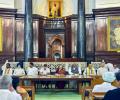
Lok Sabha Speaker Om Birla criticized former Congress president Sonia Gandhi's remarks about the Waqf (Amendment) Bill being "bulldozed through" the Lower House. Birla said a senior member casting aspersions on the House proceedings was "most unfortunate" and against the dignity of parliamentary democracy. He pointed out that the bill was debated for 13 hours and 53 minutes with several members participating and was passed after multiple divisions.

Two individuals claiming to be members of the Janata Dal (United) (JD(U)) in Bihar announced their "resignation" from the party, citing dissatisfaction with its support for the Waqf (Amendment) Bill. The JD(U) denied the resignations, claiming the individuals were not party members. However, some senior JD(U) leaders have expressed discontent over the passage of the bill, which they believe is detrimental to Muslims. The controversy over the Waqf Bill is likely to influence the upcoming assembly elections in Bihar.
The Waqf (Amendment) Bill, 2025 was passed in the Lok Sabha early Thursday, with 288 members supporting it and 232 against it.
 © 2026 Rediff.com - Investor Information - Advertise with us - Disclaimer - Privacy Policy - Sitemap - Feedback - About us - Terms of use - Grievances