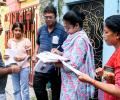
The Election Commission has issued instructions to district election officials in West Bengal regarding voters marked as 'unmapped' due to technical issues during the digitisation of the 2002 electoral rolls.

Keely Hodgkinson broke the women's world indoor 800 metres record at the World Athletics Indoor Tour Gold meeting in Lievin, France.
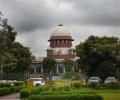
The Supreme Court has granted furlough to Vikas Yadav, who is serving a 25-year jail term for the murder of Nitish Katara, allowing him temporary release to spend time with his family during Holi.

Initiated by CoE's Head of Cricket VVS Laxman, the camp is part of a broader strategy to involve legends in grooming "targeted players" -- emerging prospects from India A and U-19 setups
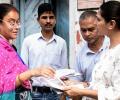
The Election Commission reports a discrepancy of nearly 26 lakh voters' names in West Bengal's current electoral rolls when compared to the 2002 voter list.
The upcoming publication of West Bengal's electoral rolls is expected to intensify political tensions and debates ahead of the Assembly elections, reflecting concerns about voter inclusion and identity.

The relationship high point was reached on Amitabh Bachchan's 60th birthday party, when Jaya Bachchan called on stage 'my to-be daughter-in-law Karisma Kapoor'.

Indian equity markets closed higher, driven by gains in PSU bank, auto, and financial stocks, following the US Supreme Court's decision on tariffs. Sensex climbed 479.95 points to 83,294.66, and Nifty advanced 141.75 points to 25,713.

The draft rolls published on December 16 had already pared down the electorate from 7.66 crore to 7.08 crore, deleting over 58 lakh names on grounds of death, migration, duplication and untraceability.

James Milner sets a new Premier League record with his 654th appearance as Brighton beat Brentford 2-0, surpassing Gareth Barry's mark.
Success percentage rates of some of these toughest exams in the world is in single digits

'I am happy showing my age. I don't want to look 20 years younger than my age. Neither have I done any cosmetic surgery nor do I want to.'

Born in Calcutta (now Kolkata) on October 24, 1935, Tully was the chief of bureau for the BBC, New Delhi, for 22 years.

Cristiano Ronaldo birthday special coverage: Check Cristiano Ronaldo age, stats, total goals, career records, trophies and net worth details.

'I will always and forever remember your sweet gentle soul.'

It's going to be a busy month at the theatres in February.

Bodo/Glimt secured an upset 3-1 victory over Serie A leaders Inter Milan in the first leg of their Champions League playoff on Wednesday.

Deepa Gahlot picks 10 Bollywood horror flicks to mark Friday the 13th.

Maharashtra Deputy Chief Minister Ajit Pawar and four others were killed after their aircraft crashed in Baramati on January 28, 2026. Here are 11 other prominent Indians who died in air crashes.
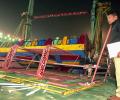
The tragedy struck the 39th Surajkund International Crafts Mela on Saturday evening, when about 19 people were riding the swing before it suddenly tilted and then crashed onto the ground.
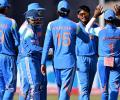
India reached their 10th U19 World Cup final, the most for any team, followed by Australia with six in 16 editions of this tournament.

'Dilip Kumar was a dream. The only regret I have in life is that I could not give him his last hit.' 'He loved every minute that he was on the set. I had set up a particularly long shot.' 'We did a number of takes mostly because somewhere he would mess up his line.' 'Then he sat down and fired himself: "Apne aap ko actor samajhta hai! Dilip Kumar! Acting toh aati nahin tujhe".' 'He shot again and did a great job.'

The Balochistan Liberation Army (BLA) has released videos and images highlighting the involvement of female fighters in its ongoing campaign in Balochistan.

The Election Commission has uploaded the names of people on the list of SIR logical discrepancies list on its website following a Supreme Court order. The district electoral officers will download the list and display it on panchayat bhavans and block offices.

Factbox on Carlos Alcaraz, who beat Serbian fourth seed Novak Djokovic to win his first Australian Open title on Sunday, increasing his overall Grand Slam tally to seven.

Addressing an event after launching the service, Shah said the rival ride-hailing platforms have reduced commission and are offering many other incentives, including free rides to customers, seeing the success of Bharat Taxi during the pilot operation.

The Supreme Court will hear on Wednesday a plea filed by West Bengal Chief Minister Mamata Banerjee challenging the ongoing Special Intensive Revision (SIR) of electoral rolls in the state.

Banerjee is personally present in court room one along with her lawyers. A gate pass was issued in the chief minister's name on Tuesday.

Chandra Kumar Bose, grandnephew of Netaji Subhas Chandra Bose, criticizes the ongoing electoral roll revision in West Bengal, calling it 'sheer harassment' and lacking clarity.
Mark Tully, the renowned journalist, author, and Indophile, has passed away at the age of 90. He spent a lifetime in India as a journalist, mingling with its people and telling their stories.

The Smithsonian will return three ancient bronze sculptures to India after evidence showed they were illegally removed from Tamil Nadu temples in the 1950s

Aryna Sabalenka swept to her fourth successive Australian Open final with a 6-2, 6-3 win over Ukrainian Elina Svitolina.

Elena Rybakina put on a brilliant performance to defeat favourite Aryna Sabalenka 64, 46, 64 and lift her first Australian Open trophy.

The first 25 years in this century has seen some amazing films and blockbusters in Hollywood. Girish Wankhede lists the top-grossing Hollywood movies from 2001 to 2025, focusing on the key qualities that resonated with Indian audiences and contributed to its appeal.

Protests erupted across several districts of West Bengal over alleged harassment of people in the ongoing Special Intensive Revision (SIR) exercise, leading to road blockages and tyre burning. Demonstrations were held in South 24 Parganas, North 24 Parganas, Jhargram, and Purba Medinipur.
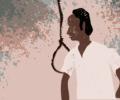
A 57-year-old man was found dead on Tuesday near Siliguri in West Bengal, with family members alleging that he was under stress over the hearing into special intensive revision (SIR) of voter rolls, the police said.

'Mark had such a profound understanding of India, which was, of course, the land of his birth as well as of his death... He loved India, and lived two-thirds of his life here.'

'A breakout above 158,000 to 160,000 could trigger the next leg higher toward 165,000 to 170,000.'
The second phase of the Systematic Integration of Rolls (SIR) in West Bengal is causing distress among elderly, disabled, and vulnerable voters, leading to political accusations ahead of the assembly polls.

Hearings under the Special Intensive Revision (SIR) of electoral rolls were underway in West Bengal, focusing on 'unmapped' voters who are unable to establish linkage with the 2002 electoral roll. Many people are being asked to prove their citizenship.
 © 2026 Rediff.com - Investor Information - Advertise with us - Disclaimer - Privacy Policy - Sitemap - Feedback - About us - Terms of use - Grievances