
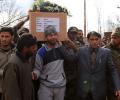
'This was the worst phase yet in the state's human rights history.' 'Notorious interrogation centres were set up, large numbers died in firing on civilian mobs.' 'This is what today's generations might identify better as the Haider phase in Kashmir's history,' says Shekhar Gupta.
'The best course for India is to wait out the implosion that is bound to take place in Pakistan sooner than later.' 'We have to ensure that the fallings debris from a collapsing State does not damage us,' says Colonel Anil A Athale (retd).

Shortly after Pakistan Prime Minister Nawaz Sharif raked up Kashmir issue once again in his address at the UN General Assembly and termed his country as a victim of terrorism, India, in perhaps its harshest ever response, said de-militarising Kashmir was not the answer for achieving peace but "de-terrorising" Pakistan is.

'She preserved national unity against great odds.'
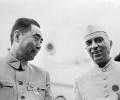
The Indians felt that if they acceded to Chinese claims in Ladakh, Beijing would simply be emboldened to press for further concessions in the future. A revealing excerpt from India And The Cold War.

'Modi has shown political courage by instituting several economic reforms which include demonetisation, ushering in GST, eradication of benami transactions...'

It is unconscionable to choose between Sardar Patel, who united India physically, and Indira Gandhi, who gave meaning, content and pride to the unity of the nation and became a martyr at the altar of national unity, says Ambassador T P Sreenivasan.

Samuel Stokes made India his home and participated in the freedom struggle. He was the only American to be imprisoned for sedition; the British CID maintained a special file on him.

'It will be foolhardy to overlook that this stunning shift in China's stance comes as the culmination of the severely damaged India-China relationship under the present government,' says Ambassador M K Bhadrakumar.
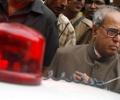
Coming down heavily on Pakistan, President Pranab Mukherjee has said unless it dismantles the terror infrastructure on its soil, there is no scope for progress in talks between the two countries.

At the Battle of Malegaon, Muslim soldiers in the Maratha army defied the British army for a full month when they had no hope of victory as the Chhatrapati and Peshwa had already surrendered.

As India's turns 70, a 70 year old -- one of India's finest poets -- decodes his relationship with her.

'Does the Indian army's new assertiveness risk a clash escalating into shooting and possibly skirmishes?' asks Ajai Shukla.

'Until India fully absorbs the fundamentals of international relations, it will continue to get evil for good,' says Brahma Chellaney.

During a war, there are just four possibilities a soldier faces. One: Victorious and safe. Two: Wounded. Three: Killed in action. Four: Prisoner of War. It was my fate to face the fourth, says Colonel Anil A Athale (retd) on the year spent as a prisoner of war in Pakistan during the 1971 War.

Photographer S Paul, who died this month, was furiously protective about his independence and intensely sure about his work. So much so that he once walked away from a shoot with a prime minister.
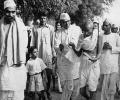
'It was a battle that took many forms, ranging from non-violent mass satyagrahas, mammoth public meetings, huge protest rallies in cities and towns to underground organisation of sabotage of communication and transport networks, an underground radio, illegal patrikas (newsletters) and the formation of parallel governments in Ballia, Midnapore and Satara.'

A look at the last films of directors, who met with untimely deaths.

'How can Kashmir be demilitarised if the terrorist threat remains and Pakistan continues to incite elements in Kashmir to keep the internal situation unstable?' asks former foreign secretary Kanwal Sibal.
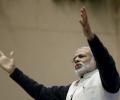
'Modi's brilliance seems to be in combining Indira Gandhi's 'feel' for the Indian pulse and Narasimha Rao's cynicism.' 'By the time the Opposition leaders caught up with Modi over the 'surgical strikes', he had already moved on,' says M K Bhadrakumar.
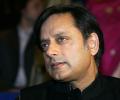
Union Minister Shashi Tharoor's video address to an Indo-Pakistan entrepreneurs' event in Islamabad was abruptly cut off after he lambasted the Pakistani government for ceasefire violations on the Line of Control and suggested the civilian administration did not control the military.

'It would be too sweeping to say that the elites and the middle-class don't care about liberty.' 'It is just that they are always calculating the trade-offs: What's in it for me, what could it cost me?' 'To that extent, we haven't changed in 40 years,' says Shekhar Gupta.
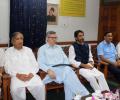
All opposition parties from J&K to apprise President of Kashmir situation.
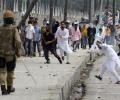
'There is a problem with the rise of a popular view that sees Kashmir through the prism of the larger, chronic Hindu-Muslim tensions.' 'By redefining the Kashmir problem simplistically in Hindu-Muslim terms could end up keeping Kashmir but losing most Kashmiris,' says Shekhar Gupta.

'Her death has left a small hole in me. That little space that her songs and her screen image always filled in me. She had not worked in films for years, but somehow I always sensed she was there, somewhere in Bombay where movie magic is made.'

'Indira Gandhi proved herself a great war leader, but failed as a statesman,' says Colonel Anil A Athale (retd).

Raising the issue of cross border terrorism during his first visit to Turkey, a traditional ally of Pakistan, President Pranab Mukherjee on Tuesday said the menace must be dealt both "individually and collectively" as it was a threat to global peace.

'Those who have followed politics even when there was no Twitter know what the word 'jumlebaaz' means,' says Utkarsh Mishra.

Love In Bombay is a piece of history, a fragment of a time that was. Letting us gaze at it is a great idea. Expecting it to compete with films shot six months ago, on the other hand, is dead wrong, writes Raja Sen.

'Even if the national security framework is to be threat-based, then the division of security threats between Pakistan and China is absurd. The two threats are one.'

As of now, in the case of China's border dispute with India, China is not likely to lose much if it does not resolve the dispute. In fact, the unresolved border dispute has much to offer to China, says Sana Hashmi.

A new book reproduces original Chinese maps that contradict Chinese propaganda. The book reveals Chinese intelligence admissions that Beijing never maintained any army base, customs office or other government function in the disputed area until 1983.

'Much can be done by India under the provisions of the treaty to make full use of its rights it has.' 'The impact of that will be felt downstream.'
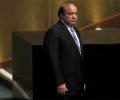
'Indian diplomacy is once again being saddled with the heavy burden of a Pakistan-centric foreign policy. It is something grossly unfair at a crucial juncture in India's trajectory as an emerging power on the global stage,' argues Ambassador M K Bhadrakumar.

'It is a pattern of behaviour of the Chinese that whenever a Chinese leader visits India or an Indian leader visits China, some incidents take place.' 'When Modi visits China, we should look out for some similar demonstration by the Chinese.'
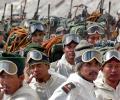
'India should stop claiming that a united Pakistan is in India's interests.' 'Pakistan's break-up is a necessity for peace and progress in the region,' says Major General Mrinal Suman (retd).

Did the human drama provoked by the Japanese invasion of Burma and the Indian exodus from Rangoon inspire director Vishal Bhardwaj's forthcoming epic?

'She was the only prime minister who won a decisive military victory.' 'She won a real war; she didn't play video games on prime time TV over surgical strikes!' 'She understood power better than any other politician, saw it as her birthright and used it with inborn expertise.' 'Every politician today who tries to be a "supremo" through populism and absolute control over his or her party is referring to the Indira Gandhi playbook!'
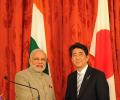
'Secretiveness and the element of surprise in announcing decisions marks the Modi style of diplomacy. From being a voluble politician, he became a reticent statesman... But the diplomatic dance is performed on thin ice and his adroitness is still to be proved,' says Ambassador T P Sreenivasan.

In Sukanya Verma's special series re-visiting great Hindi film classics, we look back at 1960's Parakh, starring Sadhana, Motilal, Nazir Hussain and Durga Khote.
