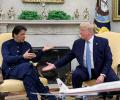
'Whether it was a habitual expression of post truth or an open offer to India and Pakistan, even Imran Khan could not have believed it,' says Ambassador T P Sreenivasan.

United States President Donald Trump remarks on Monday that Prime Minister Narendra Modi sought his mediation on the Kashmir issue will "damage" the Indo-US relations, ex-diplomats said.

China has chosen to keep New Delhi guessing, while retaining for itself the option of constantly changing facts on the ground and shifting the LAC westwards -- the strategy called 'salami slicing', notes Ajai Shukla.
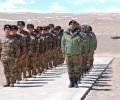
'The Indian government wakes up after the fact when it can do nothing, or rather lacks the will to prosecute military actions to reverse these adverse PLA-driven developments.'

The Narendra Modi government has refused to move the International Court of Justice against Pakistan in the death of Army Captain Saurabh Kalia.
'The logical step is to challenge the very legitimacy of the Chinese claim over Tibet,' recommends Inspector General Gurdip Singh Uban (retd).

Describing Pakistan's North Western Frontier Province area as the "fountainhead" of terror activities in the region, India on Thursday said use of terrorism as state policy with deep roots in military establishment there is a major obstacle for peaceful bilateral ties.
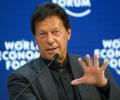
Khan also said Pakistan has decided to partner any other country only for peace and named the partnership with the US as the one.

'Chinese troops are not geared to fight Indian troops who are battle hardened and acclimatised and are far more hardy.'
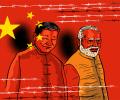
The reasons for China's negative response are located in its territorial dispute with India but also to its grand designs of dominating the region from its previous position of being merely a "balancer" between India and Pakistan, points out Srikanth Kondapalli, Professor in Chinese Studies at JNU.
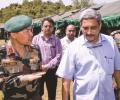
'China is likely to help Pakistan in keeping the fire burning in J&K to bleed India for its own interests.' A fascinating excerpt from Lieutenant General K Himalay Singh's Making of a General: A Himalayan Echo.
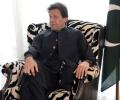
Majority of the 15 members said there should not be any statement or outcome issued after the consultations and their will prevailed, leaving China to come out and make a statement in its national capacity followed by Pakistan.
"The world's eye is on Kashmir and on Pakistan...I will be the ambassador who raises Kashmir's voice at every international forum," he said.

India on Monday said there was 'no scope for misunderstanding or misrepresenting' its position

Major General Sujan Singh Uban, a legendary veteran of the Second World War, was a natural choice to raise, train and command the Special Frontier Force and mould them into a well oiled fighting machine, recalls his son Inspector General Gurdip Singh Uban (retd), who led SFF troops during the Kargil War.

Arpi deserves to be complimented for the commitment and hard work that have gone into this production. The frustrations of seeking reliable documentation from the catacombs of the Indian bureaucracy did not deter him from going after the best information available, and the result is one that he can take much satisfaction in. Ambassador Prabhat P Shukla, Member Advisory Council, Vivekananda International Foundation, reviews Claude Arpi's The End of an Era: India Exits Tibet.

Bharati Dutt witnessed life-changing events that shaped India on the threshold of freedom. Her memories are an account of how ordinary Indians saw India change.

'The Kashmir issue has become internationalised after nearly half a century.' 'India, not Pakistan, has done so pro-actively,' says Shekhar Gupta.

'General Sam Manekshaw looked from left to right and said, "Gentlemen, I have come to have a look at you. I am taking a good look at your faces. When I come back after the war is over, some faces may not be here".'

Prime Minister Narendra Modi on Friday said his government has carried out major reforms -- including labour reforms and reforms in insurance and defence sectors -- 'in less than 100 days' and stopped reversals Indian economy had been facing.

Rejecting Pakistan Prime Minister Nawaz Sharif's demand for United States intervention in resolving the Kashmir issue, External Affairs Minister Salman Khurshid on Sunday said India will not accept this as the matter is a bilateral one agreed to between the two nations.
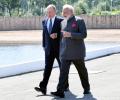
'The Vladivostok visit marks a subtle reversal of trend discernible in the revival of India-Russia relations pioneered by Modi during the past couple of years,' says Ambassador M K Bhadrakumar.

Acting tough, India on Monday called off foreign secretary-level talks with Pakistan next week and conveyed a blunt message that it was interfering in India's internal affairs by holding talks with Kashmiri separatists which was "unacceptable".
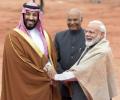
'No matter what Modi may boast about 'new India', the geopolitical reality is that India's stature diminishes when it needs a small country like Saudi Arabia under an autocratic ruler to help out with what is arguably one of the most critical templates of its diplomacy,' says Ambassador M K Bhadrakumar.

Sticking to its stand that McMahon Line on India-China boundary is "illegal", China on Monday said it is ready to work with India to resolve the vexed border issue at an early date through "friendly consultations" to create more favourable conditions for bilateral ties.

While Prime Minister Modi may pursue the laudable aim of building a cooperative relationship with Pakistan, he and his advisers should never think that concessions (and dialogue is a concession in itself) will change the Pakistan army's approach to India, says Vivek Katju.

West Indian batting legend Brian Lara, on Sunday, lamented that he never played a Test match at the historic Eden Gardens and suggested that Cricket Association of Bengal officials organise a veterans' match at the venue, and, that, it should including Sachin Tendulkar and Sourav Ganguly.

United Nations chief Ban Ki-moon has expressed readiness to engage with India and Pakistan in resolving the Kashmir issue if requested by both and asked them to resume talks to reach an agreement that would serve their security interests as well as that of the region.
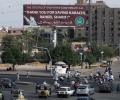
'New Delhi feels that given the internal dynamics in Pakistan and the overwhelming powers wielded by the army, one will have to wait for better times to see any meaningful progress in the India-Pakistan relationship,' says Ambassador G Parthasarthy.
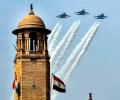
'No country can ever be free to make its choices and remain independent if it continues to wear borrowed plumes,' warn Lieutenant General Ashok Joshi (retd) and Colonel Anil A Athale (retd).

'I don't know who is deciding Indian foreign policy today. I don't know who is deciding how India deals with Pakistan,' former Union minister Ram Jethmalani takes on the Modi government.

The recent decision of the Union government asking United Nations Military Observer Group on Kashmir to vacate a government-provided bungalow in New Delhi, is garnering mixed reactions in Kashmir. While many feel there would be no real impact if the UNMOGIP was to close its main offices in Srinagar, there are others who believe that the UN would continue to have a critical role till the Kashmir issue is resolved.

'There has to be strikes on the ISI headquarters to raze it to the ground figuratively and otherwise,' says Group Captain Murli Menon (retd).

The apex court said the parties in the matter should be ready to start the hearing on the appeals which are before it.

In his latest response to his Pakistani counterpart Aizaz Ahmad Chaudhry's fresh invitation of August 19 for talks, Foreign Secretary S Jaishankar once again emphasised on the need for earliest possible vacation of Islamabad's illegal occupation of PoK and conveyed that not just India but the larger region is aware that Pakistan is actually a "prime perpetrator" of terrorism.
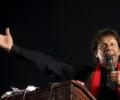
'I like him as a person, and as a politician.'

Senior advocate Rajeev Dhavan, representing the Muslim parties in the case, tore up a pictorial map.

'The China Pakistan Economic Corridor is Pakistan's number one preoccupation today -- and tensions with India and the $46 billion projects simply do not go together,' points out Ambassador M K Bhadrakumar.

'The Indian Army can easily initiate retaliation.' 'But escalation would be both inevitable and unpredictable.'

'Our policy seems to be to give away part of J&K, even though we are entitled to the entire state.' 'The Congress has done so, and the BJP is following the same policy.' 'No one is applying their mind to the legal position.' 'Kashmir is not a part of Pakistan under its own constitution.'
