
Prime Minister Narendra Modi has highlighted the risks posed by the 'weaponisation' of resources and strategic sea routes, urging India to achieve greater self-reliance in energy to mitigate vulnerabilities to overseas supplies and geopolitical tensions.

Defence Minister Rajnath Singh has called for India to become a global leader in advanced technologies, particularly in strengthening its non-destructive testing (NDT) ecosystem. He emphasised the need for indigenous capabilities, consistent quality assurance, and the integration of advanced digital technologies like AI and ML to ensure reliability and self-reliance in defence applications.
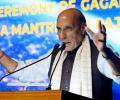
Defence Minister Rajnath Singh has urged India to become a global leader in advanced technologies, particularly in non-destructive testing (NDT), to bolster self-reliance and defence preparedness. He highlighted the critical need for indigenous capabilities in inspection technologies, quality assurance, and reliable testing results for strategic applications, emphasising that NDT is vital for ensuring the integrity of defence systems without causing damage.

India aims to become a globally competitive and technologically self-reliant semiconductor powerhouse by 2047, leading in next-generation chip technologies. This vision, highlighted at the ESTIC 2026 conclave where DRDO played a key role, focuses on developing a sustainable semiconductor ecosystem, creating high-value jobs, and ensuring digital security and economic strength through indigenous chip capabilities.

NITI Aayog member Abhay Karandikar stated that the US government's new export controls, which led AI giant Anthropic to take its latest models offline, underscore the critical need for India to achieve self-reliance in technology development, particularly in AI infrastructure and hardware.

Prime Minister Narendra Modi on Tuesday interacted with government secretaries and discussed with them on two key issues -- deregulation and other reforms for 'ease of doing business' and 'ease of living' and promoting 'Aatmanirbharta'.
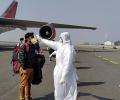
Indian airlines are increasingly focusing on developing in-house maintenance, repair, and overhaul (MRO) capabilities to support their rapidly expanding fleets and reduce reliance on overseas facilities. This strategic shift is driven by market growth projections, with India's MRO market expected to triple to USD 9.5 billion by 2035, and recent geopolitical challenges highlighting the need for domestic capacity.

Air Chief Marshal Ashutosh Dixit, India's new Chief of Air Staff, has outlined his top priorities, focusing on restoring the IAF's fighter squadron strength, accelerating indigenous programmes like Tejas and AMCA, and enhancing tri-services synergy. His vision, encapsulated by the acronym VAYU (Vigilance, Aatmanirbharta, Yukti, Unity), emphasises self-reliance in defence, tactical innovation, and integrated operations with the Army and Navy, alongside a commitment to air warrior welfare and national security.

The Indian government has released commemorative postage stamps honouring Dr Ram Bux Singh, known as the "father of modern biogas". Dr Singh made significant contributions to biogas technology in India and globally, including developing early gobar gas plants and establishing Asia's first gobar gas research station. The stamps were released on November 13, alongside a book detailing his legacy and biogas technology.

Air India has commenced construction of a new multi-facility Maintenance, Repair, and Overhaul (MRO) hangar at Delhi's Indira Gandhi International Airport. This nine-acre facility aims to centralise engineering and maintenance activities, enhancing fleet upkeep, improving reliability, and reducing aircraft ground time for the Tata Group-owned airline.
India has prohibited the export of lithium-ion battery black mass to bolster domestic recycling capabilities and enhance the recovery of critical minerals like lithium, cobalt, nickel, and manganese. This move aims to ensure feedstock availability for local recyclers, reduce import dependence, and strengthen supply chains for electric vehicles and clean energy technologies, aligning with the Aatmanirbhar Bharat vision.

Prime Minister Narendra Modi has challenged Indian industry leaders to increase job creation and employee salaries, arguing that government tax concessions and income tax relief should translate into greater employment and economic activity. He also urged businesses to improve product quality for the domestic market and leverage new trade agreements for global competitiveness.
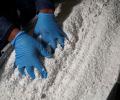
Lohum's subsidiary Vidyuta has secured government approval under the Electronics Component Manufacturing Scheme (ECMS) for a 20 KTPA cathode active material manufacturing facility, involving a Rs 500 crore investment. This initiative aims to boost domestic production of critical lithium-ion battery components, reducing import reliance and strengthening India's electronics manufacturing ecosystem.

'The political leadership is very clear that we have to move towards the integration of the three services into theatre commands.'
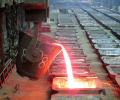
The Indian government has approved a Rs 2,814 crore capital expenditure support scheme to promote domestic processing of critical minerals like lithium and nickel. This five-year scheme, running until 2030-31, aims to reduce import dependence, develop value chains, and enhance India's self-reliance in essential materials for clean energy and modern technologies. It includes a 30% capital subsidy for setting up processing plants.

'The close collaboration between Pakistan and China, and the assistance Pakistan receives, is a factor in our planning, and the IAF is building its capacity to counter precisely such collusive threats.'

Iranian supreme leader Ayatollah Mojtaba Hosseini Khamenei has declared that the results of the US midterm elections and shifts between American political parties will not alter Iran's defensive strategy or soften Washington's long-standing hostility toward the Iranian nation.
Defence Minister Rajnath Singh has emphasised the need for India to develop a robust drone manufacturing ecosystem, drawing lessons from recent global conflicts and highlighting the importance of self-reliance in drone technology.
Hindustan Copper Limited CMD Anupam Misra spoke at the 85th CSIR Foundation Day, advocating for workplace safety, employee welfare, and scientific excellence. He stressed the importance of continuous learning, innovation, and bridging research with industrial applications to support Viksit Bharat 2047. CSIR-NML Director Dr. Sandip Ghosh Chowdhury also highlighted CSIR's legacy and its role in India's technological self-reliance.

Sanju Samson has been appointed Brand Ambassador of Jan Kaushal Kendra, Moti Nagar, with Delhi CM Rekha Gupta highlighting his connection with the capital and role inspiring youth.

Hindustan Aeronautics Limited (HAL) has delivered LCA Tejas FOC twin-seater trainers and HTT-40 basic trainer aircraft to the Indian Air Force, and Dhruv next-generation helicopters to Pawan Hans. This significant handover, witnessed by Defence Minister Rajnath Singh, marks a crucial step in India's journey towards self-reliance in the aerospace sector, showcasing HAL's capabilities across military, civil rotary-wing, and pilot training aviation.

State-run defence major Hindustan Aeronautics Limited (HAL) has delivered LCA Tejas Final Operational Clearance twin-seater trainers and HTT-40 basic trainer aircraft to the Indian Air Force, along with Dhruv next-generation helicopters to Pawan Hans. This significant handover, witnessed by Defence Minister Rajnath Singh, marks a crucial step in India's journey towards self-reliance in the aerospace sector, showcasing HAL's diverse capabilities in military, civil, and training aviation.

Indian firm Bharat Forge and US defence major Pratt & Whitney Canada have announced a collaboration to support the development of India's high-altitude, long-endurance (HALE) unmanned aerial vehicle. This partnership involves integrating advanced turboprop engines into a DRDO-designed UAV, bolstering India's indigenous defence capabilities under the Aatmanirbhar Bharat initiative.
An Indian firm, Bharat Forge, and US defence major Pratt & Whitney Canada have announced a collaboration to develop India's high-altitude, long-endurance (HALE) unmanned aerial vehicle (UAV). This partnership will focus on integrating advanced turboprop engines into the DRDO-designed HALE UAV, bolstering India's indigenous defence capabilities under the Aatmanirbhar Bharat initiative. The collaboration aims to enhance India's strategic self-reliance in surveillance and reconnaissance technology.
A seminar in New Delhi commemorated Acharya Prafulla Chandra Ray's birth anniversary, focusing on his significant contributions to pharmaceutical sciences and his vision for indigenous research and self-reliance. Organised by DPSRU and VIBHA, the event highlighted Ray's pioneering efforts in "Swadeshi science" and his role in establishing India's pharmaceutical industry.

Prime Minister Narendra Modi lauded India's 7.8 per cent GDP growth, achieved despite global conflicts and instability. He emphasised the importance of Swadeshi and self-reliance for a developed India by its 100th year of Independence, urging citizens to avoid unnecessary foreign expenditures.
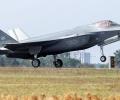
Indian Air Force Chief Air Chief Marshal A P Singh stated on Saturday that the US has not officially offered F-35 fighter jets to India, and no final decision has been made regarding Russia's Su-57 proposal. He made these remarks during the concluding ceremony of the multinational air exercise Tarang Shakti-2026.

The Indian government has approved the sale of a 60.72 per cent stake in IDBI Bank Ltd to Canadian billionaire Prem Watsa's Fairfax Financial Holdings Ltd for approximately 52,878 crore, a move that reflects improving India-Canada ties and marks a significant turning point for the bank.

BrahMos Aerospace expects to develop the first prototype of its next-generation BrahMos-NG missile by 2027 or 2028, while a missile with a range of 1,500 km remains part of its future roadmap and is currently at the conceptual stage, the company's CEO and managing director Dr Jaiteerth Joshi said.

India's Agriculture Secretary Atish Chandra has warned that the upcoming rabi (winter) crop season is likely to be challenging for rainfed areas due to the strengthening El Nio weather pattern, potentially affecting foodgrain production. This comes as Maharashtra declares drought in nearly 74 per cent of its talukas, highlighting the immediate impact of climate change.

Civil Aviation Minister K Rammohan Naidu announced India's ambition to produce its first indigenous civilian aircraft within two years through a joint venture. He highlighted the rapid growth of the country's aviation sector, with significant aircraft orders, planned new airports, and potential for manufacturing jet engines and Sustainable Aviation Fuel, underscoring India's increasing role in global aviation.

State-run Hindustan Aeronautics Limited (HAL) has delivered LCA Tejas FOC twin-seater trainers and HTT-40 basic trainer aircraft to the Indian Air Force, and Dhruv Next Generation helicopters to Pawan Hans. This significant handover, attended by Defence Minister Rajnath Singh and Civil Aviation Minister K Rammohan Naidu, underscores India's progress towards self-reliance in aerospace, strengthening both military and civil aviation capabilities with indigenous platforms.

State-run Oil and Natural Gas Corporation (ONGC) has made a significant gas discovery in the deep waters of the Mahanadi Basin off the Odisha coast, recording encouraging flow and sustained reservoir pressure, a breakthrough for India's deepwater exploration programme.

Vice President CP Radhakrishnan launched Gnani Artha, an end-to-end sovereign AI stack for Indian enterprises and public institutions. He emphasised that new technologies, including AI, will enhance ease of work and create more jobs, drawing parallels with the IT industry's growth. The initiative, backed by the India AI Mission, aims for self-reliance and includes the Gnani Evon v3.3 language model and Gnani Plexus AI platform, offering cost-effective Indic language capabilities.
Vice President CP Radhakrishnan launched Gnani Artha, an end-to-end sovereign AI stack for Indian enterprises and public institutions. He emphasised that new technologies, including AI, will enhance ease of work and create more jobs, drawing parallels with the IT industry's growth. The initiative, backed by the India AI Mission, aims for self-reliance and includes the Gnani Evon v3.3 language model and Gnani Plexus AI platform, offering cost-effective Indic language capabilities.

Union Finance Minister Nirmala Sitharaman expressed strong confidence in India achieving over 10 per cent economic growth, advocating for increased technology adoption and innovation. She urged overcoming scepticism and highlighted technology's transformative role in agriculture and public sector reforms, while also launching a new fund and book at an IIT Madras event.

Former CDS Anil Chauhan stated that China poses a long-term and comprehensive challenge to India, with the boundary issue remaining unresolved due to differing perceptions of the Line of Actual Control. However, he emphasised that India's ties with Beijing cannot be solely defined by border disputes, advocating for engagement through platforms like SCO and BRICS. He also highlighted the broader global geopolitical flux and instability in India's neighbourhood as significant security concerns, stressing the need for self-reliance.
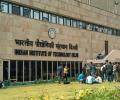
Researchers at IIT Delhi have successfully designed India's first working indigenous micro Graphics Processing Unit (GPU). This significant development aims to reduce the country's reliance on imported GPUs, which are crucial for AI, Machine Learning, and various embedded applications, and could help bridge the digital divide.

HAL has handed over a new batch of indigenous aircraft, marking another step in India's domestic aerospace manufacturing programme. The company delivered two LCA Tejas FOC twin-seater trainers to the IAF, completing twin-seater deliveries under the FOC contract.

Prime Minister Narendra Modi, in his 80th Independence Day address, expressed strong confidence that India will achieve developed nation status by 2047, urging citizens to embrace big dreams and unwavering resolve to realise 'Viksit Bharat'. He highlighted India's economic transformation and significant growth in various sectors, including defence production, electronic manufacturing, and mobile phone production.
