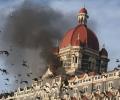
Devika Rotawan, a survivor of the 26/11 Mumbai terror attacks, has demanded the death penalty for Tahawwur Hussain Rana, a key accused extradited from the US. Rotawan, a key witness in the case, identified terrorist Mohammed Ajmal Kasab in court during the trial. She believes the extradition is a "big win" for India and called for further action against other conspirators in Pakistan.
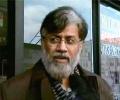
Tahawwur Hussain Rana, an accused in the 2008 Mumbai terror attacks, has been extradited to India from the US. Former home secretaries believe he will be convicted and could face the death penalty. Rana was an associate of David Coleman Headley, who played a key role in the attacks. The extradition is seen as a significant achievement for India and a message to terrorists that they will face justice. Rana's testimony is expected to provide valuable information about the planning and execution of the attacks.
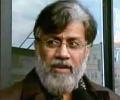
A Delhi court has sought the trial records of the 26/11 terror attack from a Mumbai court ahead of the expected extradition of the crime's alleged mastermind Tahawwur Hussain Rana to India from the US. The US Supreme Court has cleared the way for Rana's extradition, dismissing his final legal challenge against the move.
The Telangana High Court upheld a trial court's verdict handing out death penalty to five senior operatives of banned terror outfit, Indian Mujahideen, involved in a bomb blast that left 18 people killed in 2013. The court dismissed the criminal revision appeal filed by the IM operatives while upholding the NIA court's judgment. The five members, including IM co-founder Mohd Ahmed Sidibapa alias Yasin Bhatkal, Pakistani national Zia-ur-Rahman alias Waqas, Asadullah Akhtar alias Haddi, Tahaseen Akhtar alias Monu and Ajaz Shaikh, were convicted in 2016. The special court for NIA cases here awarded capital punishment to five convicts treating it as a rarest of the rare case. The high court, after conducting a detailed hearing in the appeals filed by the convicts, confirmed the death sentence of the five IM operatives.
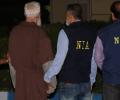
Tahawwur Hussain Rana, a Canadian national accused of involvement in the 2008 Mumbai terror attacks, has been extradited to India from the United States. Rana's interrogation is expected to shed light on the role of Pakistani state actors in the attacks, which claimed 166 lives. Indian authorities are particularly interested in his travels across India in the days leading up to the attacks, including visits to Hapur, Agra, Delhi, Kochi, Ahmedabad, and Mumbai. Rana's extradition follows a lengthy legal battle, with the US Supreme Court ultimately denying his application to challenge it. Rana is known to be associated with Pakistani-American terrorist David Coleman Headley, one of the main conspirators of the 26/11 attacks. The investigation into the Mumbai attacks has implicated senior members of terror outfits Lashkar-e-Taiba (LeT) and Harkat-ul Jihadi Islami (HuJI), as well as officials from Pakistan's Inter-Services Intelligence (ISI).
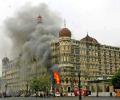
Tahawwur Rana, accused of involvement in the 2008 Mumbai terror attacks, is expected to be extradited to India from the United States soon. The US Supreme Court denied his last-ditch effort to stop his extradition, moving him closer to being handed over to Indian authorities. Rana's extradition is expected to help probe agencies expose the role of Pakistani state actors behind the attacks and shed new light on the investigation. He is associated with Pakistani-American terrorist David Coleman Headley, one of the main conspirators of the 26/11 attacks.

The National Investigation Agency (NIA) has arrested three men for allegedly sharing sensitive information about Indian defence establishments with Pakistan-based intelligence operatives. The arrests come as part of an ongoing investigation into an espionage racket that has seen eight people arrested so far. The NIA has charged five persons, including two absconding Pakistani operatives, in connection with the case, which was originally registered by the Counter Intelligence Cell, Andhra Pradesh in January 2021.
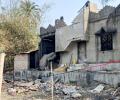
A gas cylinder blast in a house at Dholahat in West Bengal's Pathar Pratima has claimed eight lives, including four children. The explosion, which occurred on Monday night, triggered a massive fire, intensified by the presence of stacked firecrackers inside the house. The incident has sparked a political controversy, with the BJP demanding a National Investigation Agency (NIA) probe and the TMC maintaining that the police are already investigating and that the state government has a "zero-tolerance " policy towards such incidents. The blast has also raised concerns about the safety of illegal firecracker manufacturing units, which have been linked to several recent accidents in the state.
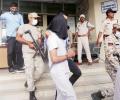
The National Investigation Agency (NIA) has charged two men for allegedly conspiring to establish an Islamic caliphate in India, besides spreading terror in Tamil Nadu and neighboring states. The accused, Abdul Rehman and Mujibur Rehman, were allegedly involved in recruiting "Daris/students" to "secret classes" of the Hizb ut Tahrir (HuT) terror organization. They are accused of conspiring and preparing to undertake terrorist acts to promote the HuT ideology in Tamil Nadu and other places.

Two men were arrested in Kerala for allegedly placing a telephone post across a railway track, endangering the lives of passengers. The accused, Rajesh and Arun, were taken into custody and confessed to placing the post on the tracks, but the police are still investigating a possible sabotage angle. The incident occurred on the Kollam-Shenkotta route, and the accused have a criminal track record, with one involved in 11 criminal cases and the other in five cases. The police are investigating whether more people were involved in the incident.
Tahawwur Hussain Rana, a key accused in the 26/11 Mumbai terror attacks, was brought to India on Thursday after being "successfully extradited " from the US, the National Investigation Agency (NIA) said. The 64-year-old Canadian citizen of Pakistani origin landed in Delhi in a special plane on Thursday evening, ending days of speculation of when and how he will be extradited, officials said. The NIA said in a statement that it had secured the successful extradition after years of sustained and concerted efforts to bring to justice the key conspirator behind the 2008 mayhem that claimed 166 lives. Rana is accused of conspiring with David Coleman Headley alias Daood Gilani, and operatives of designated terrorist organisations Lashkar-e-Taiba (LeT) and Harkat-ul-Jihadi Islami (HUJI) along with other Pakistan-based co-conspirators, to carry out the the three-day terror siege of India's financial capital.

Tahawwur Hussain Rana, a Pakistan-born Canadian national and close associate of David Coleman Headley, is set to be extradited to India from the US. Rana was involved in the planning and execution of the 2008 Mumbai terror attacks, which killed 166 people, including six Americans. He assisted Headley in obtaining a visa for India, established a front company in Mumbai, and helped in reconnaissance of targets in Mumbai and New Delhi. Rana was convicted in the US for providing material support to Lashkar-e-Taiba (LeT) and sentenced to 14 years in prison. His extradition to India will allow authorities to question him about his involvement in the Mumbai attacks and potentially uncover new information about the role of Pakistani state actors.
Tahawwur Hussain Rana, a Canadian national convicted in the United States for his role in the 2008 Mumbai terror attacks, has been extradited to India. Rana, a close associate of Pakistani-American terrorist David Coleman Headley, was involved in the conspiracy from 2005 onwards and assisted Headley in obtaining a visa for India. He is the third person to be sent on trial in India for the 26/11 attacks after Ajmal Kasab and Zabiuddin Ansari alias Abu Jundal. Rana's extradition comes after US President Donald Trump approved the request.
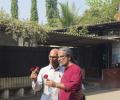
Researcher Rona Wilson and activist Sudhir Dhawale, accused in the Elgar Parishad-Maoist links case, were released on bail from a Navi Mumbai prison on Friday, more than six years after they were arrested. The duo walked out of the Taloja jail after completing bail formalities before the special NIA court, over a fortnight after they were granted bail by the Bombay High Court. The HC granted bail to Wilson and Dhawale on January 8, noting they had been in jail since 2018 and the trial in the case, in which anti-terror act UAPA has been invoked, was yet to start. Apart from Dhawale and Wilson, 14 other activists and academicians were arrested in the case. Eight of them have been granted bail till now, with one, Mahesh Raut, still in jail as the appeal filed by the National Investigation Agency (NIA) against his bail is pending before the Supreme Court. Jesuit priest and activist Stan Swamy, one of the accused, died in 2021 while lodged in judicial custody. The case pertains to provocative speeches allegedly delivered at the Elgar Parishad conclave held in Pune on December 31, 2017, triggering violence at Koregaon-Bhima, a village outside Pune city, the next day. The Pune police had claimed the conclave was backed by Maoists. The NIA later took over the probe.
According to NIA sources, the Canadian government asked for the reason for NIA behind its request to seek the death certificate of Nijjar.
The Delhi Police Special Cell arrested a man from Hyderabad for allegedly trafficking Indian youths and forcing them to work in fake call centres engaging in cyber fraud. The arrest came after a 2,500-kilometre non-stop chase, an officer said. The accused, Kamran Haider alias Zaidi, carried a reward of Rs 2 lakh on information leading to his arrest, declared by the National Investigation Agency. Zaidi was apprehended near Nampally Railway Station, Hyderabad, Telangana while trying to escape to another hideout.
Tahawwur Hussain Rana, a Pakistan-born Canadian national and close associate of David Coleman Headley, could be extradited to India in connection with the 26/11 Mumbai terror attacks. Rana's travel history in parts of north and south India before the attacks in 2008 is expected to provide crucial leads for the investigation. His extradition would mark the third person to be tried in India for the attacks, after Ajmal Kasab and Zabiuddin Ansari alias Abu Jundal.
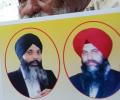
Documents released by the Justice Department of British Columbia, Canada show that all four alleged accused in the murder of National Investigation Agency (NIA) designated terrorist Hardeep Singh Nijjar appear to be no longer in custody.

Jammu and Kashmir MP Engineer Rashid on Monday moved a Delhi court seeking interim bail in a terror-funding case to attend the Parliament session.
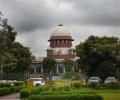
The Supreme Court of India has expressed concern over the protracted trials in heinous offences related to Maoist activities, stating that indefinite incarceration violates the right to liberty under Article 21 of the Constitution. Two separate benches of the court granted relief to two accused, citing the delayed trials. One bench expedited the trial of a man accused of transporting ammunition for a banned organization, while the other granted bail to a man accused of transporting materials for Naxal activities. The court emphasized the importance of speedy trials and suggested the establishment of special courts to handle Maoist-related cases, aiming to expedite proceedings. The court also criticized the practice of examining an excessive number of witnesses, which can lead to indefinite delays in the conclusion of trials.

The Bombay High Court has granted bail to researcher Rona Wilson and activist Sudhir Dhawale, arrested in the Elgar Parishad-Maoist links case. The court noted that they had been in jail since 2018 and the trial was yet to start. The court said the two had spent more than six years in jail as under-trial prisoners. The NIA, the prosecution agency, did not seek a stay to the HC order. Eight other activists have been granted bail in the case, which pertains to provocative speeches allegedly delivered at the Elgar Parishad conclave held in Pune on December 31, 2017.

Sharad Kumar, former head of the National Investigation Agency (NIA), was named as the new chief of the BCCI's Anti-Corruption Unit.
The crime branch named 29 accused in the 4,590-page charge sheet, including 26 already arrested and three wanted persons, including Anmol Bishnoi, the brother of jailed gangster Lawrence Bishnoi.
The Central Bureau of Investigation (CBI) has brought back Salman Rehman Khan, an alleged member of the Lashkar-e-Taiba, from Rwanda. Khan was wanted by the NIA for terror-related offences in Bengaluru. He was traced to Rwanda and returned to India on November 28, 2024. The return of Khan comes after similar operations in coordination with Interpol, where two other accused were brought back from Saudi Arabia.
The Delhi High Court has reserved its order on a plea by jailed MP Rashid Engineer, facing trial in a terror funding case, seeking custody parole to attend the ongoing Parliament session. Engineer, a Baramulla MP, was opposed by the National Investigation Agency (NIA) who argued that he has no vested right to attend Parliament and there were security concerns. The court said though there might not be a vested right to attend the session, it could exercise its discretion. The NIA also argued that Rashid misused the telephone facility in Tihar jail and that allowing him to attend the session would be a security risk.
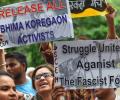
Prolonged incarceration without trial amounts to infringement of the right to life under the Constitution, the Bombay high court said while urging a special court to expedite the trial in the 2018 Elgar Parishad-Maoist links case.
'He is the key to unravel the 26/11 conspiracy.'

A police official said they were verifying the details but no First Information Report has been registered yet.

Anmol Bishnoi, the younger brother of jailed gangster Lawrence Bishnoi, has been arrested by US law enforcement authorities in Iowa. He is wanted in connection with several criminal cases in India, including the murder of NCP leader Baba Siddique and the firing outside actor Salman Khan's Mumbai home.
ASJ Chander Jit Singh underscored he would first consider the issue of jurisdiction and whether or not to transfer the case to a special court meant to try lawmakers, considering Rashid was now an MP.
A special NIA court in Lucknow has sentenced 28 people to life imprisonment for the 2018 killing of a 22-year-old youth in clashes during a 'Tiranga rally' on Republic Day in Kasganj district of Uttar Pradesh. The case drew significant attention as the killing of Chandan Gupta sparked widespread riots in Kasganj for three days. The prosecution demanded the severest punishment while the defence counsel pleaded for leniency. The court awarded life sentences and imposed a fine of Rs 80,000 on each of the convicts. Gupta's family expressed satisfaction at the verdict but vowed to continue its fight for harsher penalties for the main accused and those acquitted.

The NIA has announced a reward of Rs 10 lakh for information leading to the arrest of Anmol Bishnoi, the younger brother of jailed gangster Lawrence Bishnoi, officials said on Friday.

The National Investigation Agency (NIA) has registered three cases related to recent violence in Manipur, taking over investigations from Manipur Police. These cases include the murder of a woman, an attack on a CRPF post, and the burning of houses in Jiribam. The situation in Manipur remains volatile with protests continuing following the recovery of bodies of women and children. Violence has also spread to Jiribam, previously untouched by clashes, after a farmer's body was found in June.
Top Canadian officials have reportedly admitted to leaking details about India's interference to The Washington Post, but these specifics were not shared with Canadians, The Globe and Mail newspaper reported.

Both Lawrence and Anmol Bishnoi have been named as wanted accused in the April 14 firing incident outside the Bollywood actor Salman Khan's Galaxy Apartment in Mumbai's Bandra area.

The sources claimed that one of those arrested is believed to be Arsh Dalla, who is associated with the banned Khalistan Tiger Force and ran terror modules on behalf of Hardeep Singh Nijjar, a designated terrorist who was killed in June last year.

He was arrested by a team of Special Cell on a secret tip off received from the Delhi-Faridabad border. An illegal firearm was recovered from his possession, they said.

It said two of the key accused were Islamic State of Iraq and Syria radicals, who used fraudulently obtained "Indian SIM cards and Indian bank accounts" besides "various Indian and Bangladeshi Identity documents downloaded from the dark web (which is accessible only through specialised browsers) in carrying out their nefarious activities.

The National Investigative Agency Bill and Unlawful Activities (Prevention) Amendment Bill on Tuesday became a law as President Pratibha Patil gave her assent to those legislations which were passed in the last session of Parliament."NIA will be established to investigate terrorist offences. As and when any case is assigned to the NIA, it will take up investigation," he said. Home Minister P Chidambaram told reporters that the presidential assent has been received today.
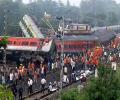
They said at least four such cases are being looked into by the anti-terror agency officials.
 © 2026 Rediff.com - Advertise with us - Disclaimer - Privacy Policy - Sitemap - Feedback - About us - Terms of use - Grievances