
The US has informed allies it will avoid new military strikes on Iran, instead focusing on economic sanctions and maritime enforcement, particularly in the Strait of Hormuz. This strategic shift aims to intensify pressure on Tehran's economy and oil exports while keeping the military option open if Iran initiates aggression. Diplomatic efforts continue amidst persistent regional tensions and maritime incidents.

Donald Trump expressed confidence in a swift victory over Iran, suggesting military strikes before midterm elections are possible, with the primary goal of denying Tehran nuclear weapons. Meanwhile, Iranian Foreign Minister Seyyed Abbas Araghchi declared readiness for a "doomsday war" if hostilities resume, while also expressing openness to diplomacy if assets are unfrozen and oil sales allowed.
Pakistan on Wednesday summoned the Indian charg d'affaires and lodged a strong protest against the Indian military strikes.

The United States military has developed fresh strike options against Iran that include the potential use of the GBU-43/B Massive Ordnance Air Blast (MOAB), widely known as the "mother of all bombs", to target energy infrastructure and nuclear sites, CNN reported, citing multiple US officials familiar with military planning discussions.

The United States has launched a fresh wave of precision strikes, hitting approximately 90 Iranian military targets deep inside Iran, further intensifying a rapidly expanding regional conflict, with Tehran warning of severe retaliation.

The United States Central Command announced strikes against Iranian military targets, including air defence and communication sites, in retaliation for alleged attacks on commercial shipping and US personnel. However, Iran's Foreign Ministry claims these strikes caused over 50 civilian casualties at a wedding and vowed a firm response. Iran's state media also reported retaliatory ballistic missile and drone attacks on US bases in Jordan and Bahrain, claims which were partially corroborated by Kuwait and Jordan reporting intercepted drones and missiles.

New photographic evidence and a Pentagon inspector general's report confirm extensive damage to US military installations across the Middle East due to Iranian missile and drone strikes. The report details billions in financial costs, structural losses to hundreds of buildings, and damage to dozens of aircraft, contradicting previous assertions about US military readiness and ordnance stockpiles. The conflict also led to disruptions in the Strait of Hormuz, impacting global oil prices.

'On two feet or on somebody's back, every soldier had to return'
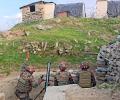
'With a military-led strategy to counter terrorism emanating from Pakistan, India has clearly signalled that it would respond decisively to future terrorist threats.'

The US rejected Iran's proposal to reopen the Strait of Hormuz, citing Tehran's demands for sanctions relief and access to frozen assets before nuclear program negotiations. US Ambassador Mike Waltz called the offer a "cynical attempt," while Iranian Foreign Minister Seyyed Abbas Araghchi disputed Waltz's account and reiterated Iran's readiness for both diplomacy and renewed hostilities. President Trump expressed confidence in winning the conflict soon and keeping all options, including military strikes, on the table, with denying Iran a nuclear weapon as the primary objective.

Reports from the New York Post, citing Mohsen Heydari, reveal that Mojtaba Khamenei was "pulled from the rubble" of a Tehran hospital after alleged US and Israeli strikes. This occurred before his secret selection as Iran's new Supreme Leader by the Assembly of Experts, which was also reportedly targeted. Conflicting accounts from Donald Trump and Iranian President Masoud Pezeshkian have further shrouded Khamenei's health in mystery, with some suggesting severe injuries while others claim he is "completely" healthy.

Donald Trump has ruled out using nuclear weapons or ground troops against Iran, despite the US military developing strike options including the "mother of all bombs" (MOAB) for Iranian energy and nuclear facilities. Trump clarified the MOAB is not nuclear and expressed confidence in non-nuclear options. He also discussed nuclear disarmament talks with Russia and China and his determination to prevent Iran from acquiring nuclear weapons, even as questions arise about MOAB's effectiveness against deeply buried targets.

'This is what we train for: That one chance to deliver a blow so lethal that the enemy will constantly think about it when planning any misadventure.'

US President Donald Trump on Tuesday said that Washington has launched a fresh wave of strikes against Iranian targets near the Strait of Hormuz. They come after what Trump claimed was in retaliation for Iran attempting to add sea mines to the Strait.

Iran's Islamic Revolutionary Guard Corps (IRGC) has launched missile and drone strikes on four US military bases in Kuwait and Bahrain. This action is in retaliation for recent American strikes against targets in Iran, which the IRGC condemned as a "violation of commitments" and an "anti-civilian act." The IRGC has warned of an expanded "crushing response" if US aggression continues.

The US military has refuted Iran's Revolutionary Guards' assertion that an oil tanker struck a naval mine in the Strait of Hormuz. US Central Command stated the Panama-registered vessel, El Gaia, was previously hit by an Iranian missile and then a drone, highlighting ongoing Iranian attempts to impede commercial vessels in the crucial maritime trade route.

Gold prices in India extended their losing streak, falling by Rs 1,500 to Rs 1,60,900 per 10 grams, influenced by hawkish remarks from Federal Reserve Chair Kevin Warsh and rising oil prices, which have increased expectations of an interest rate hike.

Congress leader Rahul Gandhi has strongly criticised Prime Minister Narendra Modi for his silence on the deaths of three Indian seafarers in US military strikes on commercial vessels, calling Modi a 'compromised PM' who lacks the courage to confront those responsible.

US and Iran officials have reportedly agreed to de-escalate tensions and ensure free passage through the Strait of Hormuz, with technical talks scheduled to continue. This development follows months of conflict, rising gas prices, and strained diplomatic relations, marked by recent retaliatory strikes and threats from both sides. Further discussions on Iran's nuclear program are set to take place in Qatar, highlighting ongoing diplomatic efforts despite recent volatility.

United States Central Command (CENTCOM) forces have conducted a 'heavy wave of strikes' against numerous Islamic Revolutionary Guard Corps (IRGC) targets in Iran. This action was a direct response to attempted Iranian missile strikes on US forces in West Asia, which were successfully intercepted. The strikes targeted IRGC military command centres, missile and drone facilities, coastal surveillance, and maritime capabilities, aiming to reduce threats posed by Iran and its proxies. US President Donald Trump also issued strong warnings to Tehran, linking the escalation to a recent drone strike on an LNG vessel in Egypt's Damietta Port.
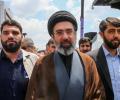
Reports have surfaced in Israeli media claiming that Iranian supreme leader Mojtaba Khamenei is in critical condition and has been rushed to a hospital.

Iran's Islamic Revolutionary Guard Corps (IRGC) has claimed responsibility for missile and drone strikes on US military installations in Bahrain, describing the operations as the second phase of its retaliatory campaign. This announcement follows US Central Command (CENTCOM) confirming its own large-scale offensive targeting Iranian military infrastructure.

India has strongly protested a US military strike on the commercial vessel Settebello off the Oman coast, which left three of the 24 Indian crew members missing. The US Central Command stated it disabled the Palau-flagged vessel for violating a blockade of Iranian ports.

Hours after US President Donald Trump on Wednesday said that the ceasefire deal with Iran was "over", the US President indicated that Washington could launch another round of strikes against the Islamic Republic, following strikes on Tuesday, saying it had already hit Tehran "very hard" and warning of further attacks.

The US Central Command announced a new wave of strikes against Iranian military infrastructure, aiming to degrade Tehran's ability to threaten civilian mariners and commercial vessels. This comes as US President Donald Trump described the situation as a 'skirmish' and suggested Iran wants to 'make a deal,' while Iran's Foreign Minister warned of a 'decisive response' to any aggression.

India's Ambassador to Oman met with 20 Indian crew members of MT Jalveer in Muscat ahead of their repatriation, following an incident off the Oman coast. This marks the third such incident involving Indian seafarers and US military action in recent days, with previous strikes resulting in casualties.
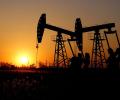
Crude oil prices experienced a sharp decline after US President Donald Trump announced a temporary halt to military strikes on Iran's energy infrastructure, easing geopolitical tensions and supply disruption fears.
The Iranian embassy also posted a video purportedly showing the aftermath of the strike, with plumes of smoke visible.

Mohammed Asif, alias Hashim Moosa, a top Lashkar-e-Taiba terrorist and a retired havildar from the Pakistan Army's elite Special Services Group (SSG) who once served in former president Pervez Musharraf's security convoy, was killed in a gunfight in central Kashmir's Budgam district.
Iran has criticised recent US attacks on merchant ships off the Oman coast, which resulted in the deaths of three Indian nationals, calling them a threat to global peace. India has also strongly condemned the 'lethal and deadly' strikes and summoned the US charge d'affaires to express its concerns.

Passenger traffic Y-o-Y fell 26.8 per cent in April and 24.6 per cent in May, while capacity declined 9.6 per cent and 11.3 per cent, respectively.

The strikes targeted the Nur Khan Airbase in Rawalpindi, the 12th Brigade base in Quetta, Balochistan, and the Khoizai camp in the Mohmand Agency in Khyber Pakhtunkhwa, along with other military sites housing key facilities and centres.

US President Donald Trump has claimed that a significant number of Iranian military officials were killed during a "massive strike" conducted in Tehran.

The United States has launched a fresh wave of airstrikes against Iran's Islamic Revolutionary Guard Corps (IRGC) in response to a deadly attack in Jordan that claimed the lives of two American service members, aiming to curb Tehran's maritime threats.

India is deeply concerned by the growing consolidation of Pakistan-backed jihadi and radical Islamist groups in Bangladesh, particularly in the strategically vital Chittagong Hill Tracts, which experts warn is transforming the country into a new safe haven for these networks and posing a direct threat to India's security.

Kuwait's air defence systems engaged 'hostile aerial targets', Jordan intercepted four missiles, and Bahrain sounded warning sirens after Iran launched retaliatory strikes targeting US military installations in the region.

Union Shipping Minister Sarbananda Sonowal confirmed the deaths of three Indian seafarers who were initially reported missing from the Palau-flagged MT Settebello. India has protested to the US over the attack on the commercial vessel, which the US Central Command stated was due to the vessel attempting to transport oil from Iran, violating a blockade.

US President Donald Trump stated that military strikes against Iran could resume if they 'misbehave,' even as he reviews a new proposal from Tehran aimed at ending the paused conflict.

Donald Trump stated that Iran has been given a "last chance" to reach an agreement, revealing that the US paused a planned military strike after receiving requests from Saudi Arabia, the UAE, Qatar, and Iran to pursue diplomacy instead.

Iran's Islamic Revolutionary Guard Corps (IRGC) claims to have captured a US unmanned submersible near the Strait of Hormuz and launched ballistic missile strikes against a US airbase in Jordan and two US Navy destroyers. These actions are stated as retaliation for recent US attacks on Iranian oil tankers. The US Central Command (CENTCOM) had previously reported destroying Iranian crude oil carriers after IRGC missile attacks on US warships. The escalating tensions have led to regional air defence activations and warnings to tanker crews.
