
The ministry of external affairs on Friday dismissed as 'fake news' reports alleging that India had requested Israel to sign a defence pact in response to the newly formed Pakistan-Saudi Arabia-Turkey security framework.

Israel's Defence Minister Israel Katz declared that the Israeli military will not withdraw from its security zones in Lebanon, Syria, and Gaza, directly opposing the newly announced American-led diplomatic framework with Tehran. National Security Minister Itamar Ben-Gvir further asserted Israel's sovereignty, stating, "Trump's agreement does not bind us. Israel is not subject to the United States, and we are an independent and sovereign nation!"

Israeli Prime Minister Benjamin Netanyahu announced a significant policy shift, declaring that Israel's robust economy no longer requires American financial assistance. He also reiterated strong opposition to Palestinian statehood, affirmed an aggressive national defence strategy, warned of pre-emptive strikes against Iran, and confirmed the continued military presence in southern Lebanon.

A sensational New York Times report alleging that Israel's Mossad secretly groomed former Iranian president Mahmoud Ahmadinejad to lead a post-Islamic Republic Iran is being scrutinised for its strategic timing amidst Iran's sensitive post-Khamenei transition.
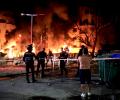
Glimpses from Tel Aviv, Central Israel and Haifa after Iranian missiles rained on Israeli cities, June 15 and June 16, 2025.

US Secretary of State Marco Rubio on Friday (local time) announced a US-mediated framework agreement between Israel and Lebanon aimed at achieving "lasting peace and security".

In a statement issued following the announcement of the US-mediated deal, Qassem characterised the agreement as a 'humiliating' and 'shameful' surrender of Lebanese sovereignty that prioritises Israeli and American dictates over the nation's independence.

Israeli Prime Minister Benjamin Netanyahu defended his actions amid growing resentment over an emerging US-Iran deal, asserting that Iran would never possess nuclear weapons. He faced criticism from opposition figures like Naftali Bennett and addressed concerns about Israel's security zones and relations with the US.

US Secretary of State Marco Rubio met with Pakistan's Foreign Minister Ishaq Dar amid American demand that countries mediating the peace talks with Iran join the Abraham Accords and establish diplomatic and economic ties with Israel.

Reports are emerging that Ali Larijani, a key Iranian security official, was allegedly targetted in an Israeli airstrike, escalating tensions in the region.
Israeli Prime Minister Benjamin Netanyahu has lauded India as a 'huge power' with a strong affinity for Israel, highlighting the growing partnership between the two nations despite global delegitimisation efforts against the Jewish state.

Amid ongoing ceasefire negotiations, Israel is on high alert, fearing a potential surprise missile and drone attack from Iran targeting Gulf countries and Israel, according to intelligence officials.

External Affairs Minister S Jaishankar has affirmed India's commitment to ensuring issues like a free, open, and rule-based maritime order, seafarer safety, and countering terror financing receive due attention at the UN Security Council during its 2028-29 term.

Former Australia all-rounder Moises Henriques, born in Madeira, will captain Portugal in their bid to qualify for the Twenty20 World Cup for the first time, leading a 14-man squad in the Europe Sub-Regional Qualifier C in Finland.
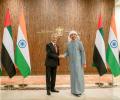
Frankly, was it really necessary in the middle of a fratricidal war for External Affairs Minister S Jaishankar to travel to Abu Dhabi for a one-on-one with the sheikh on April 12?Or, for National Security Advisor Ajit Doval to follow up on April 26? Or, for PM Narendra Modi to follow through today? There are no easy answers, notes Ambassador M K Bhadrakumar.

US President Donald Trump on Sunday said that the Israeli strikes on Lebanon's capital of Beirut "should not have happened", warning that such escalation could jeopardise the peace agreement with Iran to achieve a complete solution to the West Asia conflict, which, according to him, is within reach.

Tensions in West Asia have dramatically escalated as Israel launched targeted military operations against Iran, triggering widespread blasts across strategic cities, following earlier Iranian projectile attacks on Israel.

US Vice-President J D Vance's unexpected phone call to Prime Minister Narendra Modi on August 8 has ignited speculation about a potential diplomatic overture, possibly seeking India's support amidst the escalating US-Iran conflict and a shifting global power landscape, suggests Ambassador M K Bhadrakumar.

A top Iranian official has blamed the US and Israel for the disruption of global supply chains due to the West Asia conflict, stating that Tehran is not happy about the consequences faced by countries like India.

US President Donald Trump has reportedly urged Israeli Prime Minister Benjamin Netanyahu to withdraw Israeli military units from southern Syria and Lebanon, warning that Israel's continued presence could escalate regional tensions.

Two commercial vessels, an oil tanker and a cargo ship, carrying a total of 22 Indian nationals, were hijacked by armed pirates in separate incidents off Yemen and Somalia. All Indian crew members on both vessels are reported to be safe, according to the latest information from the shipping ministry and the External Affairs Ministry.

Israel's Defence Minister Israel Katz has stated that Israel is prepared to escalate military action against Iran, pending approval from the United States. This comes as US President Donald Trump says he would not use nuclear weapons in any conflict with Iran, while also claiming the US has 'total control' over the Strait of Hormuz.

Pakistan, Turkiye, and Saudi Arabia have signed a trilateral defence pact, agreeing to treat an attack on one as an attack on all. Analysts suggest this alliance could significantly diminish the United States' strategic influence in West Asia and elevate Pakistan's geopolitical standing, potentially acting as a deterrent in regional conflicts.

The IRGC is the most powerful branch of Iran's armed forces and operates independently of the country's regular military, answering directly to Supreme Leader Ali Khamenei.

Dimona and Ahad came under intense Iranian missile fire over the weekend as the conflict entered a far more volatile phase. These photographs capture the aftermath of the strikes -- thick smoke rising over the cities, emergency teams rushing to the scenes and residents caught in the chaos that followed.

Pakistan, Saudi Arabia and Turkiye on Friday signed a key joint defence agreement under which an attack against one of them will be treated as an attack against all of them, amid increasing security concerns in the wake of escalating tensions in West Asia.

How US President Donald Trump employed a clandestine 'decoy' Air Force One operation to secretly depart Turkiye following a NATO Summit.

Telangana Chief Minister A Revanth Reddy's planned visit to the United States has been denied political clearance by the Ministry of External Affairs (MEA), citing non-conformity with laid down norms, forcing him to cancel the US leg of his 'TelanganaRising' delegation tour and return to Hyderabad earlier than planned.

Israel extends nationwide restrictions and warns citizens of potential attacks from Iran and Hezbollah, with the Home Front Command maintaining current guidelines until further assessment.

US President Donald Trump stated that the decision regarding the conclusion of the conflict with Iran will be a 'mutual' decision made in coordination with Israeli Prime Minister Benjamin Netanyahu.

It may now be time to question the price India is paying for Israel's disregard of the serious undermining of India's energy security, asserts former foreign secretary Shyam Saran.

Prime Minister Narendra Modi on Thursday discussed with a group of senior ministers the prevailing global security situation and how to maintain supply chain uninterrupted despite conflicts in different zones, including the Strait of Hormuz, the Black Sea, the Red Sea, and the Gulf of Aden.

US President Donald Trump on Thursday announced that Israel and Lebanon have reached an agreement to initiate a 10-day ceasefire, following intensified diplomatic efforts to reduce hostilities in the region.

Iran's Supreme Leader Mojtaba Khamenei will not attend his father, former Supreme Leader Ali Khamenei's, funeral due to security concerns stemming from Israeli threats. This decision follows a sharp warning from Iran's Foreign Minister to the United States, urging it to control Israel after its Defence Minister reportedly marked Khamenei for death. The incident highlights escalating tensions and ongoing diplomatic efforts to de-escalate hostilities in West Asia.

Former Central Command chief David H Petraeus suggests the US and Iran are likely to extend their ceasefire beyond the initial two-week period, citing willingness from both sides to continue negotiations.

Iran's Islamic Revolutionary Guard Corps (IRGC) on Saturday (local time) announced the closure of the Strait of Hormuz "until further notice," stating that the strategic waterway would remain shut until the United States ends its "interference" in the West Asia region, Press TV reported.

Millions of people, including international representatives, are expected to attend the funeral of Iran's Supreme Leader Ayatollah Ali Khamenei in Tehran. His death occurred at the start of the US-Israel war on Iran. US President Donald Trump announced a week-long pause in bombing for the funeral, while India was represented by Governor Syed Ata Hasnain and MoS External Affairs Pabitra Margherita. The event is anticipated to be one of the largest gatherings in Iran's history, with ceremonies delayed due to security concerns.

Iran's representative in India, Abdul Majeed Hakeem Ilahi, describes the ongoing tensions between Iran and the US-Israel alliance as a state of 'no war, no peace,' calling for an immediate halt to the conflict and questioning the lack of pressure on the US and Israel to cease aggression.

US President Donald Trump and Israeli Prime Minister Benjamin Netanyahu are reportedly planning a White House meeting as early as next week, despite growing scepticism within Trump's inner circle regarding Netanyahu's actions and widening disagreements over regional security and Iran.

United States President Donald Trump has welcomed the declaration from Tehran regarding the restoration of maritime access through the Strait of Hormuz.
