
Trump seems to have estimated that Ghalibaf is a pragmatic politician who is receptive to close relations with the US and is enthusiastic about fostering business and economic ties in particular, points out Ambassador M K Bhadrakumar.

Australian cricket captain Pat Cummins has publicly supported the campaign by former international captains, including Sunil Gavaskar, advocating for jailed Pakistan legend Imran Khan to receive proper medical care and be treated with dignity.

The intriguing bit is that Trump is likely to attend the talks in Islamabad this weekend -- if he does, it will be the clearest signal yet that the US is ready to exit the war with some sort of win to show, since he cannot afford to go for the talks and return empty-handed, notes Prem Panicker in his must read blog on the Iran War

The meeting follows a ceasefire agreement that was announced and welcomed by Shehbaz Sharif, who also extended invitations to both delegations for further negotiations.
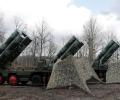
In a significant development, the Russian side has submitted a detailed proposal to the Defence Ministry in response to the Indian tender for acquiring five more squadrons of the S-400 Sudarshan long-range air defence systems for the Indian Air Force.

The core issues to be settled -- access to Hormuz, Israel's aggression in Lebanon, the question of Iran's nuclear programme, sanctions relief and compensation -- are thorny enough to require weeks of patient negotiation. The most likely outcome of the opening sessions is that both sides take the measure of each other, establish what is and is not negotiable, and return home without having broken anything. That would count as progress.
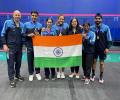
The Asian Team Squash Championship, scheduled to be held in Islamabad in April, has been postponed due to the ongoing conflict in the Gulf region.

A veteran White House reporter has revealed that the Clinton administration used a decoy aircraft during President Bill Clinton's high-risk visit to Pakistan in 2000, a security measure disclosed to journalists off-the-record due to the significant dangers involved.

J D Vance heads to Islamabad for high-stakes US-Iran talks, balancing cautious optimism with a warning against bad faith. negotiations.

The Pakistan Cricket Board has filed a petition in the Islamabad High Court against the Pakistan Information Commission's directive to disclose its confidential financial records, player contracts, and employee salary details. The PCB argues that such disclosure would harm its commercial interests and contractual negotiations, as it operates in a competitive international environment and does not receive government funding.

Pakistan summoned US Charge d'Affaires Natalie Baker to lodge a "strong demarche" following remarks by US Ambassador to India Sergio Gor, who stated that Jammu and Kashmir is an important part of India. Pakistan's Foreign Office condemned Gor's characterisation, asserting that Jammu and Kashmir is an internationally recognised disputed territory and that the US ambassador's statement contradicted the US's long-standing position and commitment to international law.

India has strongly denied Pakistan's accusations of its involvement in the suicide bombing at a mosque in Islamabad, calling the allegations baseless and a deflection from Pakistan's internal issues.

A brutal crackdown by Pakistani security forces on protesters in Pakistan-occupied Kashmir (PoK) over the last two days has reportedly left more than 30 civilians dead and over 33 injured, government sources said on Wednesday.

Ahmedabad Cyber Crime Branch has uncovered a Rs 1.5 crore WhatsApp fraud, leading to the arrest of two key SIM and OTP suppliers in West Bengal. The investigation revealed a sophisticated international cybercrime network spanning China, Pakistan, India, and Hong Kong, operating a "boss scam" and utilizing a "Cybercrime as a Service" model. Police recovered a significant portion of the defrauded amount and secured thousands of devices.

India has strongly criticised the local body elections in Pakistan-Occupied-Kashmir (PoK), labelling them as a facade to conceal Pakistan's illegal occupation and severe human rights violations in the region. External Affairs Ministry spokesperson Randhir Jaiswal reiterated India's stance that all of Jammu and Kashmir, and Ladakh, including PoK, are integral parts of India. He also dismissed Pakistan's claims to a shared cultural legacy, citing its history of promoting terrorism and fundamentalism.

New Delhi must look for formal, institutional statements issued directly from Washington rather than rely on casual pronouncements meant for local audiences, notes Ambassador Rajasekhar.

'The anger among the PoK public is unlikely to subside against Pakistani State in the near future.'

The delegations from the US and Iran head to Islamabad on Friday, carrying a ceasefire that is already fraying, a Strait that is technically open and practically closed, and a negotiating agenda that would challenge even parties actually negotiating in good faith, which these groups are not. Prem Panicker continues his must read blog on the Iran War.

How US President Donald Trump employed a clandestine 'decoy' Air Force One operation to secretly depart Turkiye following a NATO Summit.

Pakistan, Saudi Arabia and Turkiye on Friday signed a key joint defence agreement under which an attack against one of them will be treated as an attack against all of them, amid increasing security concerns in the wake of escalating tensions in West Asia.
The attack came less than three months after a suicide bomber killed 12 people in a blast outside a district and sessions court building in Islamabad.

Iranian President Masoud Pezeshkian is on a state visit to Pakistan to discuss the full implementation of an agreement signed between Iran and the US, alongside regional and international developments. The visit also aims to strengthen bilateral cooperation across various sectors, following recent high-level talks between the US and Iran in Switzerland regarding regional security.

Pakistan's Test team head coach Sarfaraz Ahmed has acknowledged ongoing fitness issues within the squad, despite a recent training camp. A new conditioning camp is planned to address these concerns before the team's crucial tours to the Caribbean and England. New Test captain Babar Azam is focused on improving fitness and discipline for better performance in red-ball cricket.

India's position appears to be anchored around three red lines: Hasina's safety and the guarantee of a fair trial; assurances that Bangladeshi territory will not be used for activities hostile to India; and the restoration of an inclusive democratic process in Bangladesh.

Operation Safed Sagar is prime purpose may be to honour IAF warriors but it is an inadvertent reminder of how we went from a nation of Jung na hone denge to Ghar mein ghus ke marenge, observes Sukanya Verma.

Supreme Leader Mojtaba Khamenei has reshuffled Iran's political and national-security establishment, appointing former SNSC Secretary Mohammad Bagher Zolghadr as his political adviser and veteran IRGC commander Mohsen Rezaei as his representative on the Supreme National Security Council, consolidating power amid the West Asia crisis and Strait of Hormuz tensions.

National Security Advisor Ajit Doval has urged India's youth to dedicate themselves entirely to national interest, rising above personal gains to capitalise on the current 'window of opportunity' for building a stronger nation. He emphasised that true freedom is not merely doing what one wants, but involves commitment and sacrifice for the country's progress.

Pakistan Prime Minister Shehbaz Sharif on Thursday signed the historic peace deal between the United States and Iran as a guarantor; the agreement will see the immediate reopening of the Strait of Hormuz and the lifting of the US naval blockade.

US President Donald Trump announced a finalised peace deal between the US and Iran, set for signing on June 19 in Switzerland, with key figures like J D Vance, Steve Witkoff, and Jared Kushner from the US side, and Abbas Araghchi and Mohammad Bagher Ghalibaf representing Iran, alongside Pakistani mediators Field Marshal Asim Munir, Shehbaz Sharif, Ishaq Dar, and Mohsin Naqvi, playing crucial roles in the diplomatic breakthrough.

The United States conducted retaliatory strikes against Iran, targeting over 80 sites, after accusing Tehran of attacking commercial vessels in the Strait of Hormuz, while Iran condemned the US decision to revoke a temporary suspension of sanctions on Iranian oil sales.

Iran's Islamic Revolutionary Guard Corps (IRGC) on Saturday (local time) announced the closure of the Strait of Hormuz "until further notice," stating that the strategic waterway would remain shut until the United States ends its "interference" in the West Asia region, Press TV reported.

US Vice President JD Vance on Sunday generated significant online traction after making a light-hearted reference to two "very, very important" Indian and Pakistani people in his life - his wife Usha Vance and Pakistani Army chief Asim Munir, on the sidelines of the US-Iran diplomatic deliberations in Switzerland.

Pakistan Prime Minister Shehbaz Sharif on Friday said that the US and Iran have agreed on the text of a peace deal, kindling hope of a diplomatic breakthrough in the region.

Pakistan Prime Minister Shehbaz Sharif clarified that the recent Memorandum of Understanding (MoU) signed between the US and Iran does not include provisions regarding Tehran's ballistic missile programme. This statement followed talks with Iranian President Masoud Pezeshkian, with Sharif emphasising Iran's right to its defence capabilities and Pakistan's role as a mediator in the US-Iran peace process.

The US and Iran have agreed on a roadmap aimed at reaching a final agreement within 60 days after hours-long talks at the Swiss resort of Burgenstock, mediators Qatar and Pakistan said on Monday, describing the progress as "encouraging."
Pakistan and Qatar have successfully mediated separate meetings between US and Iranian negotiators in Doha, reporting positive progress on a Memorandum of Understanding aimed at West Asian peace. Further discussions are planned after the funeral of former Iranian Supreme Leader Ayatollah Ali Khamenei.

The United States on Saturday (local time) launched a third round of strikes against Iran after alleging that Iran's Islamic Revolutionary Guard Corps (IRGC) attacked the Cyprus-flagged container vessel M/V GFS Galaxy in the Strait of Hormuz.

India has strongly criticised Pakistan for its alleged brutality and human rights abuses in Pakistan-Occupied Kashmir (PoK), following reports of police violence against protesters. New Delhi has called on the international community to hold Pakistan accountable, while Pakistan's own human rights body has also expressed alarm over the situation.

India has strongly condemned Pakistan's recent air strikes on Afghan territory, which resulted in civilian casualties. The Ministry of External Affairs labelled the strikes a "blatant act of aggression" and a "direct threat" to regional peace, reiterating India's support for Afghanistan's sovereignty.
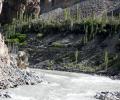
Pakistan's Deputy Prime Minister Ishaq Dar stated that the Indus Waters Treaty remains valid and binding, rejecting India's decision to revoke it following a terror attack. He emphasised the treaty's role in regional peace and warned of "profound consequences" if Pakistan is deprived of its allocated waters. PPP chief Bilawal Bhutto Zardari also proposed an international convention against the weaponisation of waterways.
