
Pakistan has welcomed an Indian delegation's visit to Islamabad for a Shanghai Cooperation Organisation (SCO) meeting, marking the first such visit after a significant gap. The visit is seen as a positive step towards regional peace and cooperation, with Pakistan also commenting on other international and domestic issues.

Pakistan and the Maldives have signed 20 Memorandums of Understanding (MoUs) covering defence, maritime security, artificial intelligence, trade, and other sectors during Maldivian President Mohamed Muizzu's three-day visit to Islamabad. The agreements aim to significantly boost bilateral cooperation and trade, with Pakistan also offering technical expertise and educational opportunities.

Pakistan and the European Union have agreed to enhance their cooperation in combating terrorism across all forms. This commitment was solidified during the 10th Pakistan-EU Bilateral Counterterrorism Dialogue in Islamabad, where both sides condemned terrorism and discussed evolving threats, including those in cyberspace. They also expressed concern over the security situation in Afghanistan and pledged to work together in multilateral forums.

Former US President Donald Trump has once again claimed he prevented a war between India and Pakistan by threatening them with steep tariffs, expressing disappointment that his efforts have not earned him a Nobel Peace Prize. India, however, maintains that any de-escalation was a direct agreement between the two nations.
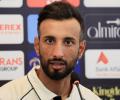
Former Pakistan captain Shan Masood is racing against time to recover from a calf muscle injury ahead of the two-Test series against Sri Lanka. His place in the playing XI is uncertain, especially with selectors and coach Mike Hesson looking to introduce younger players into the Test squad for the next World Test Championship cycle. Masood, who had an unsuccessful run as Test captain, fears his injury might be used as a reason to sideline him.

India is deeply concerned by the growing consolidation of Pakistan-backed jihadi and radical Islamist groups in Bangladesh, particularly in the strategically vital Chittagong Hill Tracts, which experts warn is transforming the country into a new safe haven for these networks and posing a direct threat to India's security.

Given the current friction in ties, such a visit looks unlikely at this juncture.

India summoned Pakistan's Charge d'affaires to protest continued cross-border infiltration and alleged facilitation of drug smuggling, rejecting Pakistan's earlier protest regarding BSF action against suspected intruders. India stated BSF engaged infiltrators who posed a security threat after ignoring warnings.

Pakistan has summoned India's Charge d'Affaires to protest the killing of two alleged civilians by the Border Security Force (BSF) along the international border in Punjab. While India claims the individuals were intruders, Pakistan asserts they were unarmed civilians and demands a transparent investigation into the incident.

Pakistan Prime Minister Shehbaz Sharif repeatedly refused to answer reporters' questions regarding Lashkar-e-Taiba (LeT) chief Hafiz Saeed during his visit to the United Nations headquarters for the 81st United Nations General Assembly (UNGA).

The 12th edition of the Pakistan Super League (PSL 12) will take place from March 18 to May 2 next year, maintaining its eight-team format. The dates were confirmed at a Governing Council meeting in London, paving the way for upcoming player signings and auctions.

Pakistan capital Islamabad is emerging as the leading venue for the next round of technical negotiations between the US and Iran, a media report said Sunday.

Pakistan's Prime Minister Shehbaz Sharif used his UN General Assembly address to thank former US President Donald Trump for his "timely intervention" in the 2025 conflict with India, a claim India consistently denies. Sharif also raised the Kashmir issue and discussed the Indus Waters Treaty, while touting Pakistan's role in mediating US-Iran peace.

India has dismissed Pakistan's recent announcement of a seven million rupees bounty on Jaish-e-Mohammed chief Masood Azhar as a "gimmick," demanding concrete action against terrorism. India highlighted Pakistan's history of similar "phoney announcements" and its alleged sheltering of Azhar, while Pakistan faces international pressure from the FATF to crack down on terror financing.

On Saturday, April 11, 2026, Pakistan is set to host crucial US-Iran talks aimed at solidifying a fragile ceasefire and de-escalating tensions in the Middle East.

India on Tuesday firmly rejected Turkish President Recep Tayyip Erdogan's reference to Jammu and Kashmir during his address at the 81st United Nations General Assembly (UNGA), asserting that the issue pertains strictly to the country's territorial integrity and sovereignty.

Former Pakistan fast bowler Shoaib Akhtar is being considered for a significant role within the Pakistan Cricket Board (PCB) as the board plans a major overhaul of its cricket think tank following a dismal tour of England.

Pakistan conducted airstrikes in Afghanistan's Kunar and Paktika provinces, claiming to have killed 28 terrorists in response to recent attacks on its security forces. However, the Afghan Taliban government condemned the strikes, reporting three civilian deaths and four injuries, and warned of an 'appropriate response,' further escalating cross-border tensions.

Pakistan is set to host the 14th South Asian Games in April next year across Islamabad, Lahore, and Peshawar, after a six-year delay. While the South Asia Olympic Council has approved the dates and venues, India's participation remains uncertain due to political tensions, despite its representative attending the planning meeting.

Delegations from the US and Iran have arrived in Islamabad for talks aimed at resolving the conflict between the two nations, following a ceasefire brokered by Pakistan. The negotiations are being closely watched due to their potential impact on regional security and global diplomacy.

External Affairs Minister S Jaishankar highlighted that India's primary concern regarding terrorism from its neighbour, Pakistan, if not fully appreciated by partners like the US, negatively impacts bilateral relations. Speaking at the Asia Society, Jaishankar discussed the turbulence in India-US ties, particularly in light of Washington's renewed engagement with Pakistan and the perceived lack of empathy for India's terrorism concerns, especially under the second Trump administration. He emphasized that addressing these sensitivities is crucial for improving the relationship.
The Ministry of External Affairs stated that India's participation in the 2027 SAF Games in Pakistan will be guided by the sports ministry's policy, which permits Indian athletes to compete in events with Pakistani participants and vice-versa. Separately, the MEA also commented on the ongoing legal proceedings for seven foreign nationals, including a US citizen and six Ukrainians, who were recently chargesheeted by the NIA for illegal entry and movement, though not under UAPA at this stage.

India has clarified its policy regarding participation in the 2027 South Asian Federation (SAF) Games in Pakistan, stating decisions will align with national sports policies and international governing bodies. While bilateral sporting engagements with Pakistan remain suspended, Indian athletes are permitted to compete in multilateral events. The government also aims to simplify visa processes to position India as a global sports hosting destination.

India, through First Secretary Petal Gahlot, strongly criticised Pakistan at the UN General Assembly, labelling it a "puppet regime" and warning of consequences for its continued support of terrorism. This came after Pakistan Prime Minister Shehbaz Sharif raised the Kashmir issue and credited Donald Trump for intervening in a hypothetical 2025 conflict. India highlighted Pakistan's internal political issues, its history with Osama Bin Laden, and the human rights situation in Pakistan-occupied Kashmir, while also condemning its blasphemy laws and treatment of minorities.

India has lodged a strong diplomatic protest with Pakistan over an 'unacceptable' naval collision in international waters, citing a breach of a 1991 bilateral agreement on military conduct after a Pakistani Navy vessel collided with an Indian Navy warship in the Arabian Sea.

Pakistan has increased security measures in Islamabad and surrounding areas as the US and Iran prepare for another round of peace talks. The move follows an announcement by former US President Donald Trump that American negotiators would be in Pakistan for discussions aimed at resolving the conflict between the two nations.

Authorities in New Delhi have demolished structures outside the Pakistan high commission, citing a breach of approved boundaries, in a move that mirrors Pakistan's recent removal of barricades outside the Indian high commission in Islamabad.

'It beggars belief that Saudi Arabia would deploy military force against India, a top partner and market.'

The United States and Iran could resume negotiations as early as next week in Islamabad, according to a report by The Wall Street Journal citing people familiar with the matter.

Pakistan's government is exploring measures, including potential smart lockdowns and austerity, to reduce petroleum consumption. This comes after recent fuel price hikes driven by rising global oil prices and West Asia tensions, which have also raised concerns about oil supply disruptions. The government is also implementing a fuel relief scheme and faces public pressure over the price increases.

An Iranian delegation, led by Foreign Minister Abbas Araghchi, is expected to arrive in Islamabad for the second round of peace talks with the US, according to Pakistani media reports. This follows a phone call between Deputy Prime Minister Ishaq Dar and Araghchi regarding the US-Iran ceasefire and Pakistan's diplomatic efforts.
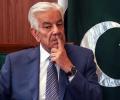
Pakistan's Defence Minister Khawaja Asif has reiterated the nation's unwavering commitment to the Makkah Joint Defence Agreement, underscoring its role in regional security following an attempted drone attack near the holy city of Mecca. The pact, signed by Pakistan, Turkiye, and Saudi Arabia, establishes a framework for collective deterrence against armed attacks.

India said the Hague-based Court of Arbitration has no jurisdiction over its sovereign decisions on the Indus Waters Treaty.

US President Donald Trump expressed confidence in America's position amid US-Iran peace talks in Islamabad, stating that Washington stands to 'win' regardless of a deal.

US Vice President JD Vance's visit to Islamabad for peace talks with Iran has been put on hold after Tehran failed to respond to American negotiating positions, according to a New York Times report.

Imran Khan has been declared 'medically fit' by a team of doctors after a comprehensive examination at Shifa International Hospital.

Javed Miandad broke down while pleading for Imran Khan's release, defending his former captain as honest and urging authorities to resolve his imprisonment amid growing health concerns.

Pakistan's Supreme Court has ordered the transfer of incarcerated former Prime Minister Imran Khan to a private hospital for a medical examination concerning an eye ailment. This directive comes despite jail authorities claiming his eyesight was "almost normal," following petitions from his legal team expressing dissatisfaction with government hospital treatment.

Iran has confirmed its participation in peace talks hosted by Pakistan, aimed at resolving the conflict with the US and Israel, despite concerns over ceasefire violations.

Australian cricket captain Pat Cummins has publicly supported the campaign by former international captains, including Sunil Gavaskar, advocating for jailed Pakistan legend Imran Khan to receive proper medical care and be treated with dignity.
