
India and Pakistan agreed on May 10 for a cessation of firing and military activity as a result of 'direct contact' between the director generals of military operations (DGMOs) of both nations, which was 'initiated by the Pakistani side', the Centre informed Parliament on Friday.

Virender Sehwag and Shikhar Dhawan launched a bitter attack on Pakistan following its blatant violation of the ceasefire agreement with India on Saturday.
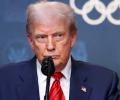
President Trump claims American tariffs imposed on India for purchasing Russian oil have negatively impacted Russia's economy, referring to India as Russia's major oil buyer. He also mentioned plans to meet with Putin and Zelenskyy, and claimed to have solved several wars, including the conflict between India and Pakistan.

The talks over the hotline were previously scheduled at 12 noon. The reason for deferring the talks by few hours is not immediately known.

India and Pakistan have agreed to a ceasefire on all fronts with effect from 5 pm on Saturday, following talks mediated by the US. The agreement was announced by Foreign Secretary Vikram Misri, who said that the DGMOs of both countries will speak again on May 12 at 1200 hours.
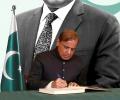
Pakistan has announced the creation of a new Army Rocket Force equipped with advanced technology to strengthen its combat capabilities. The announcement was made by Prime Minister Shehbaz Sharif, who also commented on the recent military confrontation with India and expressed gratitude to various countries for their support.

US President Donald Trump reiterated his claim at the UN General Assembly that he stopped the conflict between India and Pakistan, while also criticizing the UN's lack of involvement in resolving global conflicts.

Former US National Security Advisor John Bolton says President Trump's policies have damaged US-India relations, pushing New Delhi closer to Russia and China.

"We have not hit Kirana hills, whatever is there," Director General of Air Operations Air Marshal AK Bharti said at a media briefing on Operation Sindoor.
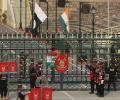
The Army further made it clear that the continuation of a break in hostilities, as decided in the DGMOs interaction of May 12, has no expiry date to it.
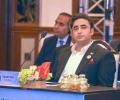
Bhutto, who served as the Foreign Minister earlier, addressed a briefing at the UN Headquarters in New York and sought reconciliation with India, making a plea for talks and Intel sharing between the two neighbours.

India has warned Pakistan against its unprovoked firings along the Line of Control (LoC) in Jammu and Kashmir as the directors general of military operations of the two armies spoke on the hotline amid the escalating tensions over the Pahalgam terror attack.

Modi has been chairing regular meetings with the top government functionaries involved in the country's military and diplomatic response to the Pahalgam terror attack of April 22.
US President Donald Trump reiterated his claim that he "settled" the conflict between India and Pakistan, suggesting it averted a potential nuclear war. He also claimed that several planes were shot down during the conflict.

Stressing that wars are "very bad", Trump said that he seems to have "an ability to end them, to get people together" for which he uses the "power of the United States".

'But that was not our aim. Our objective was already achieved.'

The address comes two days after India and Pakistan reached an understanding to stop all firing and military actions on land, air and sea with immediate effect.

The government stated that Operation Sindoor was launched in response to a 'barbaric' attack by 'Pakistan-sponsored terrorists,' focusing on dismantling terror infrastructure and neutralizing terrorists likely to be sent across to India.
Trump also repeated his claim that seven fighter jets or more were shot down during the hostilities.
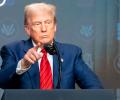
President Trump addresses questions about US imports from Russia and India's stance on purchasing Russian oil, hinting at potential tariffs.
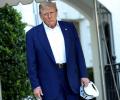
Trump said he had a series of phone calls on trade with both India and Pakistan.

External Affairs Minister S Jaishankar discusses India's approach to cross-border terrorism following the Pahalgam attack, emphasizing a firm response and no compromise on nuclear blackmail.
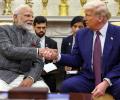
A US lawmaker and former officials warn that President Trump's policies are damaging the strategic partnership between the United States and India, potentially driving India closer to China and Russia.

India's National Security Advisor Ajit Doval is expected to attend a major security meeting in Moscow next week, organized by Russia's Security Council. Doval is invited for the 13th international meeting of high representatives for security issues, taking place from May 27-29. The meeting, chaired by Sergei Shoigu, Secretary of the Security Council of the Russian Federation, will see participation from over 150 countries and international organizations. Pakistan's NSA, Lt Gen Asim Malik, is also expected to attend the meeting, leading to speculation of a possible face-to-face meeting between the two NSAs amidst heightened tensions between India and Pakistan following the Pahalgam attack and subsequent retaliatory actions.

It is considered one of the most crucial appointments within the Indian Army, according to an official statement from the Ministry of Defence.

He said Prime Minister Narendra Modi has made it "very clear" that any talks with Pakistan will be only on terror.
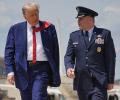
He then went on to say that, however, he won't get a Nobel Peace Prize for any of his efforts.
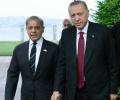
Pakistan Prime Minister Shehbaz Sharif met with Turkish President Recep Tayyip Erdogan to review bilateral relations and reaffirm their commitment to strengthening their strategic partnership. The two leaders discussed joint ventures and enhanced bilateral investment in key sectors, aiming to achieve a $5 billion annual bilateral trade target. They also expressed gratitude for mutual support during recent tensions with India. The meeting was described as "warm and most cordial," highlighting the deep-rooted historical ties between Pakistan and Turkey.

The Congress party has launched a scathing attack on Prime Minister Narendra Modi, accusing him of being unable to deny US President Donald Trump's claims of mediating a ceasefire between India and Pakistan due to a 'weak wicket' and potential cover-ups. Congress leaders assert that Modi's silence implies a tacit acceptance of Trump's assertions, potentially driven by pressure for a favorable trade deal.
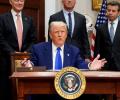
President Donald Trump on Monday claimed that his administration stopped a 'nuclear conflict' between India and Pakistan, adding that he told the two countries America will do a 'lot of trade' with them if they stop the conflict.
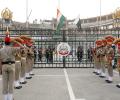
Pakistan's Foreign Office spokesperson Shafqat Ali Khan said on Friday that the ceasefire with India was holding and the country is committed to it. He also said that Pakistan is committed to making the ceasefire hold and de-escalation succeed, and then engagement to lead to stability and resolution of issues. Khan said that the two militaries have a channel of communication through the Directors General of Military Operations, through which they are working for de-escalation, in terms of the movement of troops. He added that Pakistan remains committed to the ceasefire announced on May 10 and lately, both sides have taken steps for de-escalation and return of stability.

The post further read that "at a moment of heightened regional turbulence", President Trump "demonstrated great strategic foresight and stellar statesmanship through robust diplomatic engagement with both Islamabad and New Delhi," Dawn reported.
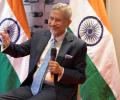
'As far as I'm concerned, how effective the Rafale was or frankly, how effective other systems were -- to me, the proof of the pudding is the destroyed and disabled airfields on the Pakistani side'
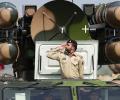
Pakistan on Tuesday increased its defence budget by 20 per cent, allocating PRs. 2,550 billion ($9 billion) for the fiscal year 2025-26, amid tensions with India.
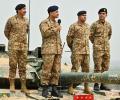
United States President Donald Trump will host Pakistan Army chief Asim Munir for lunch at the White House on Wednesday.

Defence Minister Rajnath Singh stated India's readiness to assist Pakistan in combating terrorism if it cannot act on its own, highlighting Operation Sindoor as a demonstration of India's capabilities. He also criticized Pakistan's appointment to a UN counter-terrorism committee.

The Director Generals of Military Operations (DGMOs) of India and Pakistan on Monday deliberated on various aspects of the May 10 understanding reached between the two sides on cessation of hostilities.

India on Thursday said the issue of trade did not come up at all in talks between Indian and American leaders during its military clashes with Pakistan, virtually rejecting Washington's repeated claims that its offer of trade stopped the confrontation.
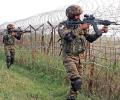
This marked the sixth consecutive night of ceasefire violations by Pakistan along the LoC, amidst heightened tensions between New Delhi and Islamabad following a recent terror attack in Pahalgam on April 22.

There was no reference to trade in talks between top leaders of India and the United States during the India-Pakistan military conflict, government sources said on Monday after American President Donald Trump claimed that he pressured New Delhi and Islamabad to stop hostilities by threatening to cut trade with both countries.
 © 2026 Rediff.com - Advertise with us - Disclaimer - Privacy Policy - Sitemap - Feedback - About us - Terms of use - Grievances