Pakistani troops continued unprovoked small arms firing in different sectors along the Line of Control (LoC) in Jammu and Kashmir for the 10th consecutive night, prompting effective retaliation by the Indian army. The ceasefire violations, which started after the April 22 terror attack in Pahalgam, were reported from eight places across five districts in the Union Territory during the intervening night of Saturday and Sunday. Indian Army responded promptly and proportionately to the unprovoked firing, a defence spokesperson said.

Earlier, at 4:39 am, the district collector had also advised residents to keep lights off and avoid going near windows, roads, balconies, or terraces.

Blackout measures have been imposed in many districts including Hoshiarpur, Ferozepur, Fazilka, Pathankot, Patiala, Moga, Kapurthala, and Muktsar districts.

'An important consideration was that we should always be at the top of the escalation ladder. When we reach a military objective, we should try and put a stop to it'
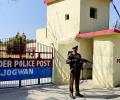
The armies of India and Pakistan on Thursday held a brigade commander-level flag meeting along the Line of Control (LoC) in Jammu and Kashmir's Poonch district to discuss issues related to border management.

In a statement after a meeting between Trump and Pakistan Army chief Asim Munir at the White House on Wednesday, the Inter-Services Public Relations -- the media wing of the Pakistan Army -- said they also discussed joint counterterrorism efforts.
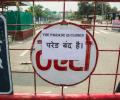
Pakistan's Foreign Minister Ishaq Dar has called for a 'composite dialogue' with India to address the contentious issues between the two sides.

Terrorism is a global menace to be addressed by humanity in unison was the all-party delegation's message to Algeria as it concluded its visit to the North African country on Sunday.
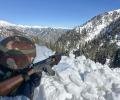
The exchange of fire occurred even though the directors general of military operations of India and Pakistan spoke over the hotline on Tuesday amid rising tensions between the two countries over the Pahalgam terror attack on April 22.
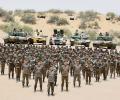
He also reviewed the joint actions undertaken in coordination with the Indian Air Force and the Border Security Force, they said.
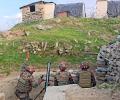
'With a military-led strategy to counter terrorism emanating from Pakistan, India has clearly signalled that it would respond decisively to future terrorist threats.'
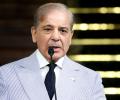
Leaders of Pakistan, Turkey and Azerbaijan agreed to strengthen their ties for the mutual benefit of their peoples, as well as for regional peace and prosperity. The understanding was reached at the Pakistan-Turkey-Azerbaijan trilateral summit in Lachin, Azerbaijan, attended by Prime Minister Shehbaz Sharif alongside presidents Recep Tayyip Erdogan and Ilham Aliyev. Azerbaijan announced a USD 2 billion investment in Pakistan's economy. Turkey expressed support for the ceasefire between Pakistan and India and hopes that it evolves into permanent peace.
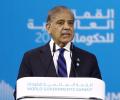
Sharif said that the US president had shown beyond any doubt that "he is a man for peace... and beneficial business deals".
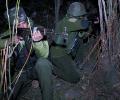
For the ninth consecutive night, Indian and Pakistani troops engaged in small arms fire along the Line of Control (LoC) in Jammu and Kashmir, continuing a pattern of heightened border tensions. The skirmishes, initiated by Pakistani troops in violation of the ceasefire agreement, have led to a tense situation along the LoC and International Border (IB). The incidents come in the wake of the April 22 terror attack in Pahalgam, which claimed the lives of 26 people, mostly tourists. Civilians residing near the border have begun preparing their bunkers, anticipating potential escalation. Despite a recent hotline conversation between the Directors General of Military Operations (DGMOs) of India and Pakistan, where India cautioned Pakistan, the ceasefire violations persist.

In the aftermath of the Pahalgam terror attack, which claimed 26 lives and injured many, the government ordered all Pakistani nationals to leave the country and revoked their visas.

John Spencer, the chair of Urban Warfare Studies at US-based think-tank Modern War Institute, said India showcased its ability to strike any target in Pakistan "at will" and drew and enforced a "new red line" for cross-border terrorism under the operation that was launched early on May 7.

Even Prime Minister Narendra Modi told US Vice President JD Vance on May 9 that Indian response will be "more forceful, stronger, devastating" in response to Pakistani actions, the sources said.
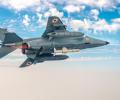
India's precision strikes using an array of weapon systems and missiles on eight key installations ranging from air defence systems to radar sites and command centres of the Pakistani military forced Islamabad to urge New Delhi to end the hostilities, the sources said.

India on Sunday said it inflicted tremendous losses to the Pakistan military, including downing its fighter jets featuring latest technologies and damaging key military installations close to even capital Islamabad, during the three-day confrontation between the two sides.
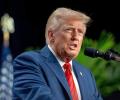
Trump said that leaders in India and Pakistan are "great leaders" and "they understood, and they agreed, and that all stopped".

A series of blasts took place in Srinagar city as the security agencies brought down a drone that was seen hovering over Batwara area of the city, close to an army installation, officials said.

'I am pleased to announce the Governments of India and Pakistan have agreed to an immediate ceasefire and to start talks on a broad set of issues at a neutral site.'
The closed-door luncheon meeting came amid escalating tensions between Israel and Iran with Trump exploring Washington's possible involvement.

In a post on X, the additional directorate general of public information posted: "Pakistan again violates the Ceasefire Agreement by firing artillery in Bhimber Gali in the Poonch-Rajouri area. Indian Army is responding appropriately in a calibrated manner."

External Affairs Minister S Jaishankar has said the recent confrontation between India and Pakistan was not just a mere conflict between two neighbours, but it was about combating terrorism, which will eventually come back to haunt the West.

External Affairs Minister S Jaishankar has informed a parliamentary panel that Pakistan was notified about Indian strikes on terror camps in their territory only after they were carried out. He also clarified that the decision to halt the military operation was taken bilaterally following a request from Pakistan, and there was no US mediation involved. Jaishankar emphasized India's zero-tolerance policy against terrorism and the importance of conveying a united message against it globally.
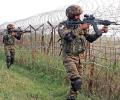
Pakistan troops have violated the ceasefire agreement for the 11th consecutive night, firing on Indian posts along the Line of Control (LoC) in Jammu and Kashmir. The firing began in Kupwara and Baramulla districts and spread to other sectors, including Poonch, Rajouri, Mendhar, Naushera, Sunderbani, and Akhnoor. The Indian Army responded promptly and proportionately. The ceasefire violation comes despite a recent phone call between the Directors General of Military Operations (DGMOs) of India and Pakistan on April 29. This marks the latest escalation of tensions between the two countries, following a terror attack in Pahalgam in April.
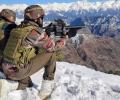
Pakistan's troops have engaged in unprovoked firing along the Line of Control (LoC) and International Border (IB) in five districts of Jammu and Kashmir, prompting retaliation from the Indian Army. This marks the eighth consecutive night of such incidents, following heightened tensions stemming from a recent terror attack in Pahalgam. Civilians residing along the LoC and IB are preparing their bunkers in anticipation of potential escalation.
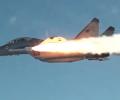
The Directors General of Military Operations of India and Pakistan firmed up the arrangement on stopping military actions on May 10 after four days of fierce offensives between the two sides that triggered fears of a wider conflict.

The United States said it encourages 'direct communication' between India and Pakistan and commends Prime Minister Narendra Modi and Pakistan Prime Minister Shehbaz Sharif for choosing the path of peace.

The lawmakers also hailed the strong strategic partnership between India and the US during a meeting with an all-party delegation led by Congress MP Shashi Tharoor, who briefed them on the cross-border terrorism faced by India and the country's strong and resolute stance in the fight against terror.
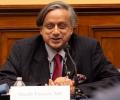
Tharoor said if Pakistan were to dismantle the infrastructure of terrorism, "we can talk to them".
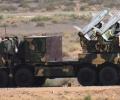
'The devastating Indian Air Force strikes on the night of May 9-10 exposed Pakistan's vulnerabilities.' 'If these had continued, it would have further degraded Pakistan's ability to continue with air operations.'
'Three days after the Kargil War ended, the Vajpayee Government set up the Kargil Review Committee on July 29 1999. Its report was tabled in Parliament on February 23, 2000 although sections of it have remained classified -- as indeed they must'

Suspected drones were observed along the International Border in Samba district of Jammu region on Monday, while armed forces downed a 'surveillance drone' in Punjab's Jalandhar district.
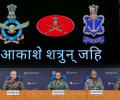
The Indian Air Force on Monday said all its military bases and systems continue to remain fully operational, and ready to undertake any further missions if the need arises.
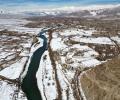
India has accused Pakistan of violating the spirit of the Indus Waters Treaty by engaging in acts of terrorism and refusing to modify the treaty. India's Permanent Representative to the UN, Ambassador Parvathaneni Harish, addressed the UN Security Council, highlighting Pakistan's disinformation regarding the treaty and its continued support for cross-border terrorism. He stated that India has always acted responsibly as an upper riparian state and that Pakistan's actions have jeopardized civilian lives, religious harmony, and economic prosperity. India has suspended the treaty until Pakistan ends its support for terrorism.
With United States President Donald Trump reiterating his claims of brokering a ceasefire between India and Pakistan, the Congress on Wednesday asked what do the 'typically loquacious' Prime Minister Narendra Modi and External Affairs Minister S Jaishankar have to say about this revelation and did they 'mortgage' India's security interests in the face of US 'pressure'.

Calm prevailed in Punjab, especially in the border areas of the state, on Sunday morning, following an understanding between India and Pakistan to stop all firings and military actions on land, air and sea.
He went on to say that even though this has not been discussed, he is going to 'increase trade substantially with both of these great Nations.'
 © 2026 Rediff.com - Advertise with us - Disclaimer - Privacy Policy - Sitemap - Feedback - About us - Terms of use - Grievances