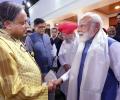
Prime Minister Narendra Modi's energy, dynamism and willingness to engage remains a 'prime asset' for India on the global stage but deserves greater backing, Congress MP Shashi Tharoor said on Monday, in remarks that are likely to irk his party and widen the growing cracks in his ties with its leadership.

According to the DRDO chairman, the BrahMos missile, primarily launched from Sukhoi Mk 1, was used during the offensive phase.
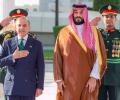
'Saudi-Pak defence pact is to anchor the defence and security of Saudi Arabia and not Pakistan, per se, with Islamabad being the junior partner.'

Congress leader Priyanka Gandhi Vadra launched a scathing attack on the government regarding the Pahalgam terror attack, questioning intelligence failures and demanding accountability.
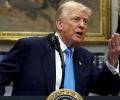
Industry leaders urge India to pursue diplomatic talks with the US, strengthen manufacturing, and consider China ties to gain leverage against tariff pressures.
'America is adopting the typical 'my way or the highway'/'Either you are with us or against us' stance.' 'This is a policy India is not going to accept.'
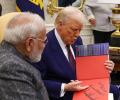
'The current strain in the relationship is serious and likely to be long lasting.' 'Even if Trump suddenly changes his attitude toward India -- which he is entirely capable of doing -- it is unlikely that New Delhi will be able to pick up the pieces and respond as if nothing has happened.'
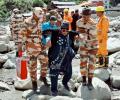
Glimpses from India and around the world that will make you smile and cry.

The Congress party has claimed credit for the extradition of Tahawwur Rana, an accused in the 2008 Mumbai terror attacks, from the US, saying the Modi government did not initiate the process and merely benefited from the "mature, consistent and strategic diplomacy" begun under the UPA. Former Home Minister P Chidambaram said the government did not secure any breakthrough to make the extradition possible, nor is it the result of any grandstanding. He added that it was a testament to what the Indian state can achieve when diplomacy, law enforcement and international cooperation are pursued sincerely and without any kind of chest-thumping. Chidambaram detailed the UPA government's efforts in securing Rana's extradition, citing the registration of a case against him in 2009, diplomatic pressure on Canada and the US, and continued efforts despite legal setbacks. He highlighted the role of the UPA in securing Rana's conviction for other terrorism-related offences and the cooperation between the US and Indian agencies in gathering evidence and securing his extradition. The Congress leader further stated that it was the UPA's groundwork that paved the way for Rana's extradition, even after the change in government in 2014.

From event planning to digital arts, career coach Nayagam PP offers a list of exciting courses you can pursue after Class 12.
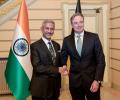
The era where nations thrived through rigid alignments is giving way to an age where the connective State defines power. For India, that era has arrived, points out Dr Nishakant Ojha.
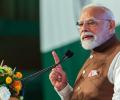
Prime Minister Narendra Modi on Friday said it is important for India and China to work together to bring stability to the world economic order as he asserted that New Delhi is ready to advance bilateral ties from a strategic and long-term perspective based on mutual respect, mutual interest and mutual sensitivity.

Sitiveni Rabuka's visit to New Delhi marks a major shift in India-Fiji ties as the former coup leader who once expelled India's envoy now returns as an honoured guest, explains Ambassador T P Sreenivasan.

By threatening to punish India with high tariff, Trump is actually planting a tantalising thought in the Indian mind that the Modi government should suitably 'incentivise' him, explains Ambassador M K Bhadrakumar.

The two sides are set to face each other in the semi-finals of the ongoing World Championship of Legends (WCL), but deepening diplomatic strains and strong public sentiment in India have cast serious doubt on whether the match will actually take place.

The IDF admitted that the map "fails to precisely depict borders".

The Trump administration is implementing a pilot program requiring visitors from countries with high visa overstay rates to pay a bond of up to USD 15,000.

External Affairs Minister S Jaishankar addresses Parliament on Operation Sindoor, denying any US trade linkage and highlighting Pakistan's request for a ceasefire through the DGMO channel.

Prime Minister Narendra Modi conveyed to Ukrainian President Volodymyr Zelenskyy that India remains committed to making every possible contribution for an early and peaceful solution to the conflict. Zelenskyy sought India's support in limiting Russian energy exports.

'The background for the Saudi-Pakistan agreement is the fact that the regional security order has collapsed due to the Israeli attack on Doha.' 'The Americans have largely abandoned their security guarantee for West Asia and the region has no choice but to look at alternatives.'
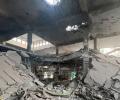
Pakistan has reiterated its desire for normal neighbourly relations with India, while also criticizing India's decision to put the Indus Waters Treaty in abeyance. The Foreign Office spokesperson emphasized Pakistan's commitment to diplomacy and regional cooperation.

Mrs Gandhi's power ebbed and peaked with the times. Mr Modi's has almost been constant, barring the few months of hard dip after the 240 seats of 2024, points out Shekhar Gupta.
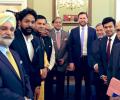
In a post on X, the Indian Embassy in the US said that the all-party parliamentary delegation led by Tharoor called on Vice President Vance this morning.
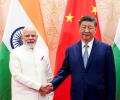
'What's currently underway is not a 'reset'.' 'What needs to be arrived at is a new balance.'

External Affairs Minister S Jaishankar discusses India's approach to cross-border terrorism following the Pahalgam attack, emphasizing a firm response and no compromise on nuclear blackmail.

The answer is to be found in the rise of the global south and in particular, the rise of China, explains Aakar Patel.

Presiding over the third Atal Bihari Vajpayee memorial lecture that was delivered by former Singaporean diplomat Bilahari Kausikan in New Delhi, Jaishankar also hailed Vajpayee's stint as an external affairs minister, and his role in strengthening India's ties with the United States and Russia.
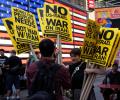
Israel's aerial assault on Iran is widely viewed as an act of naked aggression with no basis in international law, carried out unilaterally despite US opposition and aimed at derailing ongoing US-Iran nuclear negotiations, observes Ambassador M K Bhadrakumar.

A new book reveals that India and Pakistan discussed a communal division of Jammu & Kashmir along the Chenab river before the Kargil war in 1999.
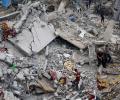
"Intermittent pauses in hostilities are not enough to address the scale of humanitarian challenges confronting the people, who grapple daily with acute shortages of food and fuel, inadequate medical services and lack of access to education," Harish said at the open debate on the 'Situation in the Middle East, including the Palestinian question'.
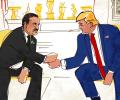
'Trump has personally weighed in to overcome doubts and reservations about Pakistan among his top advisors.'

From just 0.2 per cent before the Russia-Ukraine war to now accounting for 35-40 per cent of total crude imports, India's reliance on Russian oil has surged -- drawing fresh scrutiny with US President Donald Trump announcing a penalty on top of a 25 per cent tariff, or tax, on all goods going to the US.

This is Modi's first visit to the country as prime minister and the first Indian bilateral visit at the prime ministerial level to Trinidad and Tobago since 1999.
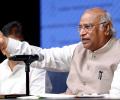
Soon after Kharge's remarks, Tharoor put out a cryptic post on X in which there was an image of a bird with the caption --"Don't ask permission to fly. The wings are yours. And the sky belongs to no one..."
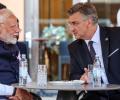
In his media statement following talks with his Croatian counterpart Andrej Plenkovic, Modi said both leaders agree that "terrorism is an enemy of humanity" and is inimical to forces that believe in democracy.
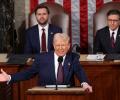
'Trump's desire to withdraw the US from some arenas on the global stage will result in ceding space to China.'
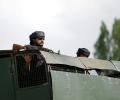
'Whatever we do, the purpose will be to re-establish deterrence.'

After his remarks at the White House. Trump, in his Truth Social pos,t warned that any retaliation from Iran would be met with "force far greater than what was witnessed tonight."
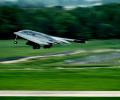
In a Truth Social Post, Trump said, "This cannot continue. There will be either peace or there will be tragedy for Iran far greater than we have witnessed over the last eight days."

The post further read that "at a moment of heightened regional turbulence", President Trump "demonstrated great strategic foresight and stellar statesmanship through robust diplomatic engagement with both Islamabad and New Delhi," Dawn reported.
