
'What's currently underway is not a 'reset'.'
'What needs to be arrived at is a new balance.'
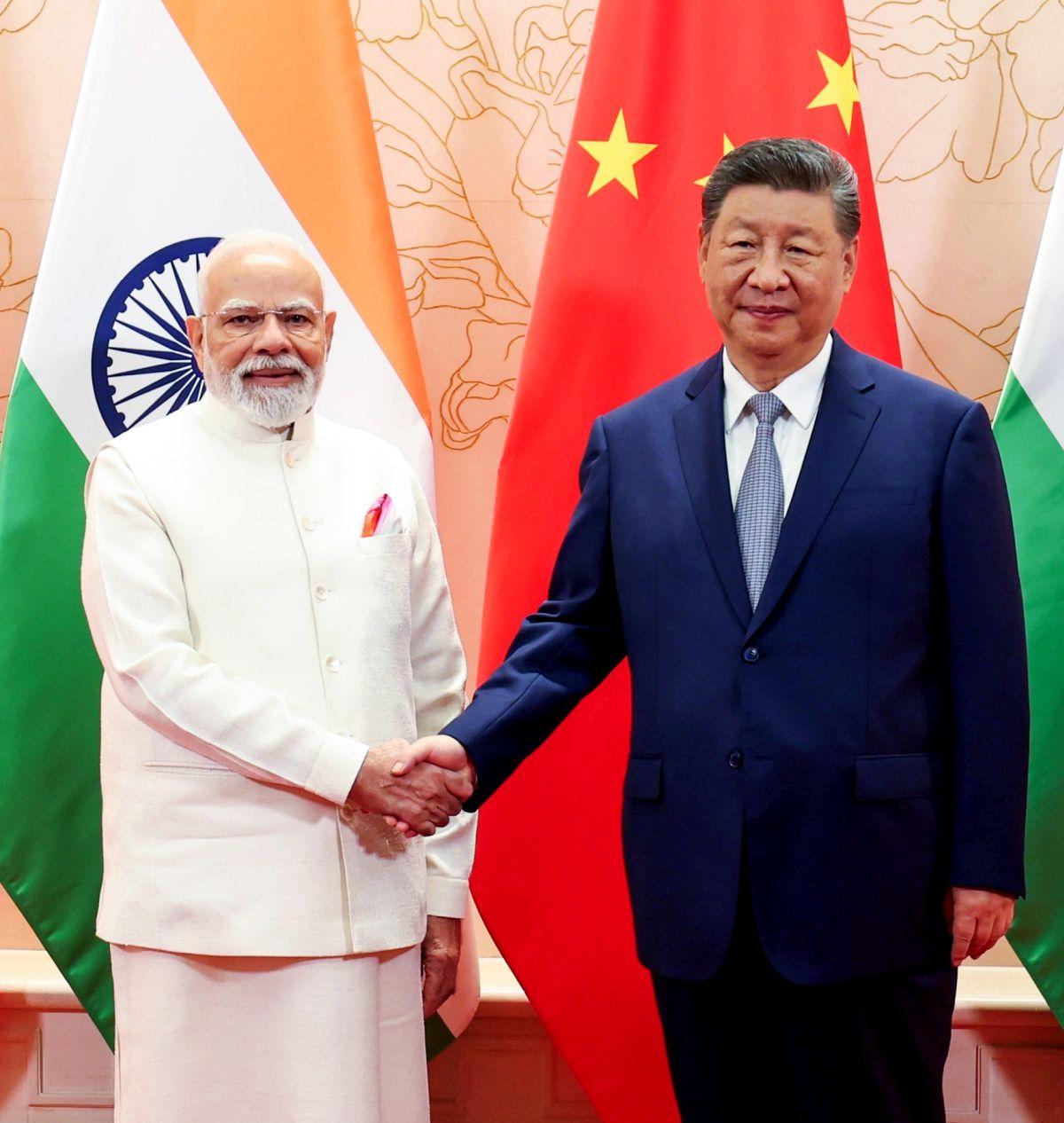
"An India that is accommodative of China's rise and interests in the Indo-Pacific is a strategic asset for Beijing. To achieve this end, it will engage in coercion but also dialogue on its terms," says Manoj Kewalramani, author of Smokeless War - China's Quest for Geopolitical Dominance.
Mr Kewalramani is the leading Indian observer of Chinese politics, foreign policy and approaches to new technologies.
He publishes a daily newsletter translating and analysing discourse from the People's Daily (external link), the Chinese Communist party's flagship newspaper.
He is also chairperson of the Indo-Pacific Research Programme and a China Studies Research Fellow at the Takshashila Institution, the well respected think-tank.
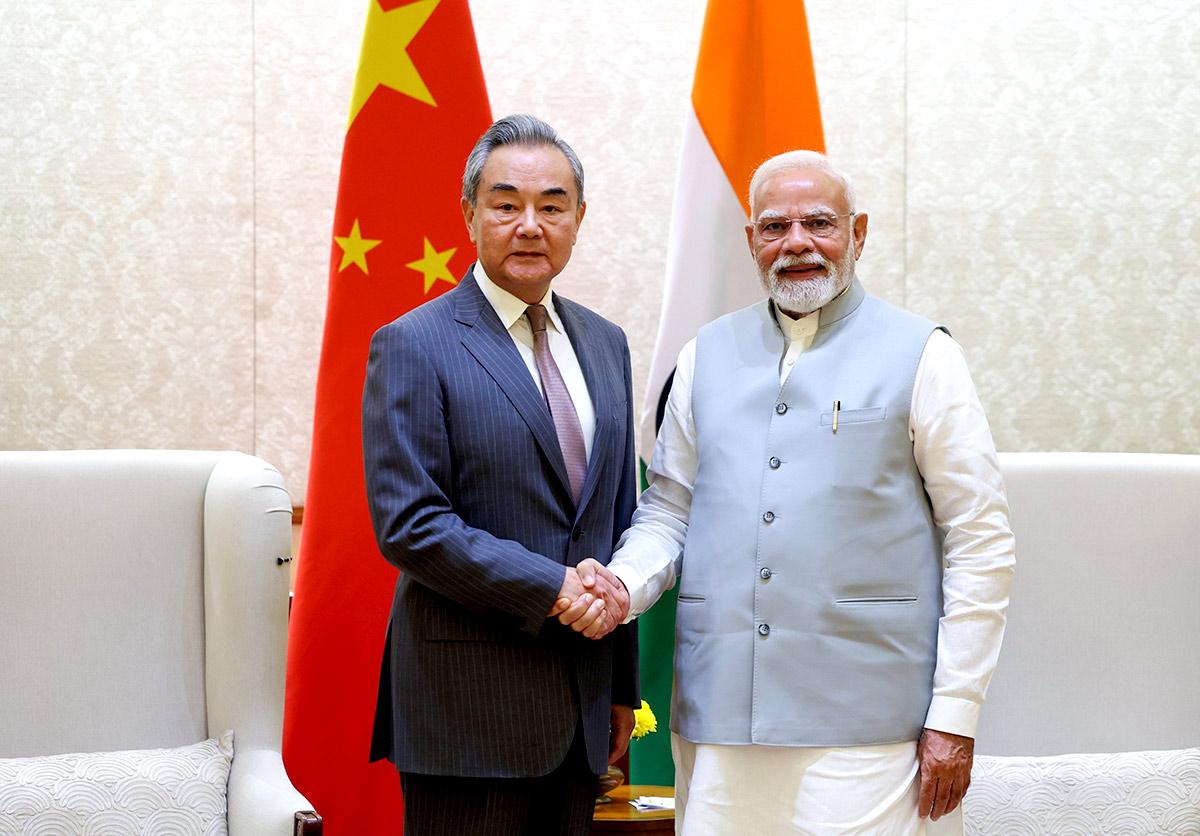
In an interview to Rediff's Archana Masih, Manoj Kewalramani discusses the outcome of the Modi-Xi meeting in Tianjin and the easing of tension between the countries.
What is your assessment of the short term and long term outcomes of the Tianjin meeting?
I think this was an important meeting. Clearly, both sides appear to be indicating that they want to proceed on the path of arriving at a new normal or new equilibrium in the relationship.
Meetings at the highest level are important to ensure that this process moves forward. There weren't any particular short-term, tangible outcomes from the meeting. Some substantive announcements had emerged earlier in August when Foreign Minister Wang Yi had visited India. One can perhaps expect visa facilitation and direct flight connectivity to be established.
There are also indications that the two sides are more open to talk about enhancing economic cooperation. Foreign Secretary Vikram Misri said it was important to move ahead from a 'political and strategic direction' in this regard. But nothing substantive has been achieved it seems.
So, we'll wait and watch. There are difficult issues that need to be addressed on this front, particularly around the trade deficit.
In terms of the long-term, I think the articulation of certain principles by the two sides is worth noting. The MEA's readout and the foreign secretary's briefing informed that there was an agreement that when it comes to development, the two sides were 'partners rather than rivals.'
This has long been a Chinese framing, which India appears to have accepted. For instance, this was not something that the Indian readout had said after the Modi-Xi meeting in Kazan.
That said, the Indian side also specified its framework of the three mutuals: 'Mutual respect, mutual interest and mutual sensitivity' as the 'basis' for a 'stable relationship.'
Several differences obviously still persist. India and China both continue to look at the boundary issue from different perspectives. China desires for it to be compartmentalised from the rest of the relationship. India believes that peace and tranquility on the border areas is significant for the continued development of ties.
Cross-border terrorism and China's ties with Pakistan also remain a source of tension. Most significantly, however, the structural faultline between India and China is around the order in Asia.
China desires a multipolar world but a unipolar Asia. India believes that a multipolar Asia must be at the heart of a multipolar world.
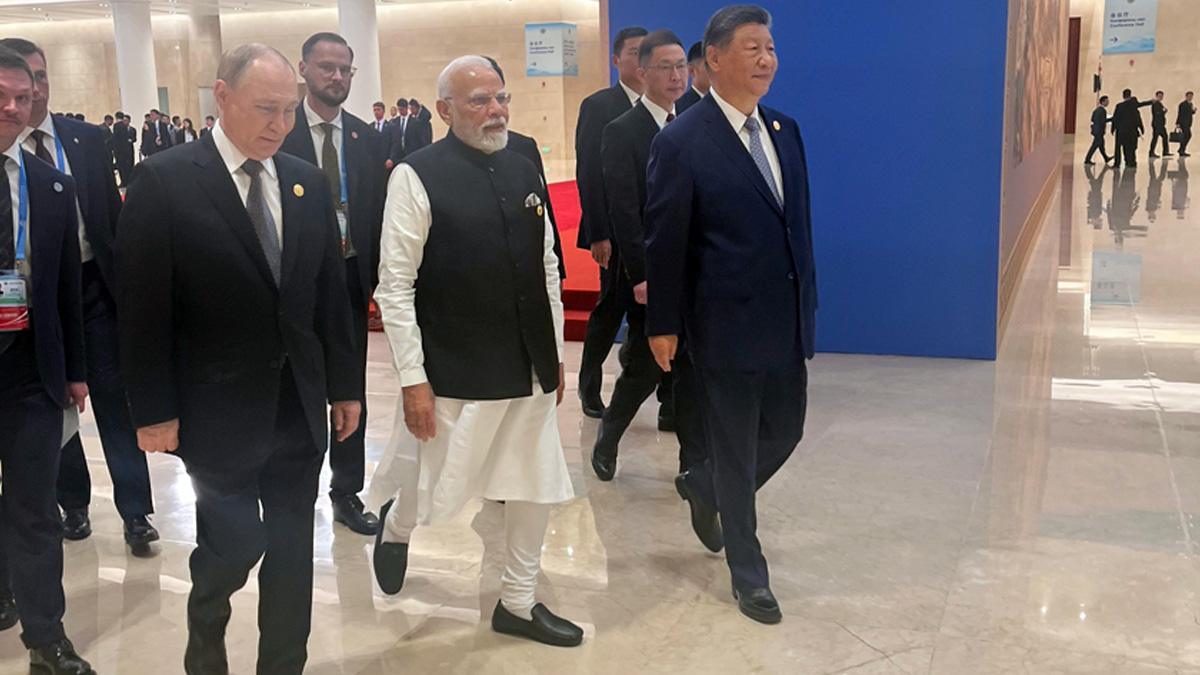
India and China have a difficult and complex relationship which was in cold freeze since the Galwan conflict in 2020.
Given the historical tensions and China's more recent support of Pakistan against India during Operation Sindoor, can the current diplomatic thaw truly be seen as a 'reset'?
How cautious should India be in engaging with China going forward?
What's currently underway is not a 'reset'. The relationship between India and China is not likely to go back to what it was in the past. What needs to be arrived at is a new balance.
The question from the Indian perspective is not about whether one should be cautious or not. The question that we in India need to ask is what sort of a relationship do we desire with China? What's in India's interests? And how do we get to that desirable destination?
Strategic clarity on these is what should guide policy, rather than caution.
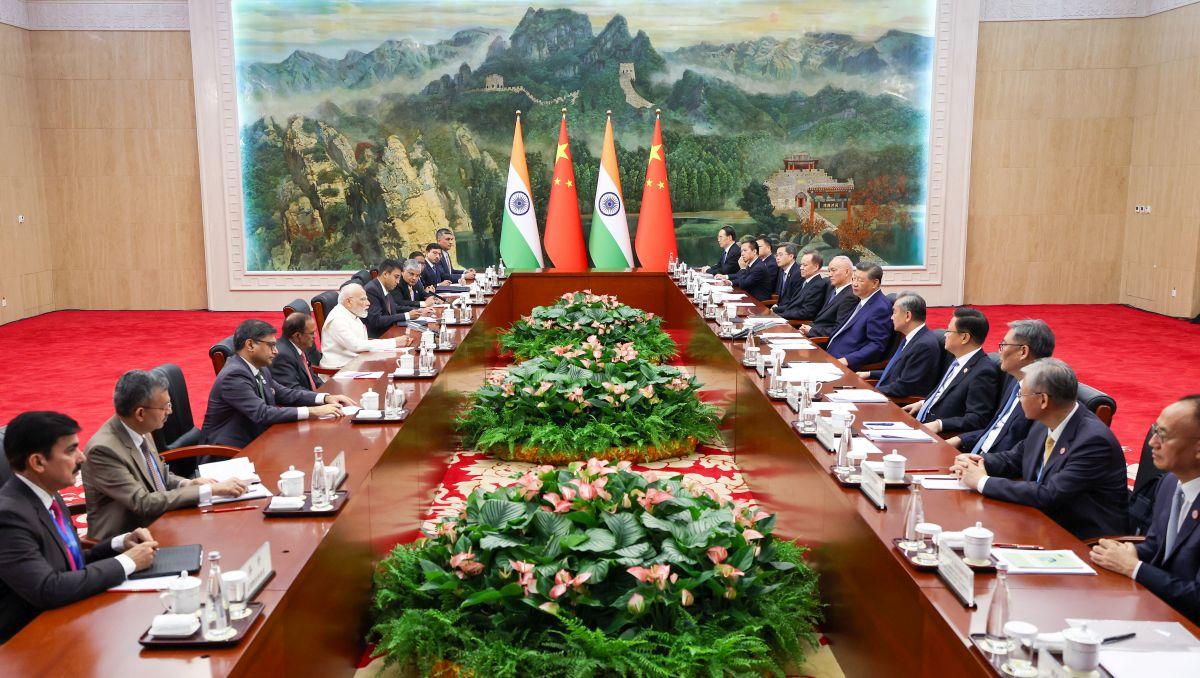
Can India realistically reduce its concerns about the US by partnering with China, given that China remains its foremost strategic adversary?
The strategic goal of Indian policy must be to ensure the development and well-being of Indians. With that in mind, I don't think that one should think about these relationships as binaries. They are not.
Of course, the strategic environment that one operates in is impacted by the actions of others. But one should be careful to not over-emphasise the impact of one relationship on the other.
There is also an internal logic to India's relationships with each of the global powers.
Ties with the US, Europe, Japan and Australia are based on shared strategic interests and are crucial to meet India's development and security needs. Apart from capital and technology, Western countries are critical sources for demand that can aid India's economic growth.
Of course, there are frictions that can emerge from time to time, and the present situation with the US is clearly turbulent. But it is important to maintain engagement keeping the big picture in mind, maintaining resolve on certain bottom lines, and approaching these challenges with a sense of confidence in the long-term strategic convergences, while leveraging our diverse set of partnerships.
The need for a stable relationship with China, on the other hand, is an imperative of geography and geopolitics. China can also be an important development partner for India, but it cannot replace Western demand. So each has its own logic and utility.
As an observer of China and Chinese media, how was the meeting between Prime Minister Modi and Xi Jinping analysed and portrayed by the Chinese media?
There exists a substantial degree of scepticism among Chinese analysts and media commentators. The general view is that this is a tactical easing, owing to the pressures brought about by the Trump administration.
Of course, this view is accompanied by a whole lot of schadenfreude. Official media, meanwhile, have essentially sought to portray India's presence at the SCO summit as a victory for Chinese diplomacy and vision for the world.
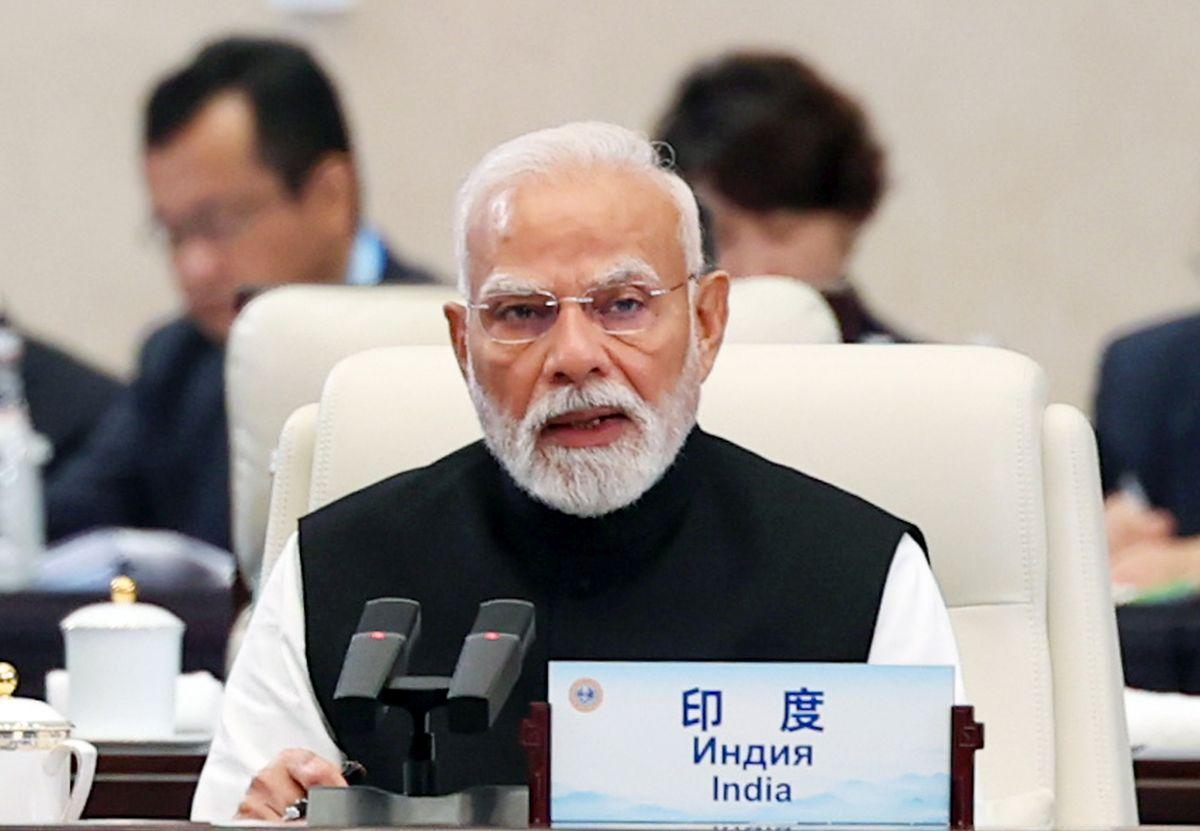
If Xi asserts that the border issue should not define overall China-India relations, how can normal relations be achieved when de-escalation remains incomplete, restrictions on Indian troop patrols continue, and the tragic loss of 20 soldiers still looms large?
This is an important question. The proverbial proof of the pudding when it comes to this current round of engagement between the two sides will eventually lie in de-escalation in Eastern Ladakh.
After Wang Yi's visit to Delhi in August, three new steps were announced.
An Expert Group to explore Early Harvest in boundary delimitation in the India-China border areas; a Working Group to advance effective border management; and the creation of General Level Mechanisms in Eastern, and Middle Sectors.
How these mechanisms progress will be important if the new dual track approach that the two sides are talking about has to succeed.
Given that trade has become a major priority for India following the 50% tariffs imposed by President Trump, what decisive gains has India made in trade agreements with China?
Data from China's General Administration of Customs for January to July tells us that Indian exports to China have fallen 7.1% year on year. There's a lot of room for China to import more from India. This can happen with regard to primary commodities, iron ores, marine goods and even pharmaceuticals.
There's also significant scope in expanding services trade. But Beijing needs to open up for all of this, easing the barriers that are in place. That said, China is unlikely to fill the demand loss for Indian sectors that are hit by American tariffs. For that, the government and companies will have to look elsewhere.
What are the reasons for China's desire to 'normalise' relations with India?
Apart from some of the obvious economic interests, an India that is accommodative of China's rise and interests in the Indo-Pacific is a strategic asset for Beijing.
To achieve this end, it will engage in coercion but also dialogue on its terms. It is in this context, we should look at the Chinese desire for a new normal.
Feature Presentation: Aslam Hunani/Rediff






 © 2025