
The 59-year-old Rana, a childhood friend of David Coleman Headley, was re-arrested on June 10 in Los Angeles on an extradition request by India for his involvement in the 2008 Mumbai terror attack in which 166 people, including six Americans, were killed.

The internet services giant wanted to cover most of the Indian territory through the Google Street View.

The American-Pakistani terrorist's deposition will resume on Thursday.
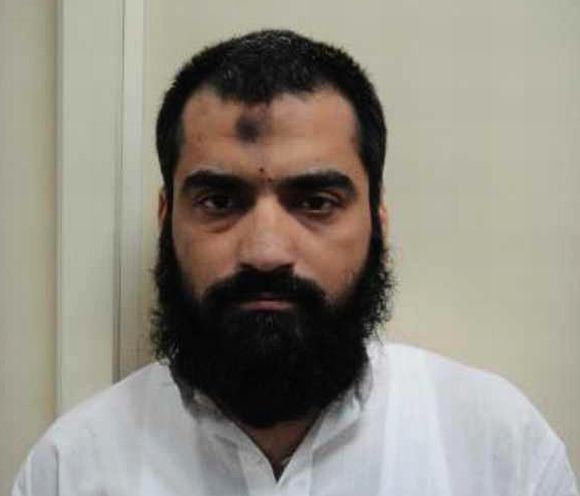
Key 26/11 plotter Sayed Zabiuddin Ansari alias Abu Jundal's lawyer on Monday informed a Mumbai court that he wanted to cross-examine Pakistani-American terrorist David Coleman Headley for four days.

Here are the revelations made by Headley so far in the deposition

Headley, 55, was pardoned on December 10 and made an approver by additional sessions judge G A Sanap who presides over special cases related to terrorism, including those under the now repealed Terrorists and Disruptive Activities (Prevention) Act.
Rana's extradition is barred under Article 6 of the United States-India extradition treaty with India because he has previously been acquitted of the offences for which extradition is sought, and under Article 9 of the Treaty because the government has not established a probable cause to believe that Rana committed the alleged offences, his attorneys argued.

Here's what Headley told the court on Thursday:

Pakistani-American terrorist David Coleman Headley on Tuesday continued his deposition for the second consecutive day before a court in Mumbai.

Describing Rana as a flight risk, the US government opposed his release on bail, arguing that if he were to flee to Canada, he may escape the possibility of a death sentence in India.

A Delhi court on Monday issued fresh non-bailable warrants against Pakistani-American David Coleman Headley, his accomplice Tahawwur Rana, Lashkar-e-Tayiba founder Hafiz Saeed and 26/11 attack mastermind Zaki-ur-Rehman Lakhvi, who are accused of carrying out terror attacks in New Delhi.
In a further blow to the encounter case of Ishrat Jahan, the National Investigation Agency has clarified that convicted terrorist David Coleman Headley, who is currently lodged in an American jail, never mentioned the 19-year-old during any of the interrogations.

Both Major Iqbal and Major Pasha are shown as wanted accused in the charge sheet filed by the city police's crime branch in the case.

Rana, 59, a childhood friend of David Coleman Headley, was recently released from jail on compassionate ground after he told a US court that he has tested positive for the COVID-19.

David Coleman Headley pens down his life as a terrorist and his turn towards extremism in his new memoir.
David Coleman Headley, the Pakistani-American Lashkar-e-Tayiba operative is being deposed before a Mumbai court on Monday through video conference.

The deposition was meant to secure more information and revelations on the 26/11 terror attacks that would make India's case against Pakistan stronger. Instead, the internal conflicts within India's security establishment stood exposed.
A Delhi court has issued fresh non-bailable warrants against Pakistani-American David Coleman Headley, his accomplice Tahawwur Rana, lashkar-e-Tayiba founder Hafiz Saeed and 26/11 attack mastermind Zaki-ur-Rehman Lakhvi, who are accused of carrying out several terror attacks in India.

The CIA released 4,70,000 additional files seized in May 2011 when US Navy SEALs burst into the Abbottabad compound and shot dead Laden.

Mumbai terror attack operative David Coleman Headley, who had been vehemently denying that he had not been paid by Pakistan's Inter-Services Intelligence, finally made a sensational revelation before a court today that the ISI had massively funded his entire operation.

'Amid the different versions of truth on the Ishrat case, what is certain is that Ishrat's mother Shamima Kausar, who has continued to maintain that Headley's confession was nothing but an attempt by powerful people to save themselves in the case, is unlikely to find a closure anytime soon.'
'His deposition shows that the dividing line between Pakistan's State and non-State actors had completely blurred in Mumbai's 26/11 terror strikes.'
The family and the lawyer of Ishrat Jahan, who was killed in an alleged fake encounter in Gujarat, on Thursday raised questions over David Coleman Headley's testimony that she was a Lashkar-e-Tayiba operative, saying this was for the "political benefit of some big people" whose names have been "besmirched."

In a significant claim, Pakistani-American terrorist David Coleman Headley on Thursday said that Ishrat Jahan -- who was killed in an alleged fake encounter in 2004 in Gujarat --was actually a suicide bomber of Lashkar-e-Tayiba terror outfit.
akistani-American David Coleman Headley outline how the Lashkar-e-Tayiba and the Inter-Services Intelligence wanted to spread terror in India.

Here are the highlights from the Lashkar terrorist's deposition on Day 4.

'The Americans never or hardly give complete information, only information that directly affects them is shared.' Indian intelligence agents challenge The Siege's version of the 26/11 attacks in conversations with Vicky Nanjappa.
To a question, Headley further clarified that he had informed the NIA that 'this woman (Jahan) was an Indian and an LeT operative' but could not explain why this was not recorded in his statement.
Deposing for the third day after his cross-examination began on Wednesday, Headley said Yousuf Raza Gilani, former Pak PM, had visited his house after the 26/11 attacks.
In related findings for India, the FATF in a report brought out last month, chronicled the use of banking channels to fund the activities of the banned terror group Hizb-ul-Mujahideen.
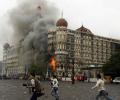
Pakistani-American terrorist David Coleman Headley on Thursday exposed how Inter-Services Intelligence and Lashkar-e-Tayiba majorly funded terror operations in India.
Testifying before a Mumbai court for the second day on Tuesday, Pakistani-American terrorist David Coleman Headley said LeT had planned to attack Indian defence scientists at the Taj Mahal Hotel in Mumbai and that he was asked by Pakistan's ISI to recruit Indian armymen to spy for them.

Lashkar-e-Tayiba and the Al Qaeda were convinced that 26/11 attack masterminds Hafiz Saeed and Zakiur Rehman would face only "superficial" action from the Pakistani authorities and within months plans were afoot for another terror strike in India, Pakistani-American terrorist David Coleman Headley said on Saturday.

Strobe Talbott's tweet that hijackers may have wanted to use the missing Malaysian flight to attack Indian cities should be seen in the context of Lashkar-e-Tayiba's long standing plans to attack Indian cities like Delhi, Bangalore and Chennai from the skies. Vicky Nanjappa reports.
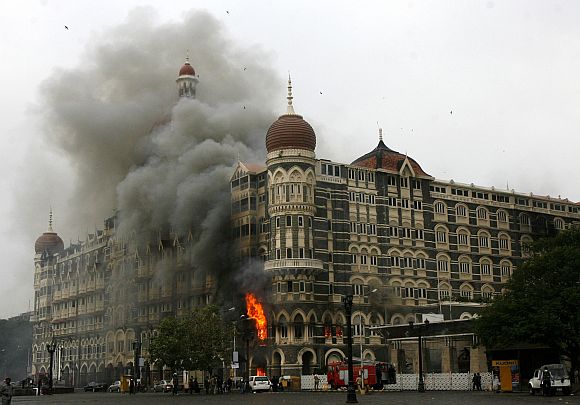
'Headley's testimony indicates to what extent the Pakistan government and its proxies can go to destroy not only Indian scientific talent but also international expertise.'
'An operation such as the Mumbai attacks, which needed expert technical assessment, money and time to prepare, could not have been carried out without the knowledge of the ISI's leadership.'

An accused D G Vanzara gets bail months after Modi emerges as PM and hails it is as a return of 'Achche Din' while the blind-folded lady justice, almost mocks the rest of us, by suggesting that nobody is guilty for the cold blooded killing of Ishrat Jahan, Kauser Bi and the 2,000 odd innocent people in Gujarat, says Shehzad Poonawala.

'The Ishrat encounter was neither genuine, nor fake. I believe it was a 'controlled killing,' says Shekhar Gupta.
.jpg)
It's perverse to rationalise 'controlled' killings or torture -- without going down a slippery moral slope. Once the state stoops to torture, it's liable to sink into tyranny, says Praful Bidwai.

The Lashkar-e-Tayiba operative also revealed about his training while he deposed in front of a Mumbai court via video link.
