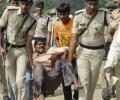
Acting on reports of the Intelligence Bureau about his movement, Delhi police had been hot on Tehsin's trail for a few weeks, says Vicky Nanjappa

Top Indian Mujahideen operative Tehsin Akhtar alias Monu, one of the alleged masterminds of a string of terror attacks in India, was on Wednesday remanded to police custody till April 2 by a Delhi court.
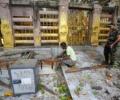
It might have taken several years, but the intelligence and security agencies in several states recently tracked down and arrested dreaded terrorists involved in creating havoc in the country. It began with the arrest of Zabbiuddin Ansari, an accused in the 2008 Mumbai terror attacks, then came the arrest of Indian Mujahideen co-founder Yasin Bhatkal followed by Lashkar-e-Tayiba bomb maker Abdul Karim Tunda, Zaveri Bazaar bomber Waqas Ahmed and now IM chief Tehsin Akthar. In a five-part series, Rediff.com's Vicky Nanjappa describes how each of these terrorists were painstakingly tracked by the Intelligence Bureau and arrested by the security agencies.

National Investigation Agency on Friday told a special court that suspected Indian Mujahideen terrorists Tehsin Akhtar and Zia-Ur-Rahman are "still conspiring" to carry out terror strikes at various prominent places in India, especially the national capital, with the aid of Pakistan-based handlers.
.jpg)
Indian Mujahideen's new chief Tehsin Akhtar was arrested quite a few days ago, but security agencies decided to keep the news under wraps to entrap fellow terror operative Waqar Ahmed and three other terrorists of the IM.
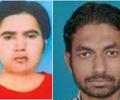
Why do the security agencies wait till the proverbial last minute before arresting terrorists when there is credible information about a threat to the elections?
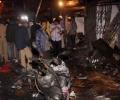
Rediff.com's Vicky Nanjappa reveals how Waqas Ahmed, the Zaveri Bazaar bomber, was captured, averting a major terrorist attack in Rajasthan.

'They will wait and watch for some time before making any new move. There have been too many arrests in the past couple of months and the organisation has been shaken up, but only temporarily.... We planned to hit tourist spots in Rajasthan, blow up a train... We had planned on carrying out an attack at the Taj Mahal.' Rediff.com's Vicky Nanjappa accesses Indian Mujahideen bomb-maker Tehseen Akhtar's confession.

Indian Mujahideen's Tehsin Akhtar was in Patna at the time of Sunday's serial blasts. He set up teams of three to plant bombs. Vicky Nanjappa reports

Investigating officials are taking Indian Mujahideen terrorist Tehsin Akhtar's claims with a healthy dose of salt, says Vicky Nanjappa
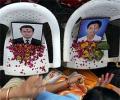
Given the nature of his job, a terrorist heading an underground organisation usually grooms a successor who is prepared to take over in case of his boss's arrest or demise.

Two Pakistan-based operatives of the Indian Mujahideen were arrested in Gorakhpur, Uttar Pradesh on Thursday.

Indian Mujahideen was planning to send letters "soaked with poison" to their targets to kill them, the Delhi Police has told a court here in its charge sheet filed against six suspected men of the terror outfit in a case of allegedly setting up an illegal arms factory in New Delhi.

It took six years, but the co-founder of the Indian Mujahideen was finally trapped after he made a rare mistake.

A Delhi court has ordered framing of charges against banned terrorist organisation Indian Mujahideen's (IM) co-founder Yasin Bhatkal and several of its operatives, including Mohammed Danish Ansari, in a case of conspiring to wage war against India in 2012.
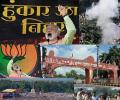
Flawed execution by SIMI operatives resulted in many bombs, including the one under Narendra Modi's stage during his Hunkar rally in Patna in October 2013, not going off

The Delhi Police on Friday filed a charge sheet in a court against suspected top Indian Mujahideen operatives Tehsin Akhtar, Zia-Ur-Rahman and three others for allegedly setting up an illegal arms factory in the national capital from where a huge quantity of arms and ammunition were recovered.
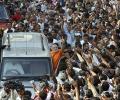
SIMI slogans in Bhopal against the next prime minister alert security agencies about a likely threat.
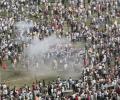
From assembling bombs to planting them, 10 terror operatives spread across Patna on Sunday and wreaked havoc in the city. Vicky Nanjappa reports

If the words of Lashkar-e-Tayiba operative Abdul Karim Tunda are to be believed, then Bharatiya Janata Party's assessment of Kerala, the God's own country, turning into a nursery for terrorism may well be true.

With more details of an Indian Mujahideen role emerging in the Patna blasts case, investigation agencies have found that alleged mastermind Tehsin Akhtar had access to 90 improvised explosive devices.

Setting up the Darabhanga module was perhaps the easiest job the Indian Mujahideen ever pulled off. With politics, appeasement and a safe hiding ground on offer, the agencies are finding this terror module the toughest one to crack.
A tug of war was witnessed in a Delhi court between the National Investigation Agency and the Special Cell of Delhi Police for seeking the custody of top Indian Mujahideen operatives Tehseen Akhtar and Zia-ur-Rehman alias Waqas.

Indian Mujahideen co-founder Riyaz Bhatkal not only used to send funds for terror acts across the country but also regularly provided money to families of the jailed and absconding operatives of the banned outfit, the NIA has told a special court in New Delhi.
Sabir Ali's stint in the Bharatiya Janata Party lasted for a couple of hours. Accused of being a Yasin Bhatkal sympathiser, till only a few days back he belonged to a party that has been accused of going soft on terrorists. Vicky Nanjappa analyses if there's any truth to these allegations

How Lashkar-e-Tayiba's bomb maker Abdul Karim 'Tunda' was arrested after being on the run for 30 years.

Bureaucratic delays have cost the two security agencies precious time in nabbing terrorists. The new arrangement will see the two security agency work together and share information in real time. Vicky Nanjappa reports

IB sources say the arrests of top Indian Mujahideen operatives and trouble brewing within the terror group has led to the re-emergence of SIMI, who is planning a fiery attack. Vicky Nanjappa reports on this new terror threat.
The terror group, which suffered a major blow after the arrest of its founder Yasin Bhatkal, is all set to make a comeback with a 'sticky' bomb usually used to target government officials. Vicky Nanjappa reports

Hours before Narendra Modi's scheduled rally in Bahraich, the district administration gave a conditional permission to the Bharatiya Janata Party to hold the meet on Friday.
The Patna attack was just the beginning, the alleged SIMI terrorist told NIA agents. His organisation has resolved to attack Narendra Modi wherever possible.
Patna blasts' suspect Meher-e-Alam, who was detained by the National Investigation Agency from Darbhanga on Wednesday, has escaped from custody.
How Zabiuddin Ansari alias Abu Jundal, the Indian link in the 26/11 conspiracy, was captured after a painful 43-month chase.

Wednesday's arrest of four terror suspects including that of SIMI mastermind Haider Ali signals the end of the road for organised terror modules in India, claims the Intelligence Bureau. But what's worrying is thatthe Al Qaeda and Taliban are taking keen interest in the terror operations in India. Vicky Nanjappa reports

'It is still God's own country. Nobody needs to worry about coming here. Anybody can come to Kerala without worry because bad elements will be kicked out of the state mercilessly... These terrorists visited many places and not only Kerala,' says Kerala Home Minister Ramesh Chennithala, reacting to the fears that Kerala has become a terror hub.

The suspects in the Patna serial blasts case, allegedly members of the Indian Mujahideen, had used an old-fashioned clock timer on all the bombs used in the terror strike.

Believe it or not, but terror outfit Indian Mujahideen sent the operatives who successfully carried out the July 2011 blasts in Mumbai on a vacation to Goa!
